I first heard about this Free Inquiry project months before I started this class. My mind went to a myriad of interesting things I would like to learn.
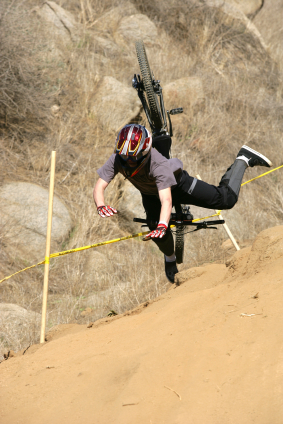
There is a spot on my local trails that I really wanted to master on my mountain bike. But then I considered the likelihood of getting injured. No thanks.
Fontana, California Photo credit singletrack.com
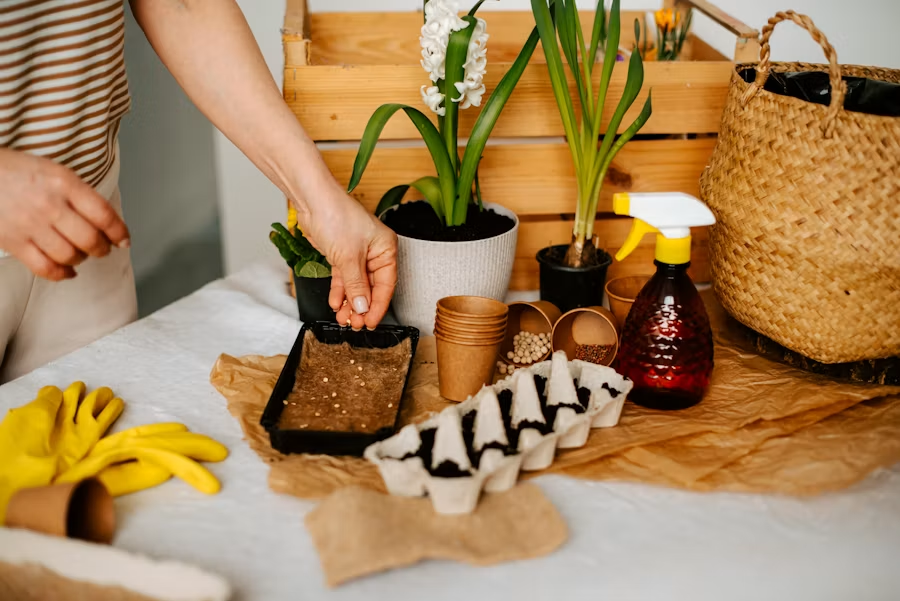
Then I thought about indoor gardening. Wouldn’t that be cool to do with my future class! Yes. But I kept killing all my seedlings and just didn’t need that kind of responsibility in my life right now. So I passed on that idea too.
Photo credit Kateryna Hliznitsova from Upsplash
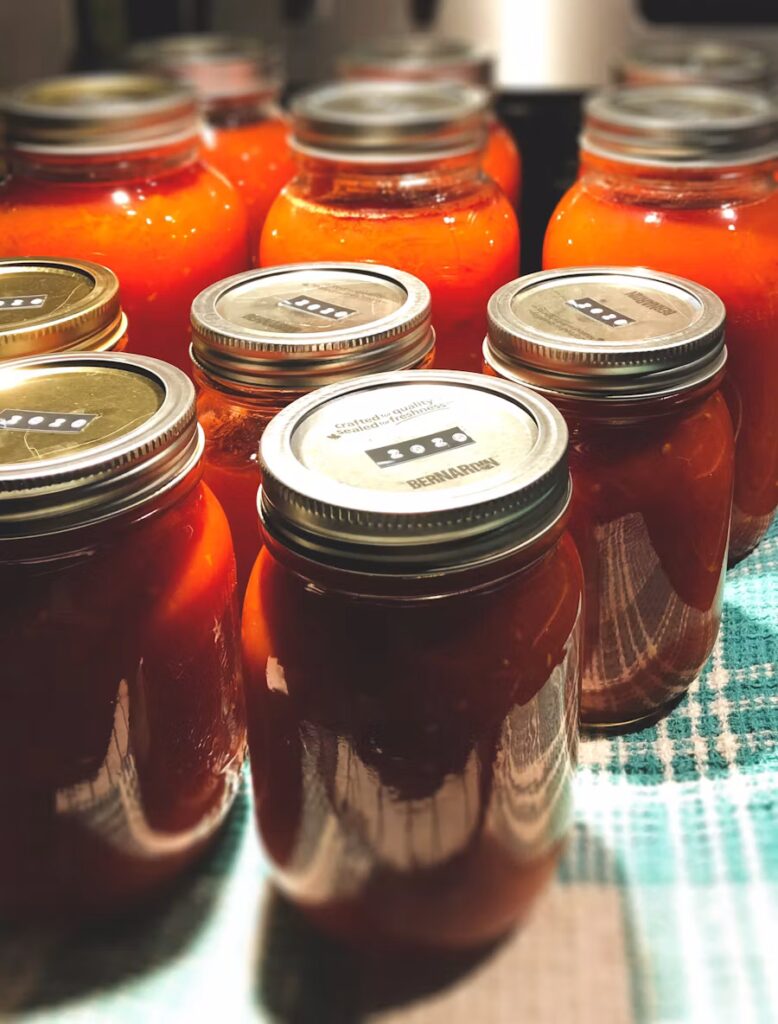
What to do? What to do? Summer ensued and as I looked at my garden, that I am not wholly responsible for (recall the aforementioned seedling death), I realized that I have always wanted to learn to can and preserve food.
Photo by Compagnons on Upsplash
I thought a lot about why I didn’t learn from my mom before me. I knew my grandma had canned for her family, but why didn’t Grandma pass the tradition on to my mom and her four siblings?
I thought about it more and more. I asked questions. I stayed curious. Was my mom a modern woman raising a family through the 80s and 90s not to be be bothered with the traditions of yore?
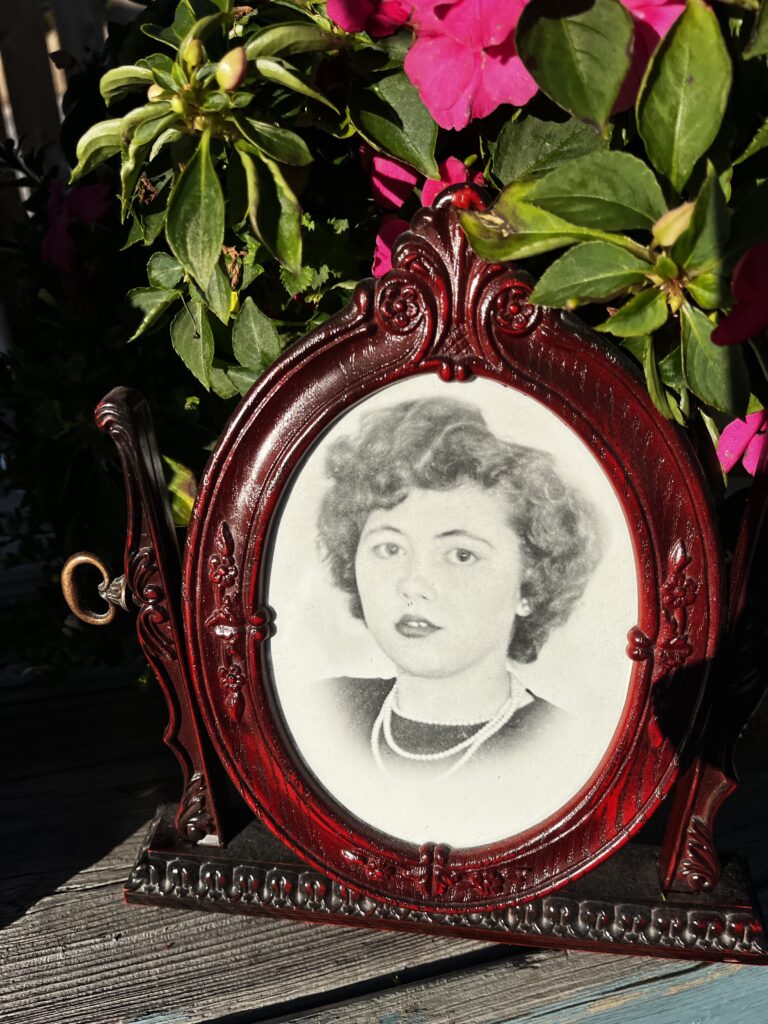
Then I thought further back to my mom’s childhood. My grandma was diagnosed, at 32 years old, with breast cancer. She spent the next 10 years in and out of a hospital an hour away from her rural farm to receive treatment.
My momma, the oldest of 5, started to take care of her family at 11 years old. hen grandma was home she would need a lot of time to recover from her treatment.
When would there have been time or energy to spend days canning and preserving? Or if there was a day when energy allowed, was it likely that grandma sent the kids outside to play?
These women that came before me are the epitome of resilience.
Photo credit Barbara Wright
After months of considering what I would do for this project I will try to honour my grandma in this small way. By learning a lost skill and thinking of her and her journey.
My plan is to can or preserve: tomatoes, plums, apples, and a mystery food. Stay tuned.
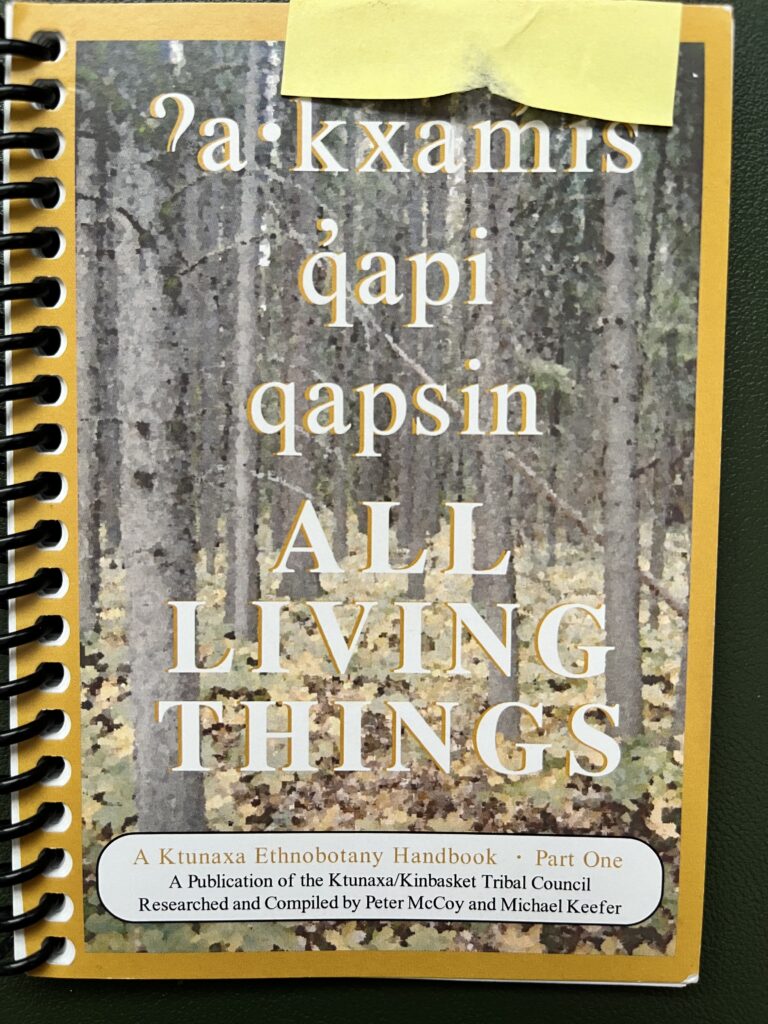
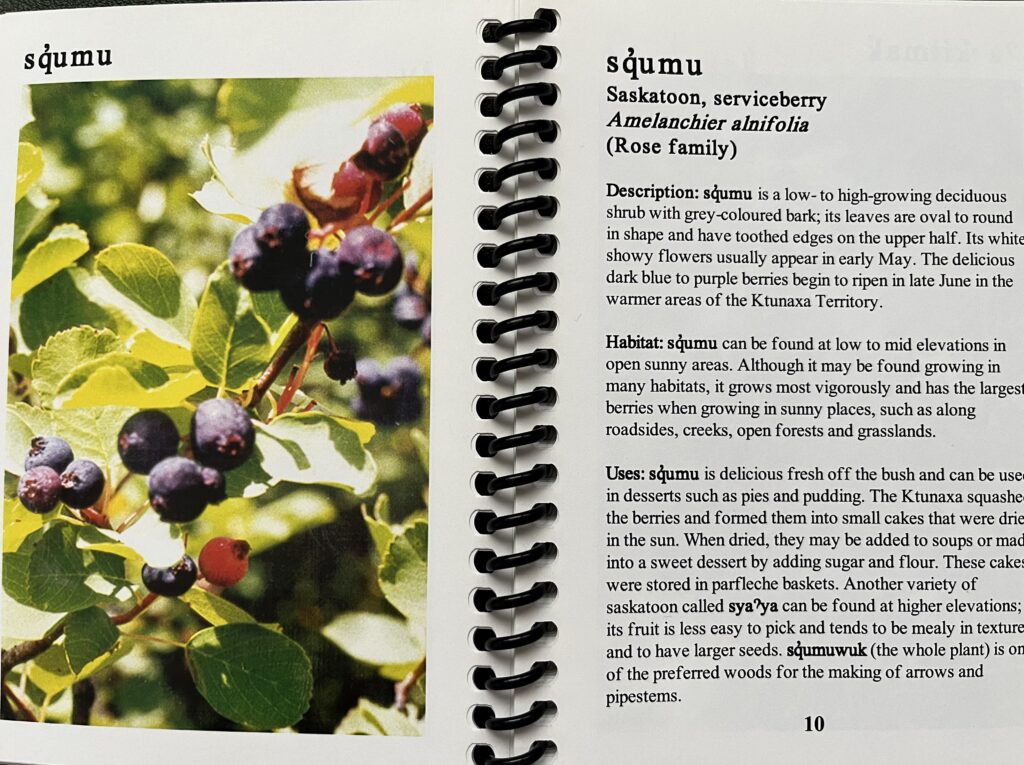
Place based learning offers a beautiful way to create meaningful connections to land on which we live. I was recently lent “All Living Things” which was researched and compiled by Peter McCoy and Micheal Keefer, and published by the Ktunaxa/Kinbasket Tribal Council.
With this little book in hand I am able to begin my attempt at teaching a love of our loca area slowly and deeply, and with intention. I am very thankful to the lender who has proven to be a deep well of knowledge and support.
Collaboration makes us all better at what we do, and I am thankful to have learned this important lesson. This is another way to make meaningful connections.
I am left wondering if I will be able to communicate me deep love of this content to my students, or if they will think my zeal is cheesy or boring. I guess I will find out!
As a future teacher of elementary science I really believe that we have to actively teach our students what reciprocity looks like, and create meaningful ways for them to participate in reciprocity.
A few examples I have are: – Planting a class garden – Watering the ground if we take a plant for our own use – Safely picking up garbage when we are outside (and inside for that matter) – Setting clear expectations for how we treat the outdoor spaces we occupy
I wonder what else I could add to this ongoing list?
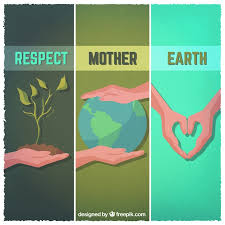
Respect has become a core part of my teaching philosophy.
As scientists we must have:
Respect for the people who have come before us, and on whose shoulders we stand.
Respect for the knowledge other people hold.
Respect for the animals and other living things.
Respect for the Planet.
We have had to consider what our future classroom will look like, and the reality is that we have to model respect if we expect to see it grow while our students are under our care.
I would say the most profound realization that I have had this semester is that I am not alone in teaching the students that pass through my classroom. I alone do not need to teach them everything there is to know about any given topic.
For example, I chose to plan a unit about biomes. I started researching all the biomes on Earth. I was sucked into the vortex of the various subcategories. There was so much information and so many different avenues I could take to show my students the wide world. I was pumped. I made plans to do ‘reading comprehension’ sheets and have my students learn so many cool facts.
But then I got some perfectly timed advice.
Why not do less, but do it deeper. Allow space and time to really explore a few biomes and make it meaningful.
I felt a huge weight lift off my shoulders, and I realized. I alone do not need to teach my students everything there is to know about this beautiful Earth we get to call home. I do not need to stress about teaching them everything about every topic.
Meet Eli. Eli is in grade 2 and loves Sonic the Hedgehog and playing Fortnite and Minecraft. He loves to play with his “really big” dog. Eli has an older sister, and they do not get along very well. That said, he hopes that they might get along better when they got older. Eli is quiet and seems like tough nut to crack. He loves physical education and playing outside, but does not like reading, writing, and math. He is really looking forward to Spring Break.
Acadience Progress Monitoring and Oral Reading Fluency
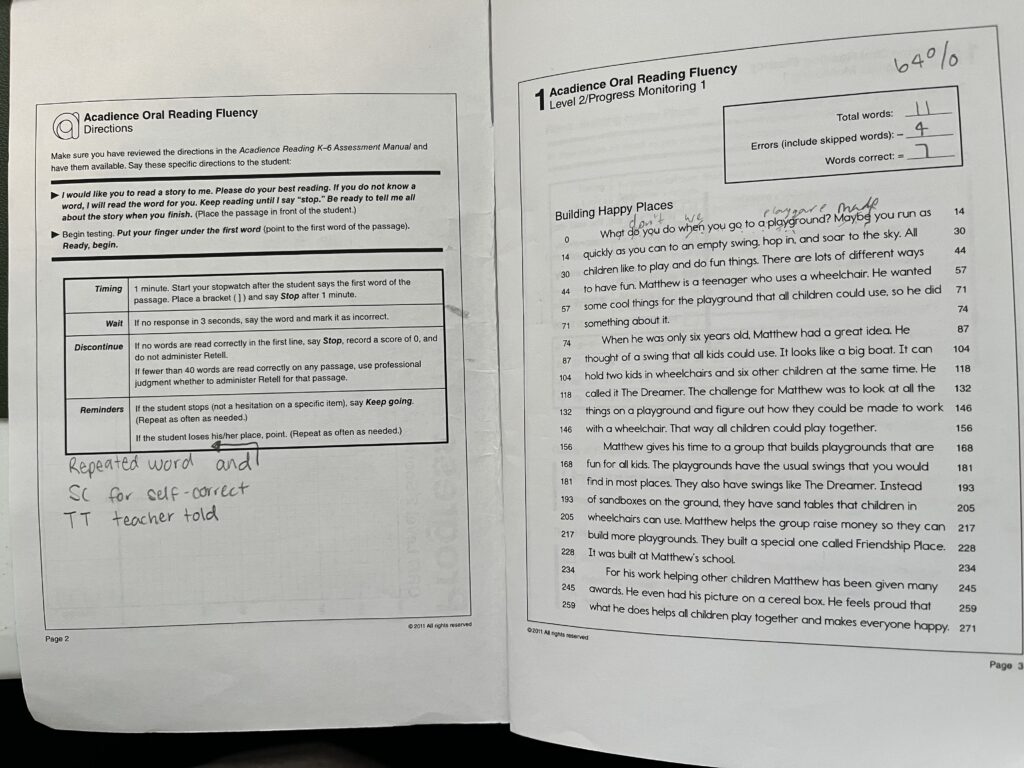
Analysis of Results: I had the opportunity to do the Acadience Progress Monitoring reading assessment with Eli. Acadience uses the Oral Reading Fluency (ORF) reading levels. Eli, being in grade 2, read from the Level 2 booklet. Acadience ORF is in line with the Science of Reading. Acadience is different from other reading assessments because there are no “clues” on the page like with picture books. Acadience is a universal screening tool and it uses benchmarks that are predictive of future reading outcomes (Stollar, 2024).
I read with Eli twice; first in January and second in February. In January I had Eli read the first 3 passages from the level 2 booklet. In February Eli read the following 3 stories (4-6). Below are the results of both assessments.
I am new to this testing, and as a result I made some errors in the “script” that I was suppose to use, additionally I also did not correct Eli when he got words wrong which likely accounts for some of Eli’s overall comprehension. According to the benchmark this level places Eli below the grade 1 benchmark.
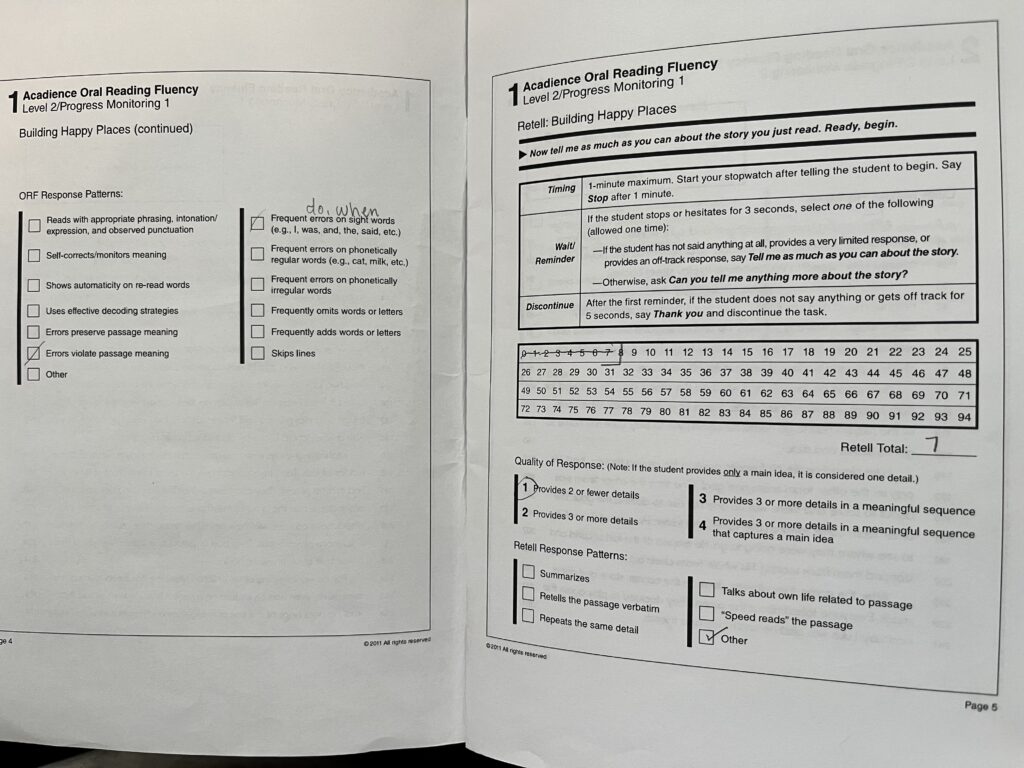
Eli adds or changes letters which violates the meaning of the word. For example “pen” became “plan.” Do became “don’t.” During the retell, Eli tended to make up his own version of the story. Part of this is attributed to my failure to correct his mistakes. For example when retelling about a Pen Pal, Eli told me about a baseball game.
I corrected my errors from the first testing.
Overall, Eli’s results decreased from the first assessment. This could be the result of my becoming more proficient at the testing process.
Eli’s ability to read sight words improved from the first assessment. However, Eli’s response pattern continued to contain errors that violate the meaning of the text, he makes frequent errors on phonetically regular and irregular words, and finally I noticed that he now omits words or letters which makes comprehension difficult.
The retelling response pattern remains the same in that Eli creates a different meaning based on a word he recognizes. For example in the story “A Day for Trees” Eli inferred the meaning of the text to be about a river after the phrase “rays of sun stream in through the trees.”
BC Curriculum
Curriculum Expectations:
For Grade 2, grade level means students should be able to: “read with comprehension, phrasing, and attention to punctuation,” “to use personal stories and experiences,” make predictions, inferences, connections, and ask questions (BC Curriculum, 2016).
Some of the Connect and Comprehend Curricular Competencies for grade 2 are: to read at grade level; to use sources of information and prior knowledge to make meaning; to use developmentally appropriate reading, listening, and viewing strategies to make meaning.
Eli is not yet reading at grade level. It does not appear that he is using information and prior knowledge to make meaning, nor is he using strategies to make meaning. Yet.
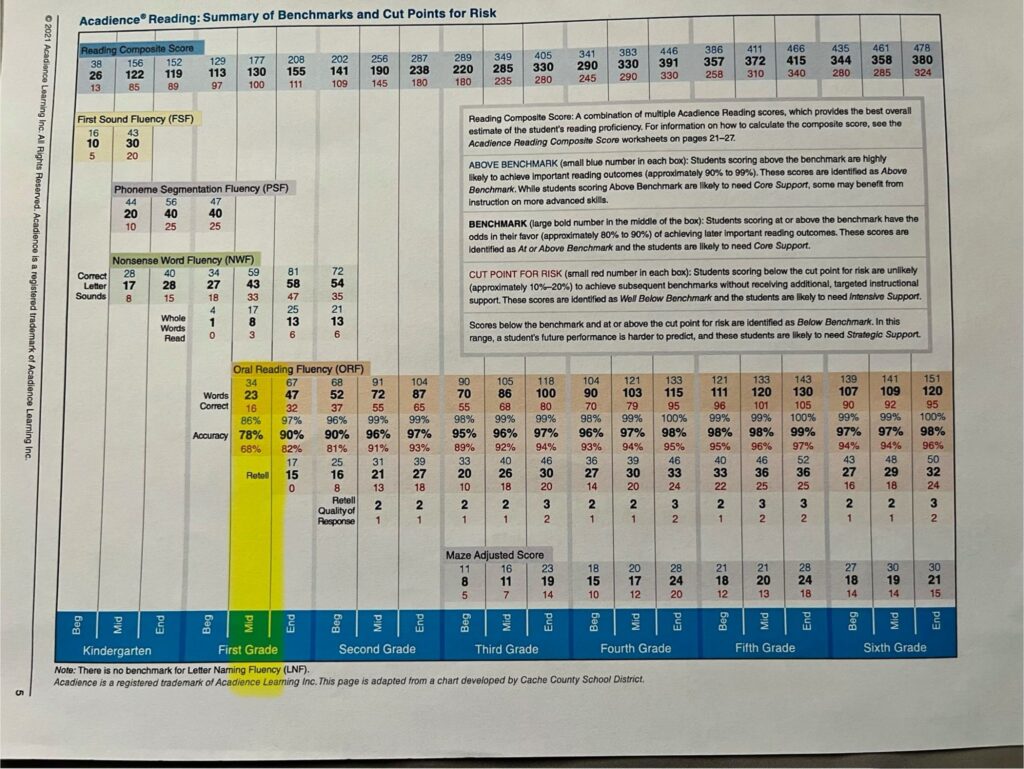
Based on Eli’s ORF results he is scoring below the grade 1 benchmark. The yellow highlighted area is the benchmark for the middle of grade 1. Eli’s mid-grade 2 percentage is 44% with 8 words correct.
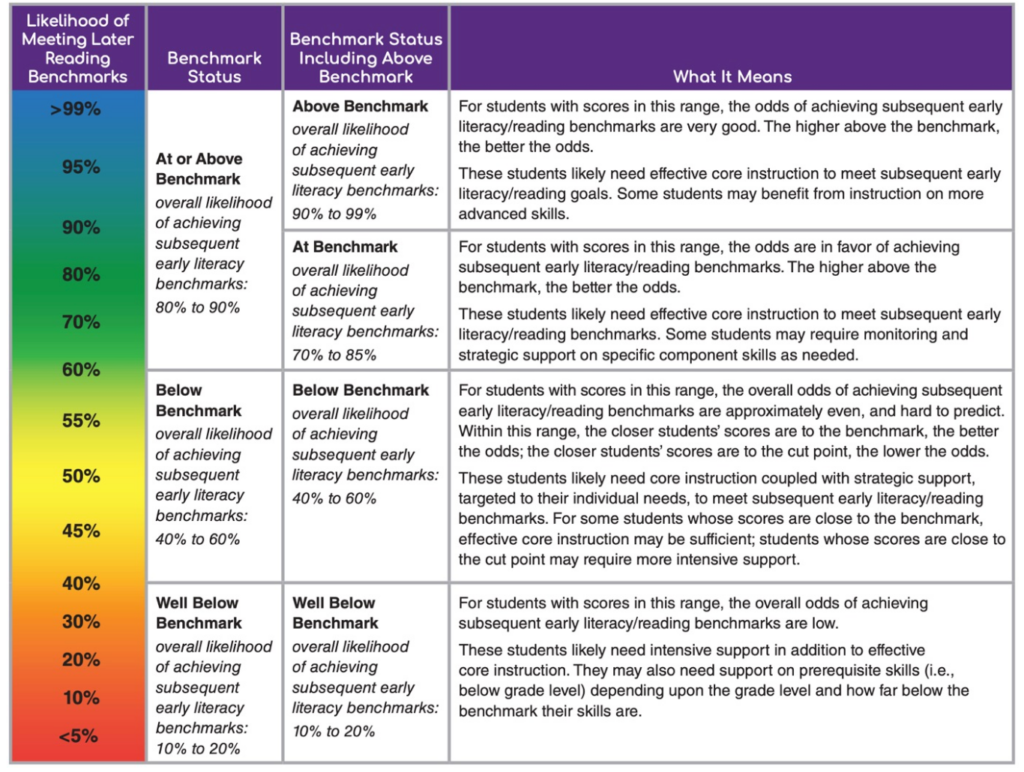
According to the chart below this score puts Eli in the “Well Below” category, and as a result intervention is needed (Acadience).
Sample Report Card
Reporting Communication:
English Language Arts: Developing
Eli you are an energetic and kind child. You can recognize some sight words (in, the, are, to, from), and with hard work you will be able to read at a grade 2 level. With support, you can make some connections to the text from your own experiences, and retell some details of a story. Eli you have a lot of interests; so, we will be focusing on finding books you like. Eli, the goals we made together are to do 2 minute chunks of independent reading 10 times a day. At home, you can read for 5-10 minutes each day to keep progressing! You are working really hard, and it will pay off!
Weekly Classroom Literacy Set-up
Directly below is a potential daily plan, and below that is an example of a yearly plan to focus on individual skills:
Book Recommendations
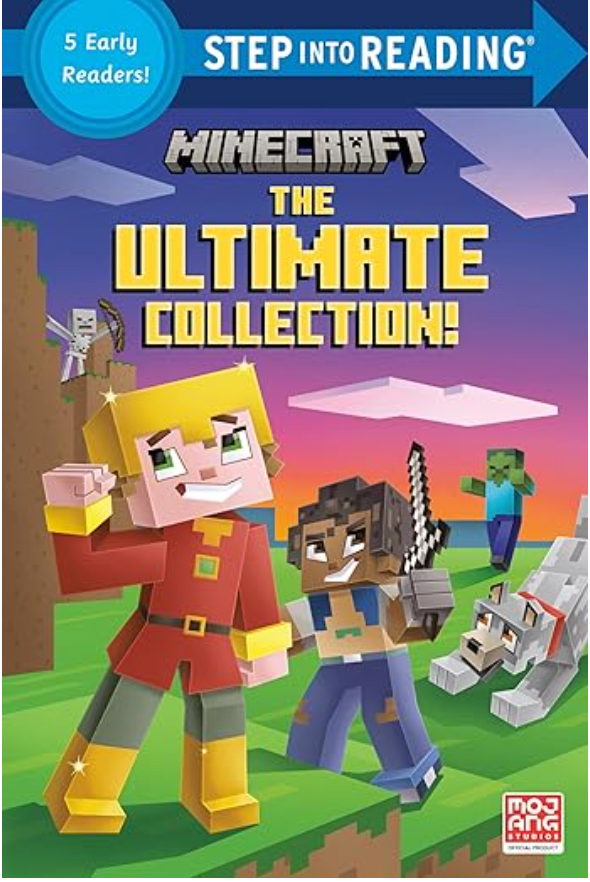
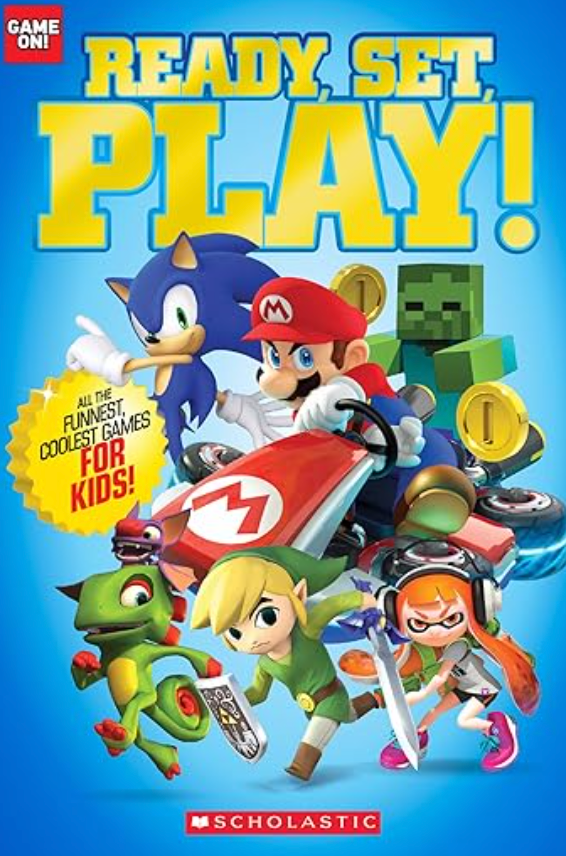
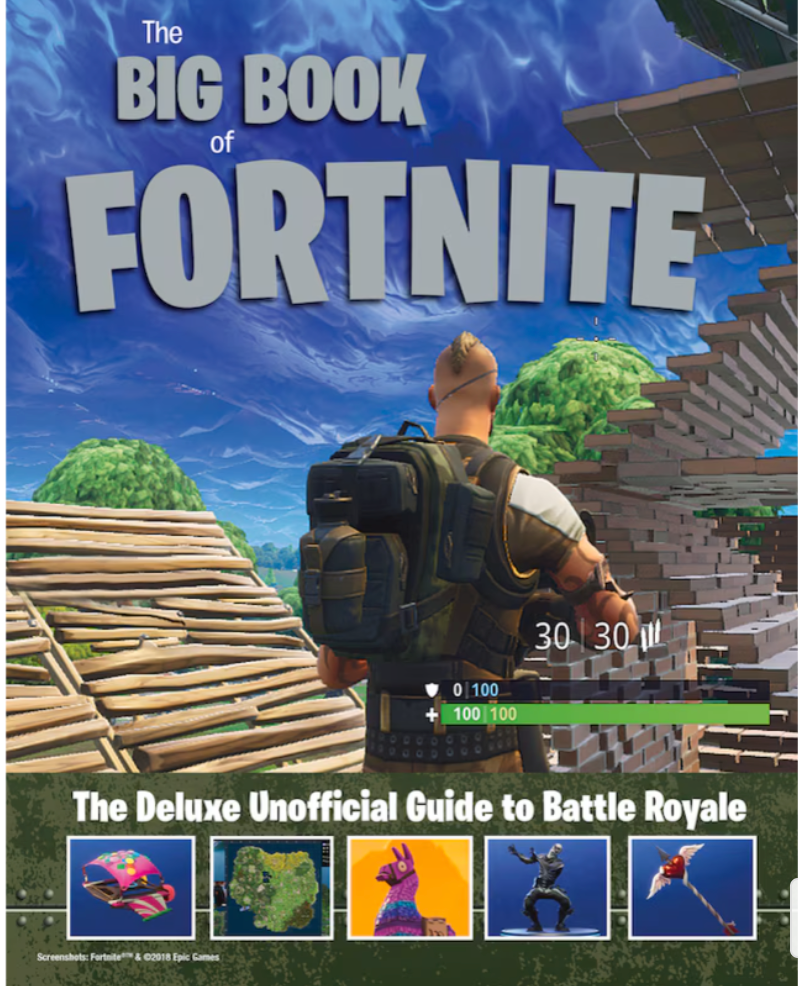
Eli is really interested in Minecraft, Fortnite, and Sonic the Hedgehog. One of the best ways to get buy-in is to find books that he is interested in. The best reading intervention is a book the child wants to read (Harvey & Ward, 2017, 145). Based on this principle I recommend the following books.
Some of these books are at Eli’s level, but some of them are not. However, all of them are books that will motivate him to open the book and begin to engage with the pictures. By working on the skills he needs outside of independent reading he will gain the skills to read these high interest books. The best book for Eli may be one written specifically for him. He is not the kind of kiddo who will enjoy the books that are at his reading level, so finding a book that he can read and like is a big challenge.
The three video game books provide small sections of reading for Eli to choose to read or not read. The main reason I choose these books for him is because I knew I could get “buy-in” from him. The first step for getting him to read is to have a book he is interested in. While he may not be able to read the entire book or even the entire page, there will be familiar words found through out the books from characters or game levels. This will give him a chance to see how these familiar words are spelled.
Minecraft: The Ultimate Collection also provides an opportunity for buy-in, but it also has fewer words per page which will give Eli a better chance of reading more of the words. This collection is still above Eli’s reading level, but it will be ‘cool’ which is half of the battle.
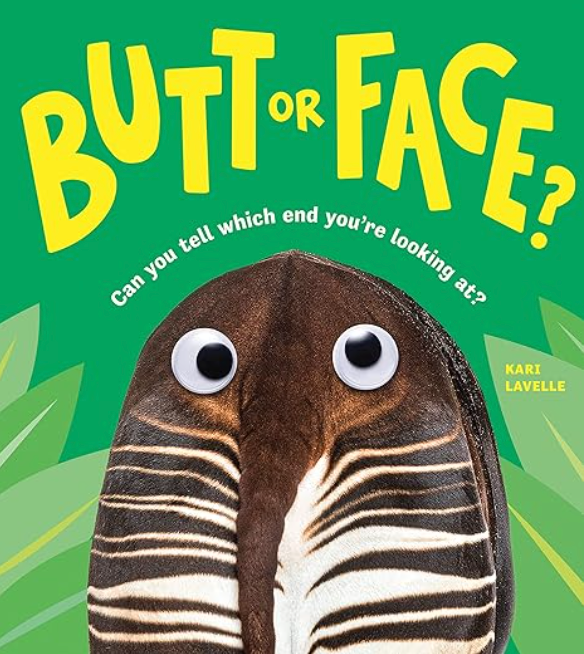
Finally, I chose Butt or Face? because it is hilarious. As I am sure you have noticed, it is all about “buy-in” when I choose books for Eli. The picture to word ratio in this book is really manageable. Plus, the phrase “Butt or Face” repeats throughout, therefore, he will have a base to start from. He is pretty guarded and I know that if I am to succeed in getting books onto his “Up-Next” list they are going to have to be funny or cool.
Classroom Supports & Small Group Instruction
Soft Start (whole-class with individual check-in): Building meaningful relationships are key to success. “No meaningful learning occurs without meaningful relationships” (Bright, 2021, p. 19). Spending a small amount of time with each student who really needs an extra bit of attention has the potential to allow me to ask more of them academically. While this is not specifically a literacy activity, it directly supports all learning. 10-15 minutes
Morning Meeting (whole-class): According to Dr. Lori Friessen, routines are an important way to create a safe learning environment for our students. Additionally, phonemic awareness is supported through songs with rhyming. Our morning meeting will also include a “word of the day” to increase students’ vocabulary (Bright, 2021, p. 95). 15-20 minutes
UFLI (whole-class) followed by Literacy Stations (small-group) or a Literacy Activity (small-group): Some days we will focus all on UFLI activities that come with the program such as reading passages. Literacy stations would change throughout the year based on what skill we are working on. Literacy Stations that focus on phonics, decoding, vocabulary, and comprehension will be a specific way to support Eli, and all the students. What is good for one is good for all. Literacy stations also provide an opportunity for the teacher to check in with one small group of students at a time. This also provides Eli with the opportunity for individual support when he is working with the teacher in the small group. 25-30 minutes
Some literacy activities ideas that I will use are:
Guided reading: group the students together according to their approximate reading level, look over the cover of the book together while looking for clues, look at each page to make some predictions about what the story may be about from the pictures, teacher should review unfamiliar vocabulary, read book all together, then take turns reading pages (Bright, 2021, p.40).
Shared reading: Use the “Five Days of Shared Book Reading” which is the brainchild of Jill Eggleton. Each day use the same book for 10-15 minutes of instruction. Day 1: Understanding the Story, Day 2: Vocabulary and Phrasing, Day 3: Flow and Fluency, Day 4: Phonemic Awareness and Phonics knowledge, Day 5: Oral and Written Response (detailed instructions in Bright, 2021, pp. 44-46).
Before Reading-During Reading-After Reading: To boost reading comprehension I will work with Eli and the whole class to build the routine of Before Reading-During Reading-After Reading (Bright, 2021, pp. 132-133). Before reading students think-pair-share to consider what they need to understand more about before reading the book. During reading the teacher can pause for students to understand parts of the story. After reading the teacher can give specific instruction about what the students need to know. This helps students create a type of formula for comprehension in their minds. This is also similar to the Read Aloud template created by Molly Ness in “Read Alouds for all Learners” (2024, pp. 18-31).
Independent Reading (individual): When Independent reading is happening I will offer a choice of where to read as long as students are not distracting one another (Harvey & Ward, 2017, p. 63). There will be daily independent reading as it is imperative that students have access to books they like as much as possible. Book matching is important here (Harvey & Ward, 2017, pp.87-113).There is no literacy intervention better than getting a kid to read a book they love (Harvey & Ward, 2017, pp.87-113). I will spend a great deal of time book matching with Eli to ensure he has a book that he is interested in and has some success with (Bright, 2021, p. 57). Offering a Reading Interest Survey will help me narrow down what Eli is most interested in beyond video games. Additionally, I can create a “Up Next” list for him so that he always has something to be reading. for building fluency (Bright, 2021, pp. 84-85). As with the literacy stations, this time offers a great opportunity for the teacher to do one-to-one reading with students like Eli. 10-15 minutes
While thinking about Eli specifically, I noticed that the books he was reading had vocabulary that was too hard. To ensure he does not get too frustrated I would ensure that a lot of the focus for the small-group lessons are on building his bank of Tier 1 words, or sight words, to ensure he has success moving forward (Bright, 2021, p. 97). If there are not any books available with the correct level of vocabulary that is interesting to Eli, I would also consider writing a book for him to ensure he has success (Bright, 2021, p. 99).
Gratitude Journal (individual): The Journal will be one of the main writing activities that my class will do. This practice actively fosters gratitude and resilience (Sauber Millacci, 2017). For Eli in particular, I would consider scribbling or writing his sentence out in highlighter and having him trace his entry with pencil. 10 minutes
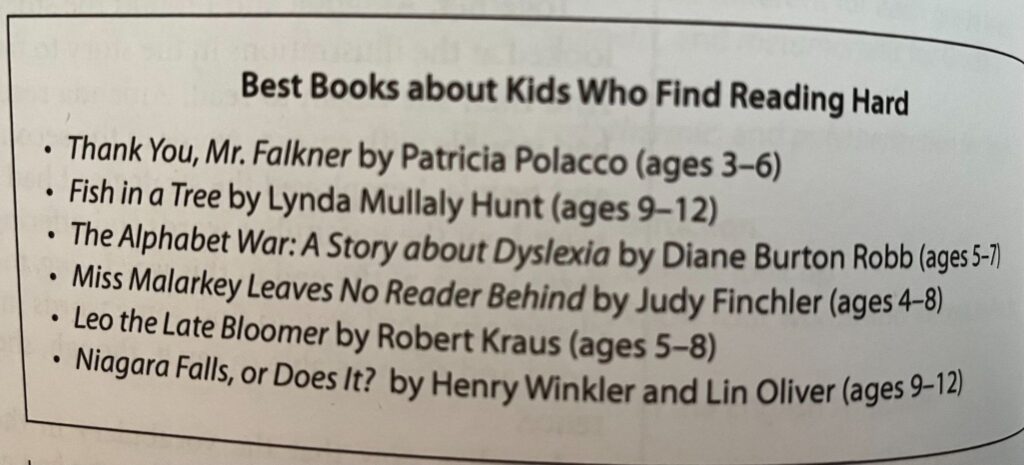
Read Aloud (whole-class): When students hear books being read out loud it builds their fluency and exposes them to a wider range of vocabulary. When choosing books I will consider choosing books about kids who find reading hard (Bright, 2021, p. 100). 8-10 minutes
Learning Services & School Supports
Levelled Reading Programs: As the classroom teacher I will speak with Learning Services to advocate for Eli getting reading support. I know a lot of schools in the area used levelled reading programs, and I have seen a lot of success with those. The issue I have is often students who need the most support are pulled out when the classroom teacher is doing core instruction. As a result I really love the reading programs that have students read for 1 minute at a time because they do not miss as much class time, and it does not exhaust their ability to do work in class.
Testing: For Eli in particular, I am curious if there are any learning delays or issues like dyslexia. I would compare how Eli is doing in other subjects and use data to inform my request for help from learning services. Teachers are not able to do any of these assessments, only trained professionals with the permission of caregivers; however, Learning Services Teachers have a lot more experience with the symptoms of disorders like dyslexia. As a result I can put in place Tier 2 supports that would be good for a lot of students.
One-One Reading: I would refer Eli to any in school reading programs like One-to-One reading. However, I would wait until he had been assessed by Learning Services to ensure these programs were appropriate for him.
Big Buddy Reading: I would invite an older grade to come in to do Big Buddy Reading. All students, including Eli, would benefit from having a more fluent reader come in to read with them. I would be intentional about pairing Eli with an older student who Eli would look up to.
Home Supports
I would send home a list of manageable strategies for reading with their child. A lot of caregivers do not know where to start to help their child read which can lead to being unsure of where to start or causing harm by pushing too hard and making kids hate reading. Plus, families are really busy and do not always have time or energy to do a bunch of homework with their children. By offering some tools we can empower our families.
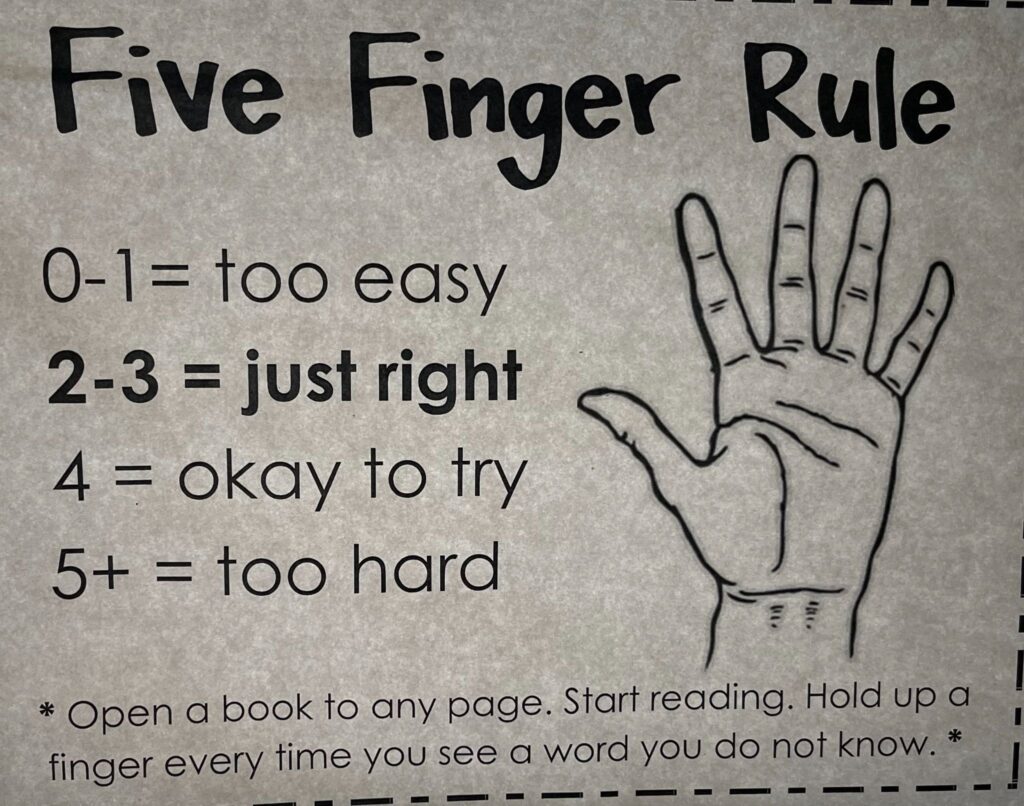
The books I would choose to send home would be books that will be “just right” books. I would send an email and a printed out form in the Home Reading Bag.
An example of a letter I would send home is found below:
Hi Caregivers,
We will be starting our home reading program. I will send 3-5 books home with your child each week. They can read either these books, books that you have at home, or books from the public library. The books I send will be just right for them, which means there may be 2-3 words on the page that are a bit too hard for them. This is just the right amount of challenge, but not so much that they are discouraged. It is also ok to read books that seem too easy because this can make reading more enjoyable. If your child is interested in reading a harder book then let them give it a try!
I have talked with your child about how important 10-15 minutes of reading a day is. Kids who read 10-15 minutes a day can end up learning thousands more words every year. But even 2 minutes would be an amazing place to start!
This program is not mandatory, but I would love and appreciate your help. Just do what you can. Please reach out to me if you have any questions.
Here are some tips if you are not sure where to start.
Keep it short and calm. Ten minutes of relaxed reading is better than 30 minutes of frustration.
Let your child choose the book. Kids read more when they like what they are reading.
Start with a quick picture walk. Look at the pictures together and guess what might happen.
Take turns reading. You read a page, then your child reads a page.
Help tricky words gently. Give them a moment to try, then offer the first sound or say the word and keep going.
Talk about the story. Ask simple questions after reading like “What was your favourite part?” or “Why do you think that happened?”
Reread familiar books. Repetition builds confidence and fluency, even if it feels easy.
Celebrate effort, not perfection. Praise things like trying hard, sounding out, or reading smoothly.
End on a positive note. Stop before they get tired so reading always feels like a win.
Ongoing Assessments
I would like to do a Holistic Reading Assessment like that found in Powerful Thinking by Adrienne Gear (2024, p. 26). While I appreciate the Acadience testing system, as a new teacher I do not have enough experience to understand the data to meaningfully move forward. The holistic reading assessment really breaks down individual skills so I can find out exactly where Eli is needing support.
Ultimately, I am looking for growth. I would rather Eli make small steady gains than nothing at all. To ensure this is happening I would:
Observation: Create a checklist to fill out once a month during small group work. This time interval will give me an overview of the progress my students are making.
Products: The gratitude journal will be an ongoing record of the kind of work each student is able to produce. For Eli in particular, I will be able to use this journal to see how much he is able to do on his own and how much has been scribed for him.
Conversation: Do a Reading Interest Survey after big school breaks in order to gauge if Eli’s reading interest has changed or remained the same.
Sauber Millacci, T. (2017, February 28). What is gratitude and why is it so important? Positive Psychology. https://positivepsychology.com/gratitude-appreciation/
We have spent a lot of time talking about inquiry based learning in the UVic teacher education program. Student engagement is really high which means they are learning a lot. I also love that it gives students the opportunity to try something out, have it fail, and try another way. I see how inquiry based learning is applicable across the curriculum, not just in science and math. For example I created an activity for an English Language Arts lesson that uses art and drama to engage with this Ktunaxa Legend.
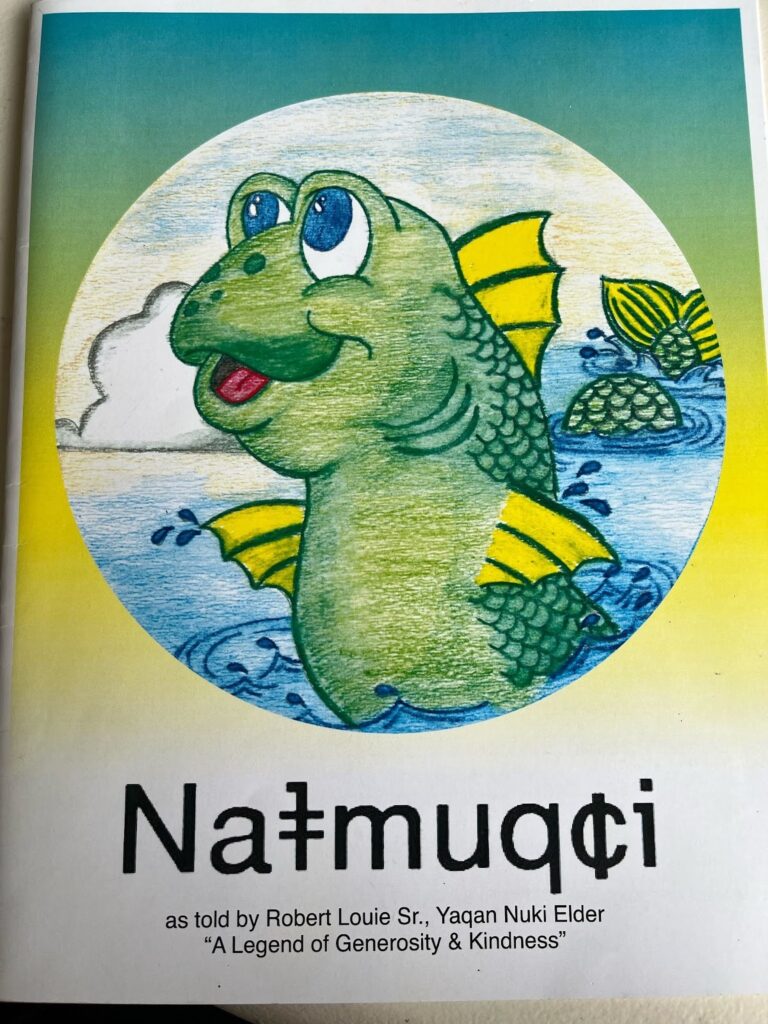
Nalmuqci as told by Robert Louie Sr.
Book Summary: Nalmuqci is a kind water creature who is given a “special” task, to prepare the land for the Ktunaxa people. A group of animals, Muskrat and the Woodpecker family, are jealous of Nalmuqci. Skinkuc, the coyote, convinces the gang of animals to chase Nalmuqci. The book is about the journey that follows.
Curricular Content/Competencies:
ELA:Explore oral storytelling processes as a way to understand the relationship between reading, writing, and oral language.
Art: Explore artistic expressions of themselves and community through creative processes of creating art collectively.
Book Activity: Story drama with a class made map on the ground. Clear the desks to one side of the classroom. Lay down three pieces of white paper from the giant rolls, each piece should be about 3 meters long. Spend the morning looking at the map in the back of the book and allowing the students to recreate it on the floor map. Then, in the afternoon the students will be split into 3 groups: one group is Nalmuci, one group is the woodpecker gang, and one group is Skinkuc (coyote). Each group will decide on three actions that describe what they will do when the drum sounds. Now form groups of three students (one from each animal group). Move around the map and at the sound of the drum do one of the actions.
For a science application you try the following activity:
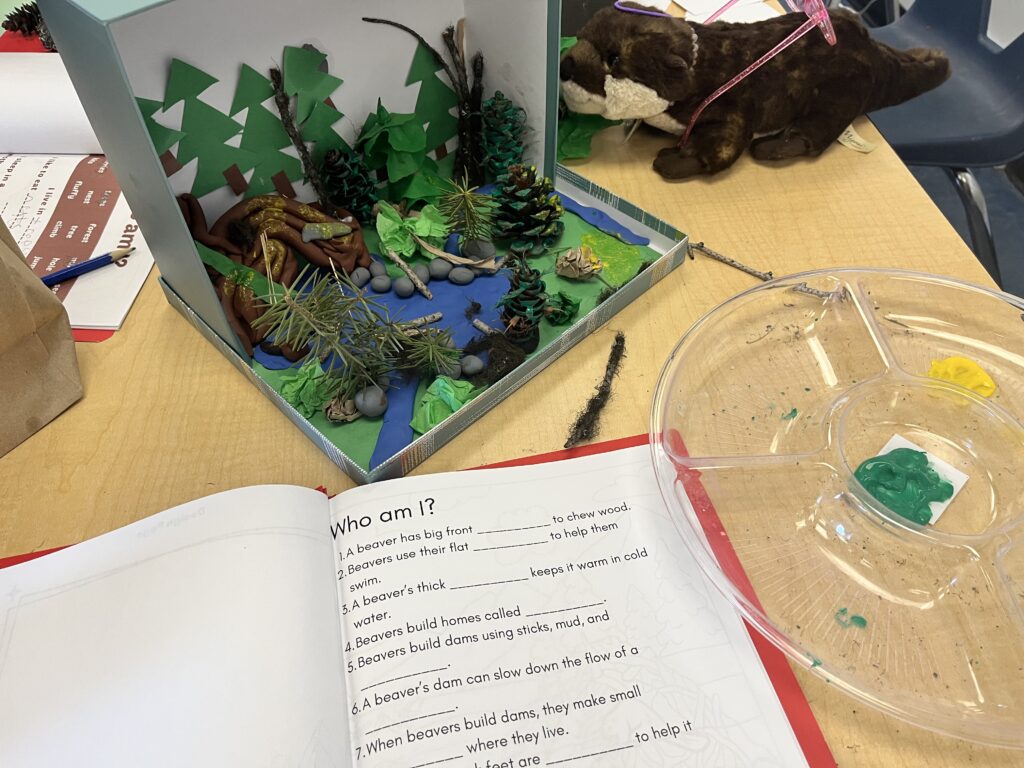
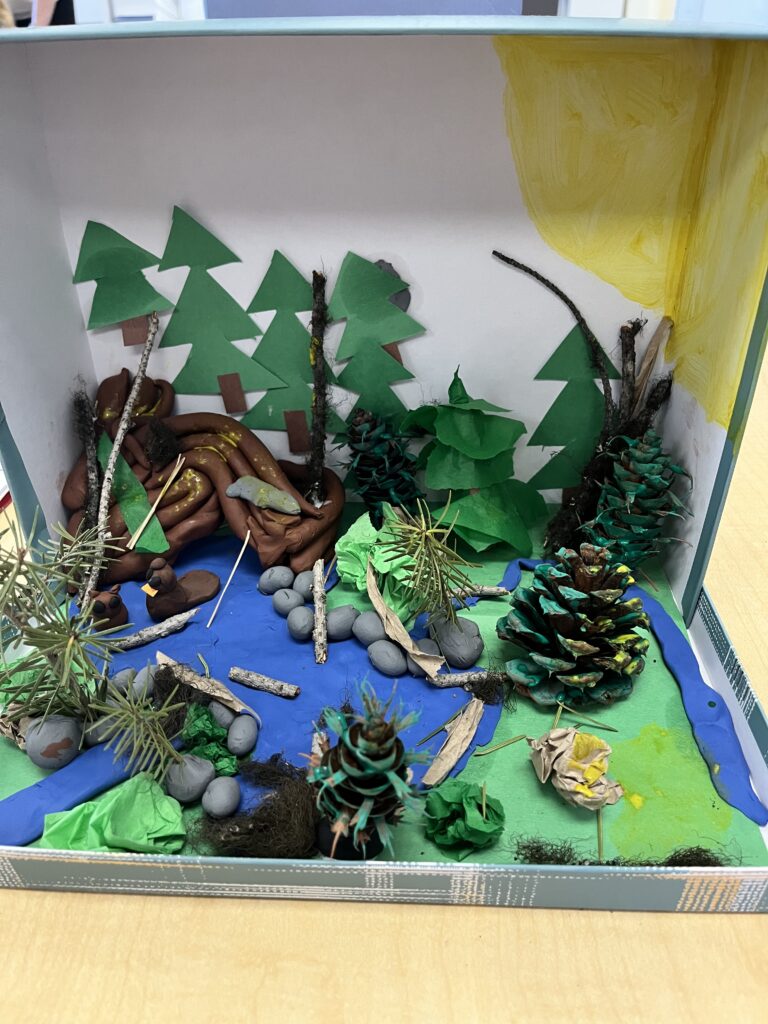
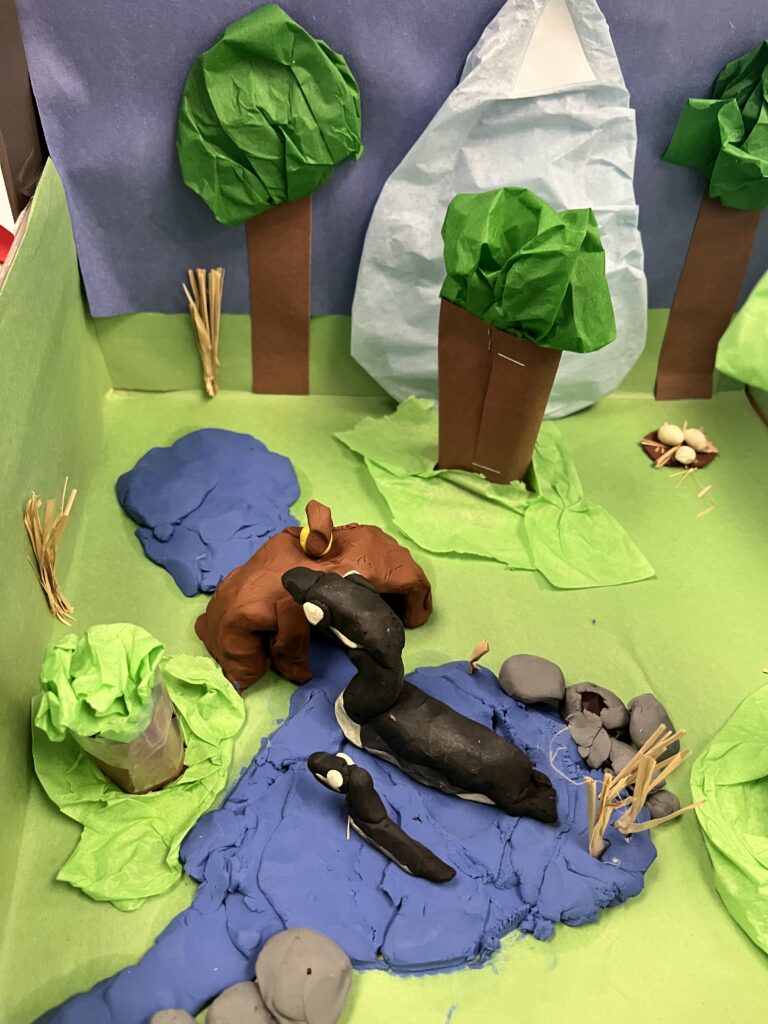
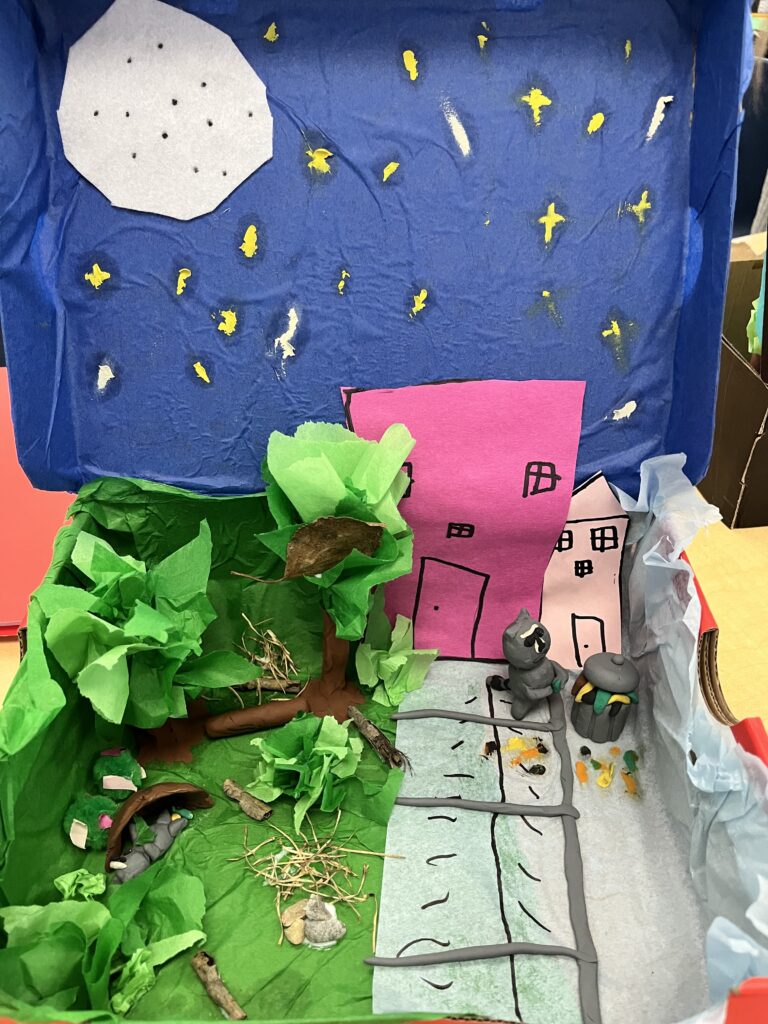
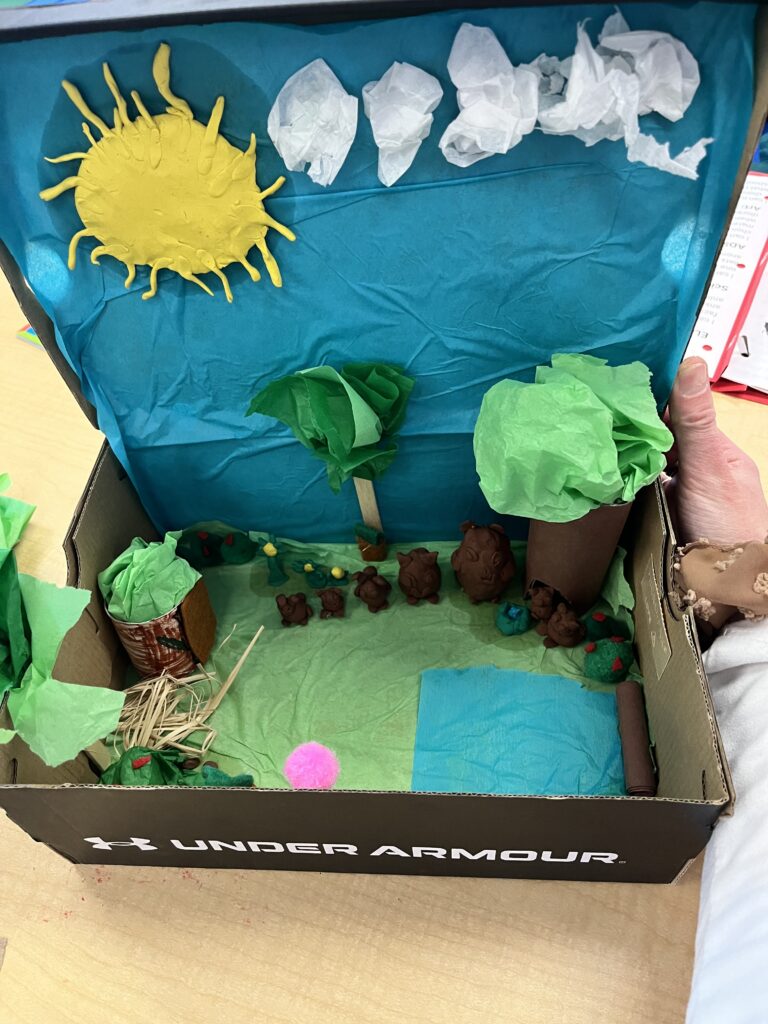
In a grade 2 science class we worked with students who had chosen a local animal. Our students were tasked with learning the animal name in Ktunaxa, creating a diorama of the animal’s habitat, and with completing a workbook including a self-assessment. This was a great way to do hands-on learning! My student chose the beaver and wanted to put the beaver lodge on the side of the diorama with no pond. We were able to talk through how the beavers would get into their homes if there was no door. We then looked back at the book to remind ourselves that the beavers needed to swim underwater to enter the lodge. You guessed it, we moved the lodge to sit on top of the pond instead. It was a great “aha” moment for my student, and for me.
I still wonder how to create these meaningful learning opportunities for my students while covering all of the required content. Inquiry based projects can take up a lot of time. I wonder if there is still a place for conventional worksheets or if it is better to create an environment where students to make a few lasting connections rather than learning all of the content items?
You’ve probably heard the old saying: we don’t truly understand something until we try to teach it to someone else. Speaking from experience this is absolutely true. According to Robin Bright, author of Sometimes Reading is Hard, one way to build our students’ reading and oral fluency is to create a story vine (2021, pp.91-93).
What is a ‘Story Vine’?
What is a story vine you ask? Well, let me tell you!
Bright explains that Story Vines “are based on an old African tradition of storytelling and can be used to develop language and support reading and writing across the curriculum” (Bright, 2021, p. 91).
Robin Bright cites Marlene McKay who argues that Story Vines are a great tool for developing a student’s “reading skills while collaborating and contributing to meaningful classroom talk” (Bright, 2021, p. 91).
Below is a page from McKay’s book, Story Vines and Readers Theatre: Getting Started (2008, p.37).
The Process
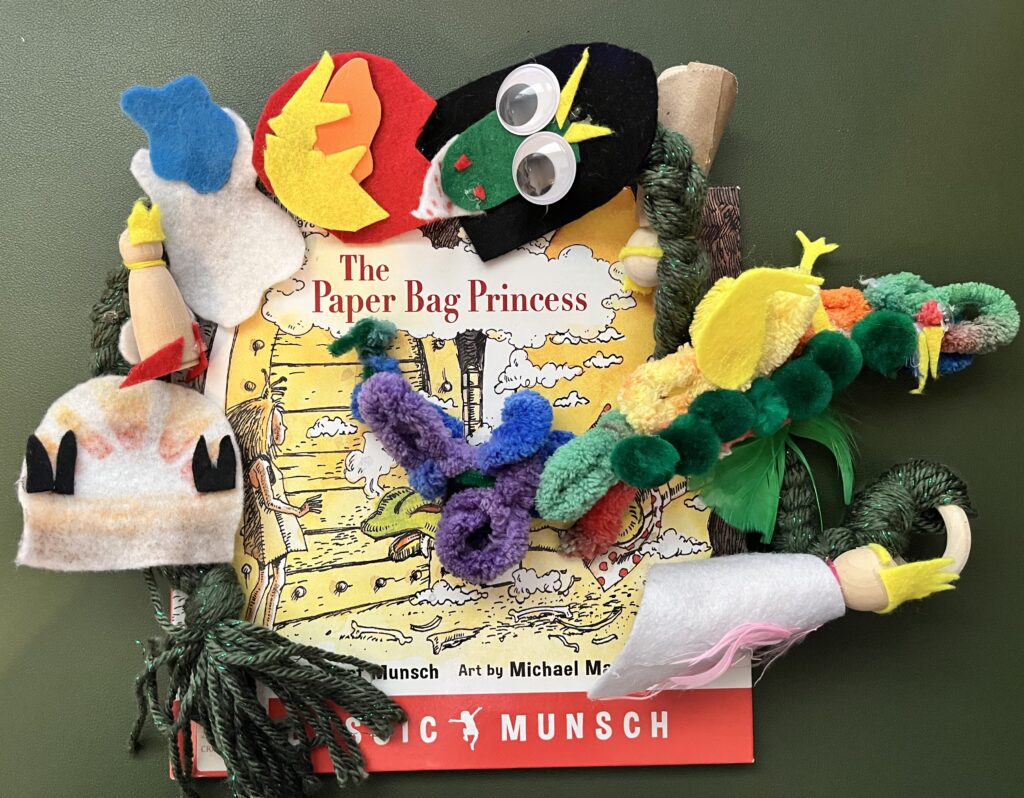
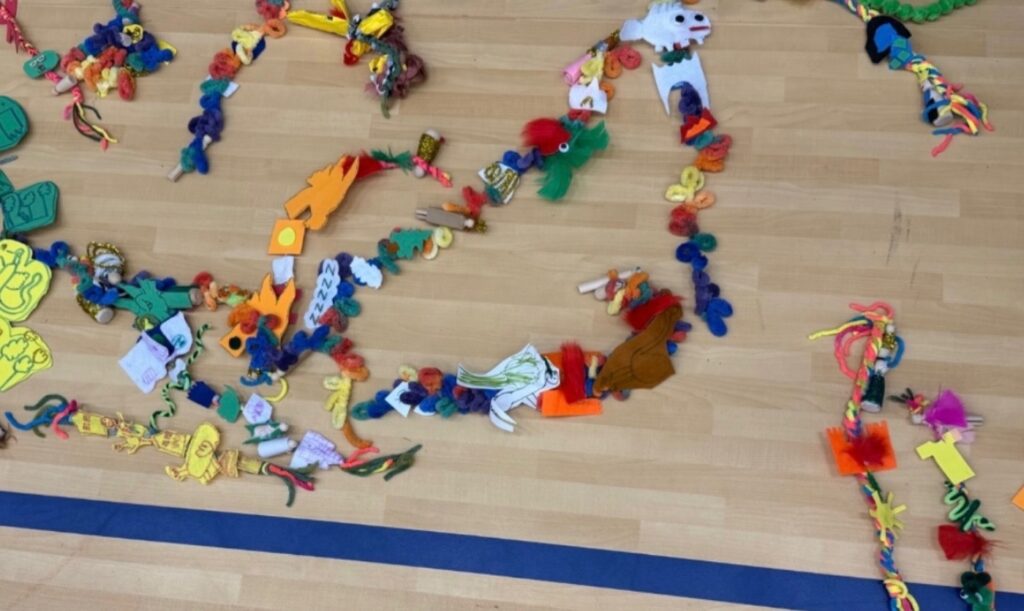
When our teacher education class made Story Vines with a grade 2/3 class this is what we did…
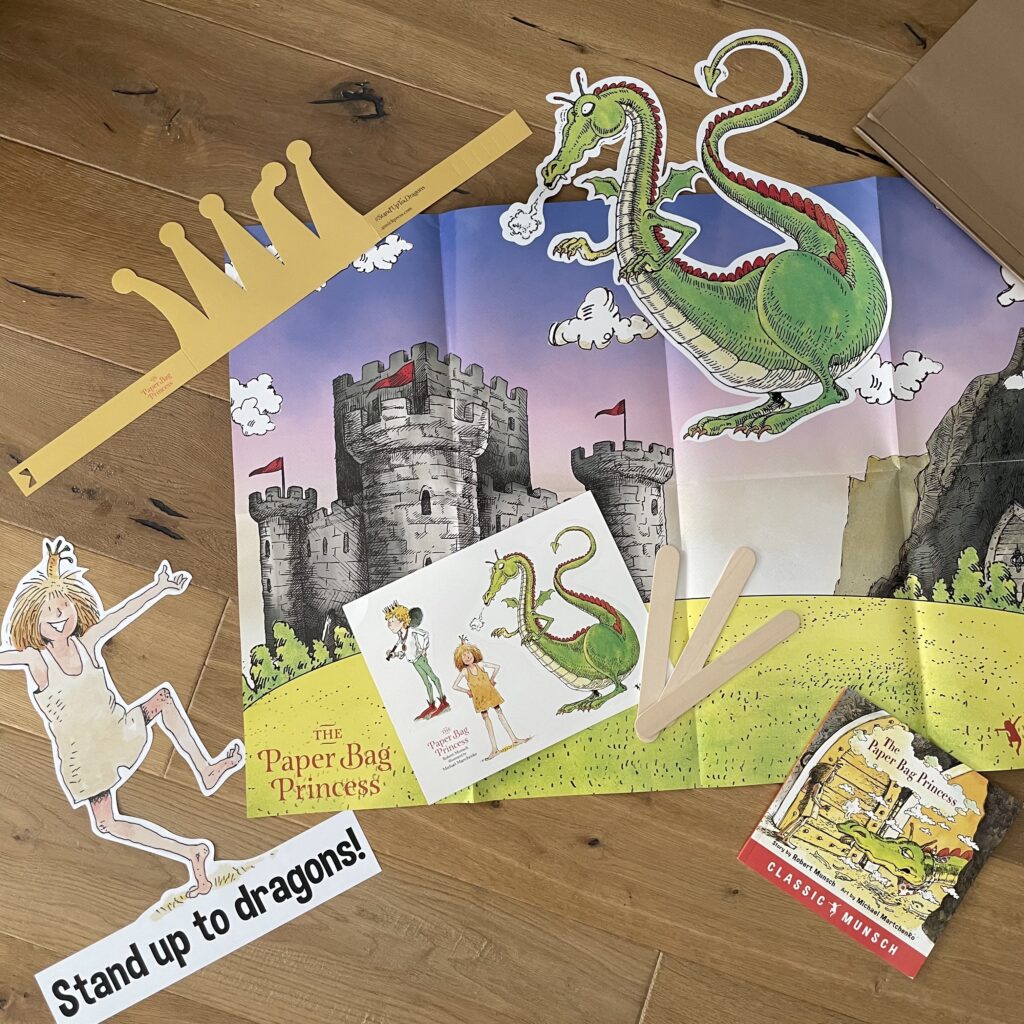
First, choose a book. For this activity we chose The Paper Bag Princess by Robert Munsch.
Second, using yarn, rope, or sturdy string you make a braid that is about arms length (pro tip, the yarn pieces should be from the floor to the person’s outstretched arm). Then gather craft supplies to create the elements of the story vine.
Third, instruct your students to listen to the story and pick important events that they will use to retell the story to someone else. Our grade 2/3 students used their vines to tell the story to kindergarteners.
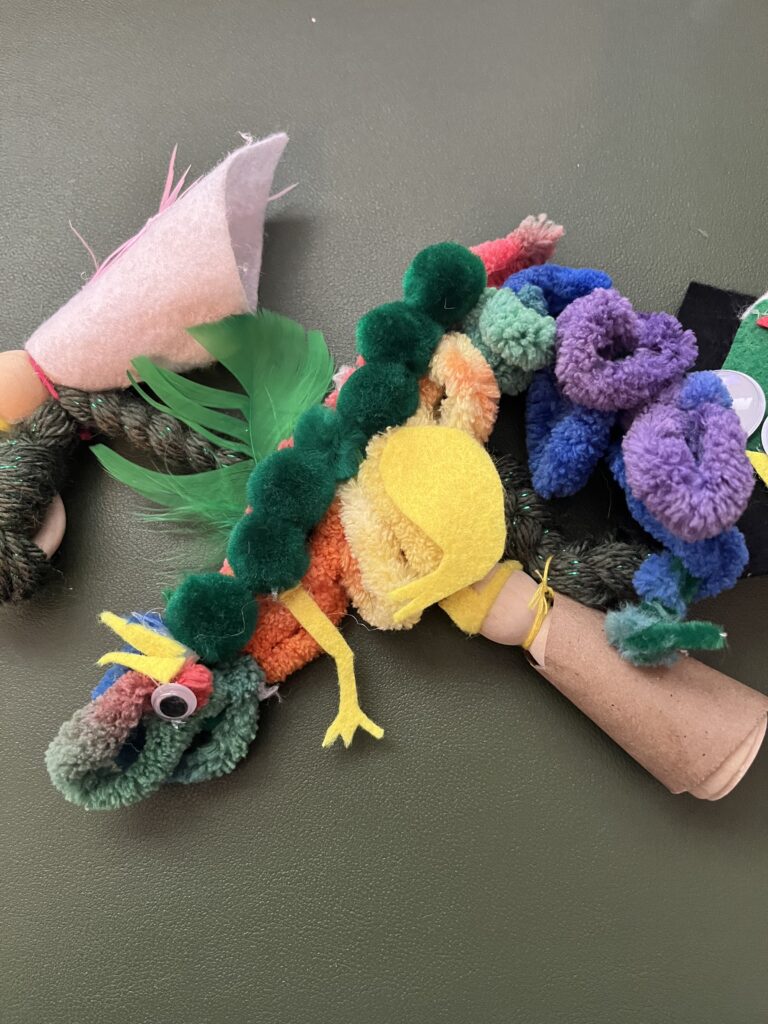
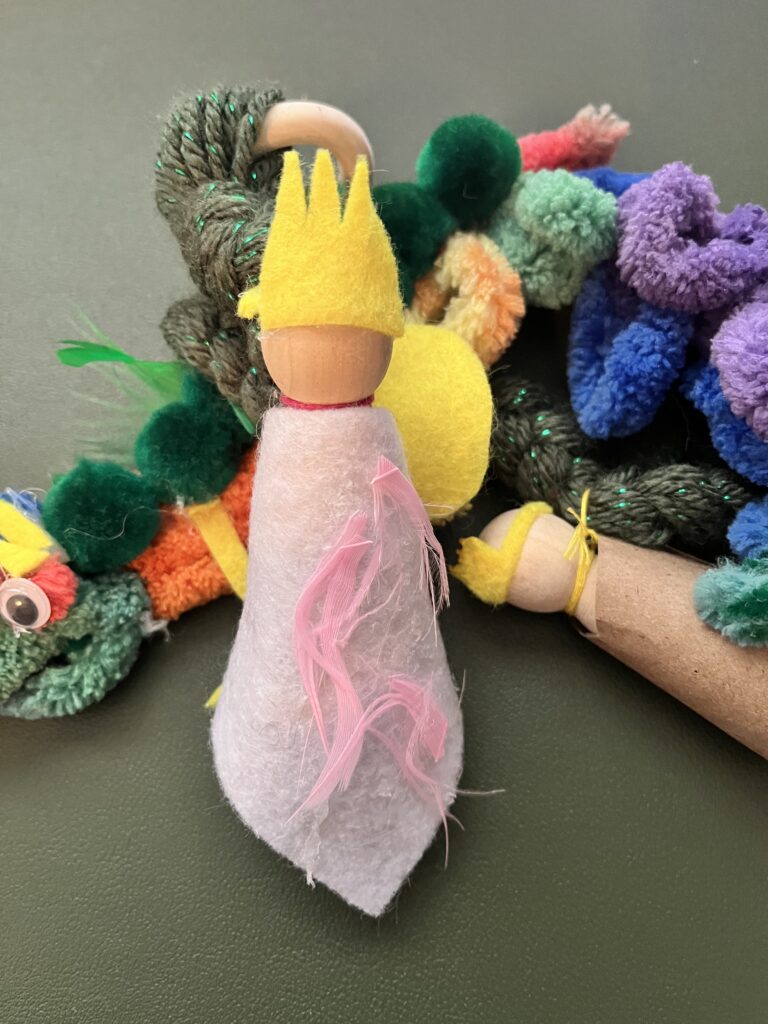
Fourth, students should create the “characters” or “pictures” that will go onto their vines.
Fifth, put it all together and share with a classmate.
Reflection on the Experience
Our students were really engaged with this activity. While some were not really into The Paper Bag Princess, and chose to highlight Prince Ronald’s role in the story more so than Princess Elizabeth, I did hear them ask to do another Vine that was about a preferred book. Allowing students a choice in books is a great way to help them connect with the process.
Considering my own reading journey, I think I would have really benefited from this kind of activity as it challenges the creator to think about the key moments in a story to be able to retell it.
Screenshot
What is really wonderful about this activity is that you can adapt it for nearly all ages and subject areas. As McKay shows in her book, you can use this in a variety of situations with all ages. I love the idea of using this for social studies to create timelines. What about giving it as an option for a cheat sheet for a science test? There are so many different learning styles, and this would be a great way for a student to solidify their learning. This, in combination with a conversation, could be a great summative assessment for many different students.
Screenshot
BC Curriculum Connection
First Peoples Principle of Learning: Learning is embedded in memory, history, and story. The students get to participate in the power of oral story telling, while deepening their ability to listen for important details when hearing a story.
All from the grade 4 English Language Arts BC Curriculum:
Curricular Connections:
Big Ideas: Language and text can be a source of creativity and joy.
Curricular Competencies: Comprehend and Connect: Use a variety of comprehension strategies before, during, and after reading, listening, or viewing to deepen understanding of text Create and Communicate: Use oral storytelling processes
Content: Strategies and Processes: reading strategies, oral language strategies, writing processes Language features, structures, and conventions: features of oral language
References
Bright, R. M. (2021). Sometimes reading is hard: Using decoding, vocabulary, and comprehension strategies to inspire fluent, passionate lifelong readers. Hawker Brownlow Education, 91-93.
FNESC (n.d.). First peoples principles of learning. First Nations Education Steering Committee. https://www.fnesc.ca/first-peoples-principles-of-learning/
McKay, M. (2008). Story vines and readers theatre: Getting started. Portage & Main Press, 37.
When curating a classroom library ensure that BIPOC books fully develop the character and ensure the protagonist is not objectified or used to teach a moral lesson (Harde, 2016).
Indigenous Books
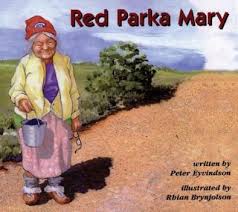
Harde quotes Clare Bradford who states “settler-society texts,” or books written by non-indigenous writers, can be used when authors, like Peter Eyvindson, create books wherein “Indigenous children can find themselves and their community depicted in positive and human ways in a variety of settings, urban, rural, and reserve” (Harde, 2016, p. 5). Eyvindson’s books are: Red Parka Mary, Jen and the Great One, Kookum’s Red Shoes, and Kyle’s Bath.
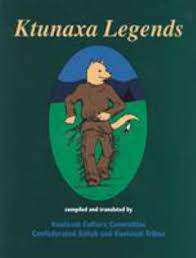
Harde talks a lot about using literature that is grounded in Oral Storytelling. Ktunaxa Legends comes to mind. Using a local resource like this will be a part of my diverse classroom.
Some other books I would like to include in my classroom library are:
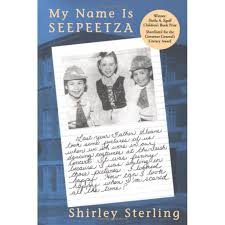
My Name is Seepetza by Shirley Sterling. This novel is about a 6 year old girl going to residential school.
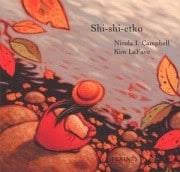
Shi-Shi-etko by Nicola I. Campbell. This story book is about a young girl and her family preparing for her to leave home for residential school.
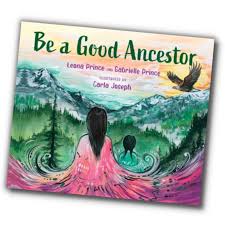
Be a Good Ancestor by Leona Prince and Gabrielle Prince. This picture book encourages the reader to consider how they are connected to the world around them.
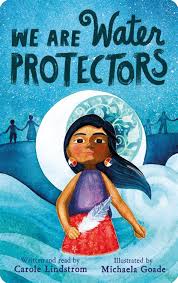
Water Protectors by Carole Lindstrom. This picture book encourages readers to protect the water as it is the source of life.
BIPOC Books
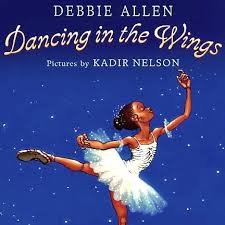
Dancing in the Wings by Debbie Allen. This picture book is about Sassy, a ballerina with big feet. Sassy is embarrassed by her feet, but in the end those feet allow her to do great things.
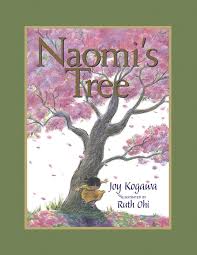
Naomi’s Tree by Joy Kogawa. This picture book is about Naomi, the heroine from Naomi’s Road and Obasan. This is an age appropriate introduction to Japanese Internment.
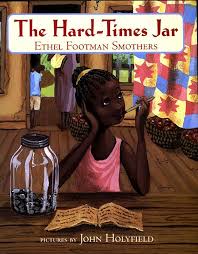
The Hard-Times Jar by Ethel Footman Smothers. This picture book is about distinguishing between want and need and a young girl’s love of reading and writing.
Read Aloud to All Ages
According to Molly Ness, author of Read Alouds for all Learners, students of all ages love to be read to. These books could either stand on their own as a novel study in the case of My Name is Seepetza, or as an anchor book for a larger unit.
BC Curriculum Connections
Using diverse books meets the BC Curricular Competencies for many grades:
– recognize the importance of story in personal, family, and community identity (comprehend and connect-kindergarten) – recognize the role of language in personal, social, and cultural identity (comprehend and connect-grade 4) – recognize the validity of First Peoples oral tradition for a range of purposes (comprehend and connect-grade 7)
Ideas to Encourage a Diverse Classroom
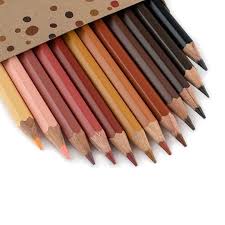
Other ways to increase diversity in my classroom will be to include a variety of options for skin colour. Growing up everyone was coloured peach or light pink. I think assumptions like this create a white-centric world view, and in small communities where there is not a lot of diversity it is even more important for teachers to provide opportunities for our students to broaden their thinking.
References
Harde, R. (2016). Putting first nations texts at the center. Bookbird: A Journal of International Children’s Literature, 54(1), 4–9. https://doi.org/10.1353/bkb.2016.0019
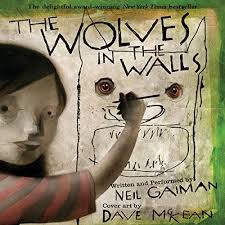
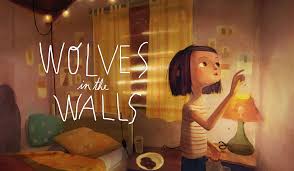
I embarked on my first experience with Virtual Reality (VR) this week! I had heard of it of course, but I had never used one before. Man was it ever a blast!! I am so glad I got to try it first before bringing it into a classroom setting. We started off in the local Design Lab. Many Teacher Candidates got to try out the app that we would be using with the students the following day. It was wonderful. I actually enjoyed the VR so much more than I thought I would.
Read Aloud in Different Locations
The following day we all met and divided the jobs to be done with the students. First the students would all listen to the book read aloud. Another really cool thing we did was to split the long story up into 5 sections. Each section was read by a different person. The small groups of students cycled through each of the 5 sections, which were placed around the school. This kept the students engaged because they were never sitting for too long. I also really enjoyed reading the same section repeatedly because I got more into the voices and the characters each time I read it. The last group definitely got the best reading of them all. One thing I really noticed is that I read slower and took my time with each word to really get the most of it.
English Language Arts: booklet work
Following the reading, the students could either work on a booklet that encouraged them to think about the story they had read, or have a chance to try out the story in the VR app. We did not have enough VR sets for each student so many had to wait for their turn.
BC Curriculum Connections
When considering the BC Curriculum and where an activity like this fits in I think immediately of English Language Arts (ELA). Of course.
Grade 6: ELA
Big Idea: Exploring and sharing multiple perspectives extends our thinking.
Curricular Competency: Recognize and appreciate the role of story, narrative, and oral tradition in expressing First Peoples perspectives, values, beliefs, and points of view.
Content: Language features, structures, and conventions.
First Peoples Principles of Learning: Learning is embedded in memory, history, and story. The students got to experience a story in a different way.
However, ELA is not the only application for a story like this.
In grade 5 math you could use the VR to estimate the area and perimeter of different rooms in the house. Additionally you could establish a timeline of events that are happening throughout the story.
In grade 5 science you could compare the muscular skeletal system of wolves to humans. There may even be some bones to bring into class of other animals found in this region. You could compare similarities and differences.
There are so many applications for using VR in classrooms. For example, the following day the VR headsets were used in a grade 8 science class to teach cell theory and types of cells. There are so many great ideas!
Movement Breaks for the WIN!
I had such a wonderful time reading a section of the book to all the groups of students as they moved through the different sections of the book and the school. I think this was a wonderful way to read the book as it built in movement breaks to an otherwise very long book. I also loved reading the same section over and over again because I got better at reading it. I’m sure there is an application there for doing Readers Theatre.
Here is another great idea I want to save for the future!
First peoples principles of learning. First Nations Education Steering Committee FNESC. (n.d.-a). https://www.fnesc.ca/first-peoples-principles-of-learning/