by Neil Gaiman
Virtual Reality for Literacy
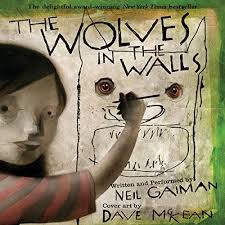
I embarked on my first experience with Virtual Reality (VR) this week! I had heard of it of course, but I had never used one before. Man was it ever a blast!! I am so glad I got to try it first before bringing it into a classroom setting. We started off in the local Design Lab. Many Teacher Candidates got to try out the app that we would be using with the students the following day. It was wonderful. I actually enjoyed the VR so much more than I thought I would.
Read Aloud in Different Locations
The following day we all met and divided the jobs to be done with the students. First the students would all listen to the book read aloud. Another really cool thing we did was to split the long story up into 5 sections. Each section was read by a different person. The small groups of students cycled through each of the 5 sections, which were placed around the school. This kept the students engaged because they were never sitting for too long. I also really enjoyed reading the same section repeatedly because I got more into the voices and the characters each time I read it. The last group definitely got the best reading of them all. One thing I really noticed is that I read slower and took my time with each word to really get the most of it.

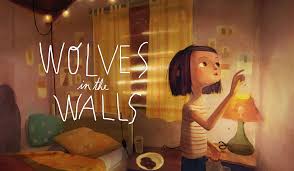
English Language Arts: booklet work
Following the reading, the students could either work on a booklet that encouraged them to think about the story they had read, or have a chance to try out the story in the VR app. We did not have enough VR sets for each student so many had to wait for their turn.
BC Curriculum Connections
When considering the BC Curriculum and where an activity like this fits in I think immediately of English Language Arts (ELA). Of course.
Grade 6: ELA

Big Idea: Exploring and sharing multiple perspectives extends our thinking.
Curricular Competency: Recognize and appreciate the role of story, narrative, and oral tradition in expressing First Peoples perspectives, values, beliefs, and points of view.
Content: Language features, structures, and conventions.
First Peoples Principles of Learning: Learning is embedded in memory, history, and story. The students got to experience a story in a different way.
However, ELA is not the only application for a story like this.
In grade 5 math you could use the VR to estimate the area and perimeter of different rooms in the house. Additionally you could establish a timeline of events that are happening throughout the story.
In grade 5 science you could compare the muscular skeletal system of wolves to humans. There may even be some bones to bring into class of other animals found in this region. You could compare similarities and differences.
There are so many applications for using VR in classrooms. For example, the following day the VR headsets were used in a grade 8 science class to teach cell theory and types of cells. There are so many great ideas!
Movement Breaks for the WIN!
I had such a wonderful time reading a section of the book to all the groups of students as they moved through the different sections of the book and the school. I think this was a wonderful way to read the book as it built in movement breaks to an otherwise very long book. I also loved reading the same section over and over again because I got better at reading it. I’m sure there is an application there for doing Readers Theatre.
Here is another great idea I want to save for the future!
References
Curriculum. (n.d.-a). https://curriculum.gov.bc.ca/
First peoples principles of learning. First Nations Education Steering Committee FNESC. (n.d.-a). https://www.fnesc.ca/first-peoples-principles-of-learning/
Leave a Reply
You must be logged in to post a comment.