Magic E Literacy Stations
The “Magic e” or the “Bossy e” can be a struggle for many readers. I created a literacy station focusing on this topic.
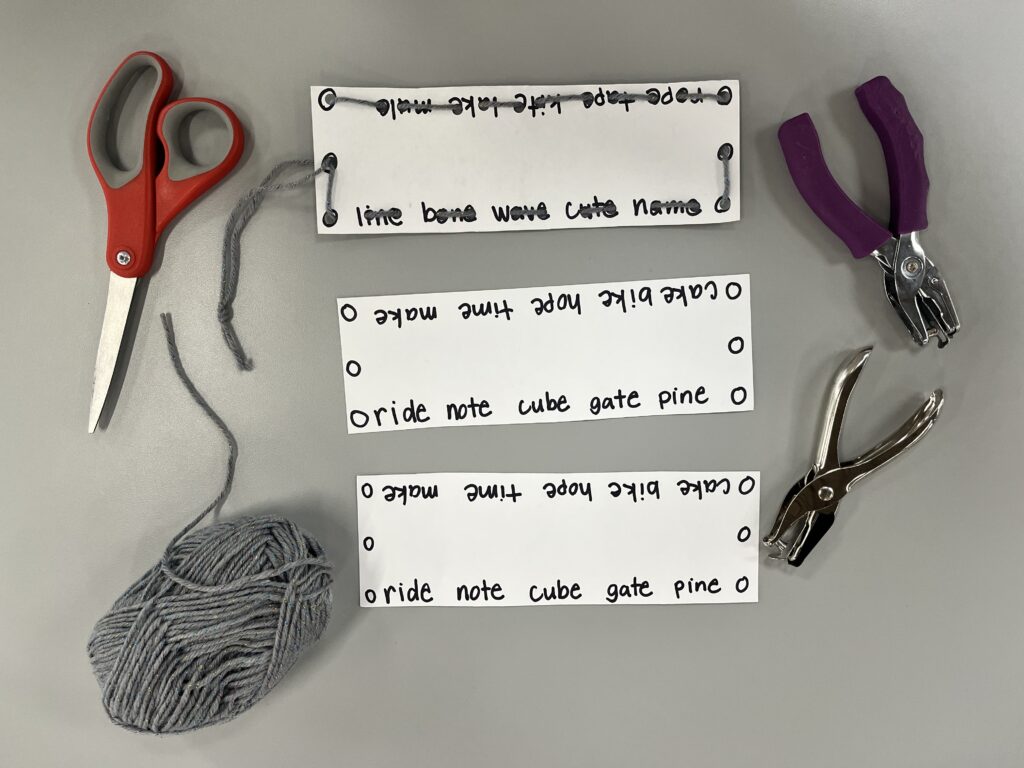
I cut cardstock into four sections. In each section I wrote ten “magic e” words to create a border. Each student had to use an individual hole-punch to punch out the “magic e.”
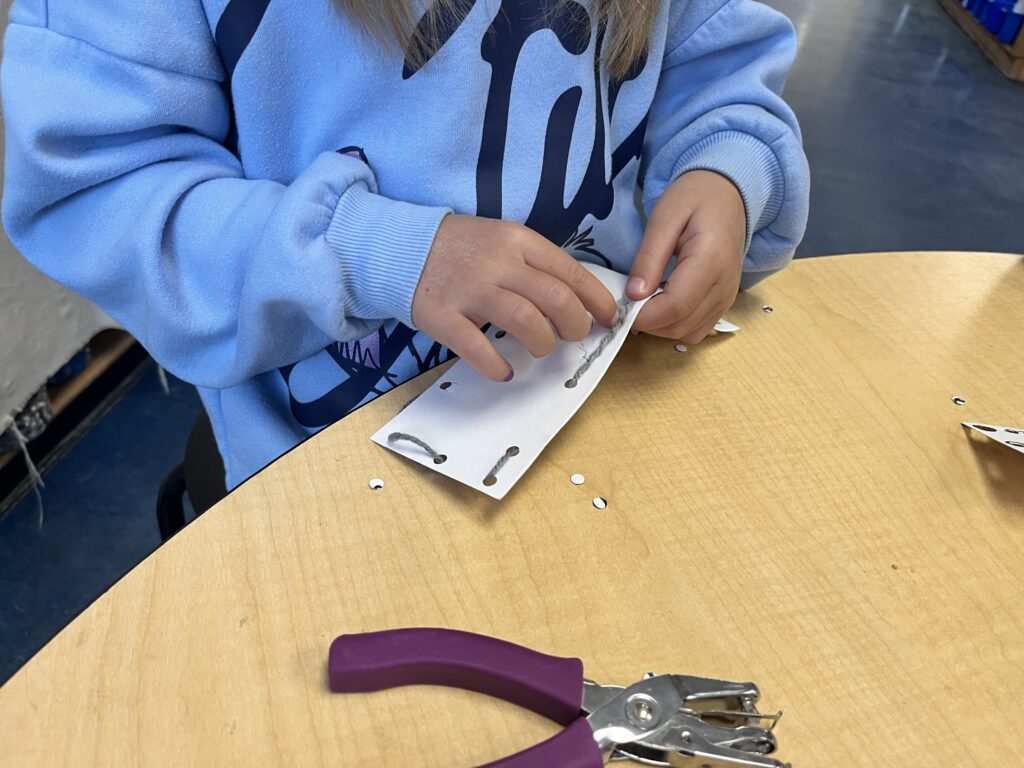
Together as a group we read each word first, punched the “magic e,” then read the word that was left. Some words made sense like “note” became “not,” while others did not make sense like “gate” turned into “gat.” In the future, I would choose words that all made different words when the “e” was taken off.
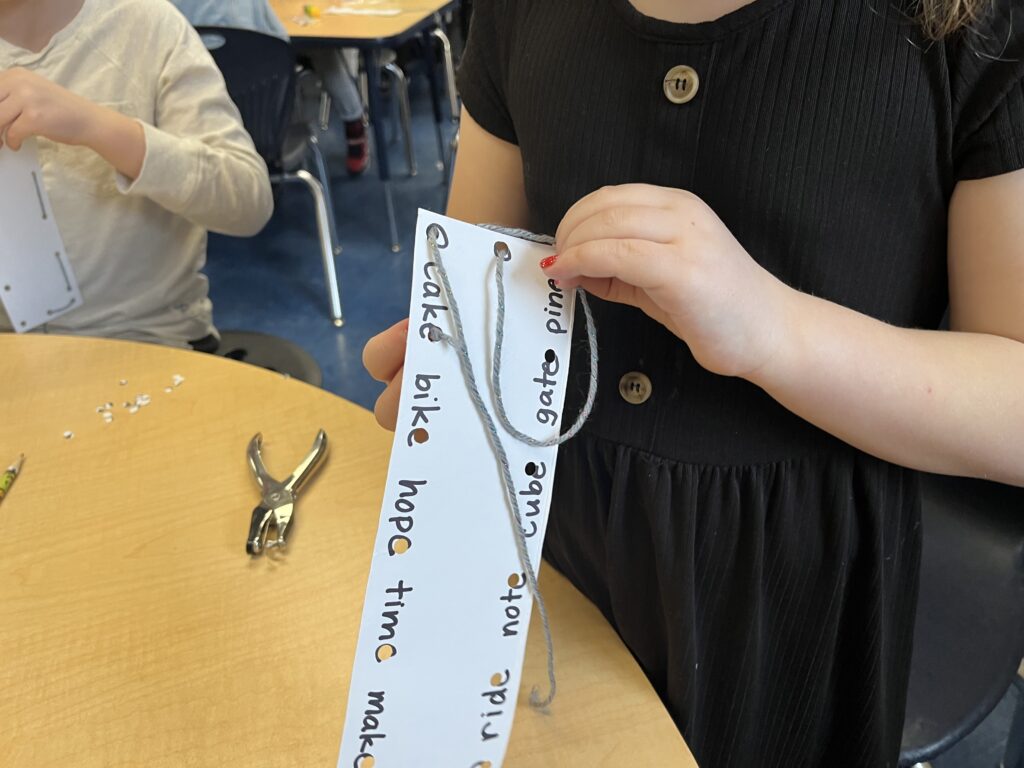
Many students found using the hole-punch hard at the beginning, but once they got the hang of it they really loved it.
As a final piece the students thread a string of yarn through all of their punched holes to create a bookmark. Most students did not have time for the yarn part of the activity, but a few did. They took the yarn to finish at home.
All in all I will use this centre again. I will need to pre-teach how to use the hole-punch. Specifically, where the paper goes, how to line the metal punch up with the spot you need to put a hole in, and how to use both hands. However, I think the skill of using a hole-punch, gaining hand strength, and working on fine motor skills by threading the yarn through the holes make this a worthwhile activity. Plus many students said it was FUN! Always a win!!
Materials Needed:
Cardstock (1-2 quarters per student)
Individual hole-punch per student in the group
Yarn
Scissors
Sharpie
BC Curriculum Connections
Big Idea: Playing with language helps us discover how language works.
Curricular Competency: Use developmentally appropriate reading, listening, and viewing strategies to make meaning
Content: Strategies and processes: reading strategies
Core Competency: Critical Thinking and Reflective Thinking
Profile 2: I can use evidence to make simple judgments.
Profile 4: I can gather and combine new evidence with what I already know to develop reasoned conclusions, judgments, or plans.
First Peoples Principles of Learning: Learning is holistic, reflexive, reflective, experiential, and relational (focused on connectedness, on reciprocal relationships, and a sense of place). This literacy station used experience and a tactile approach to learn this concept.
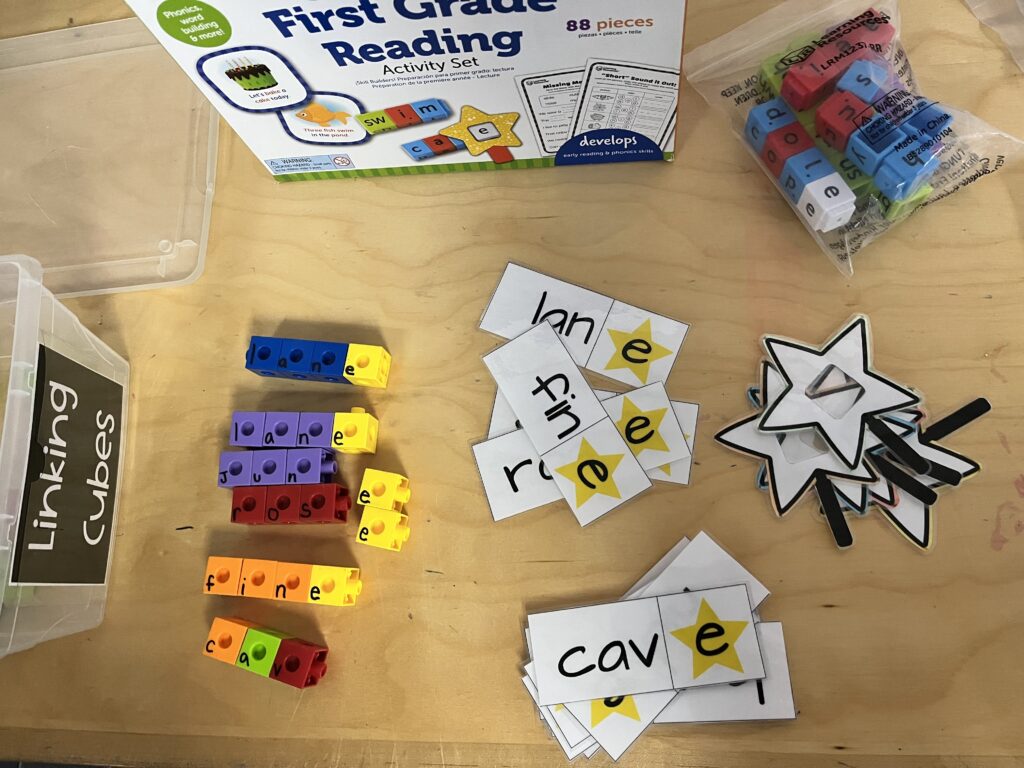
Another literacy station that was used in the class used linking cubes with the letters on each block. Students had to put the word together on the corresponding word.
Boosting Reading Comprehension
Other ways to boost reading comprehension beyond literacy stations are to teach the following:
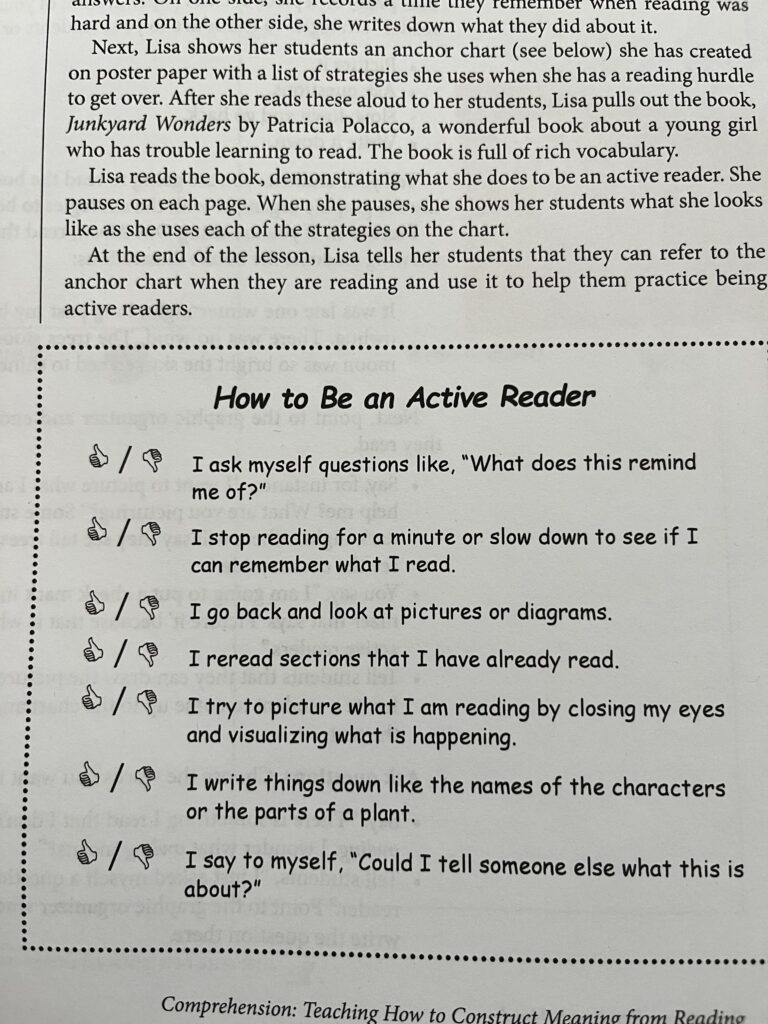
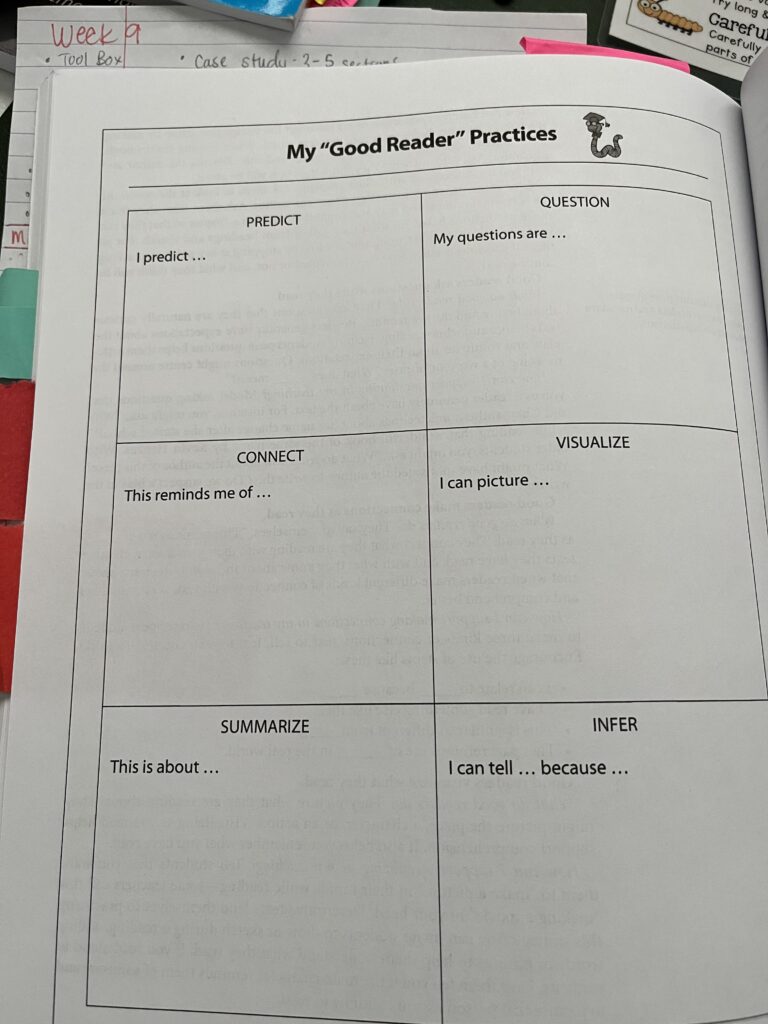
1. “Engage students in self-aware, active reading
2. Teach the practices of good readers
3. Teach text structures
4. Seek out mentor texts
5. Organize book clubs” (Bright, 2021, p.34)
References
Bright, R. M. (2021). Sometimes reading is hard: Using decoding, vocabulary, and comprehension strategies to inspire fluent, passionate lifelong readers. Hawker Brownlow Education, 134-147.
Curriculum. (n.d.-a). https://curriculum.gov.bc.ca/
First peoples principles of learning. First Nations Education Steering Committee FNESC. (n.d.-a). https://www.fnesc.ca/first-peoples-principles-of-learning/