We have spent a lot of time talking about inquiry based learning in the UVic teacher education program. Student engagement is really high which means they are learning a lot. I also love that it gives students the opportunity to try something out, have it fail, and try another way. I see how inquiry based learning is applicable across the curriculum, not just in science and math. For example I created an activity for an English Language Arts lesson that uses art and drama to engage with this Ktunaxa Legend.
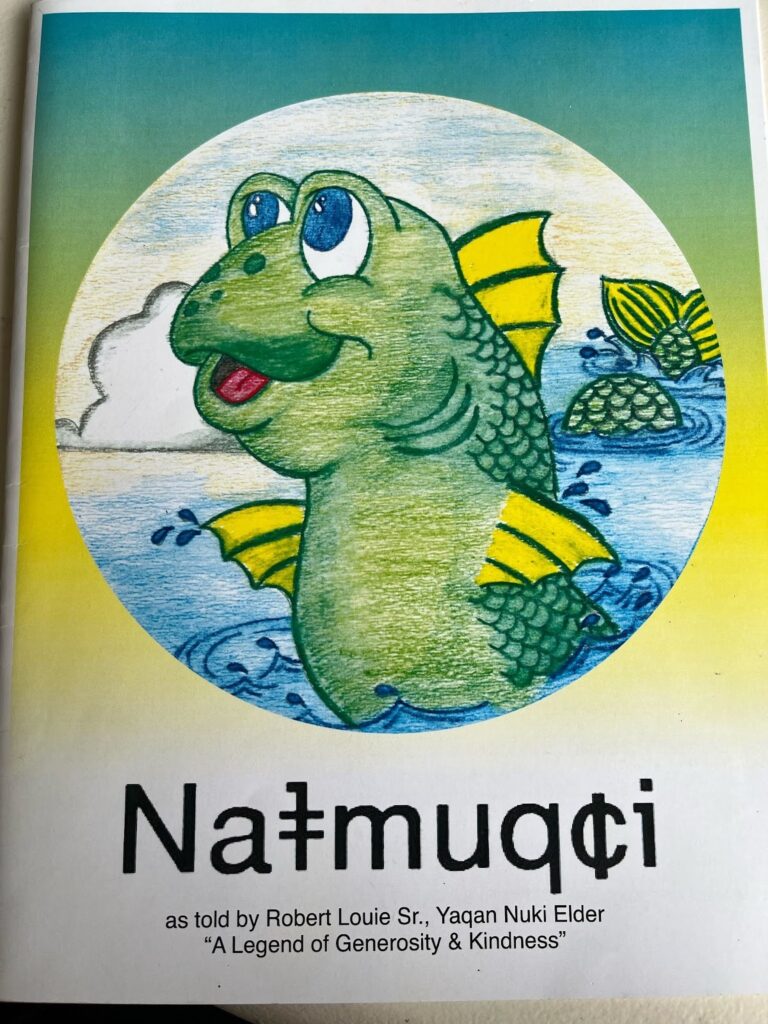
Nalmuqci as told by Robert Louie Sr.
Book Summary: Nalmuqci is a kind water creature who is given a “special” task, to prepare the land for the Ktunaxa people. A group of animals, Muskrat and the Woodpecker family, are jealous of Nalmuqci. Skinkuc, the coyote, convinces the gang of animals to chase Nalmuqci. The book is about the journey that follows.
Curricular Content/Competencies:
ELA:Explore oral storytelling processes as a way to understand the relationship between reading, writing, and oral language.
Social Studies: Explain the significance of personal or local events, objects, people, or places and learn about the Ktunaxa people and some of the important landmarks that are part of their traditions.
Art: Explore artistic expressions of themselves and community through creative processes of creating art collectively.
Book Activity:
Story drama with a class made map on the ground. Clear the desks to one side of the classroom. Lay down three pieces of white paper from the giant rolls, each piece should be about 3 meters long. Spend the morning looking at the map in the back of the book and allowing the students to recreate it on the floor map. Then, in the afternoon the students will be split into 3 groups: one group is Nalmuci, one group is the woodpecker gang, and one group is Skinkuc (coyote). Each group will decide on three actions that describe what they will do when the drum sounds. Now form groups of three students (one from each animal group). Move around the map and at the sound of the drum do one of the actions.
For a science application you try the following activity:
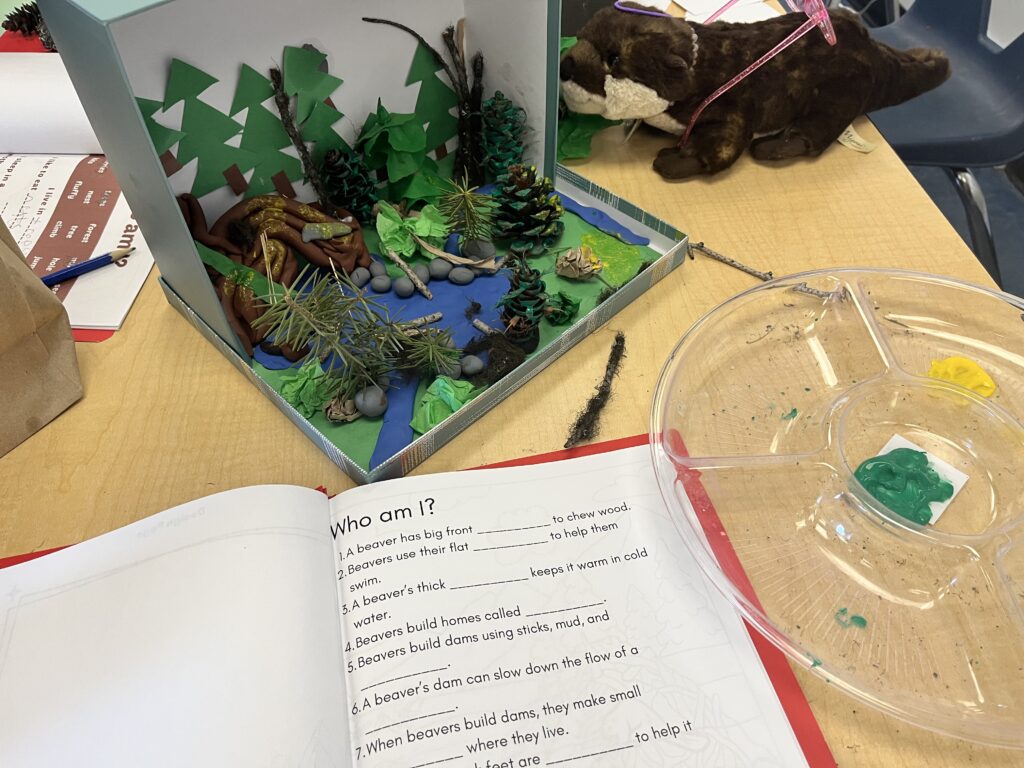
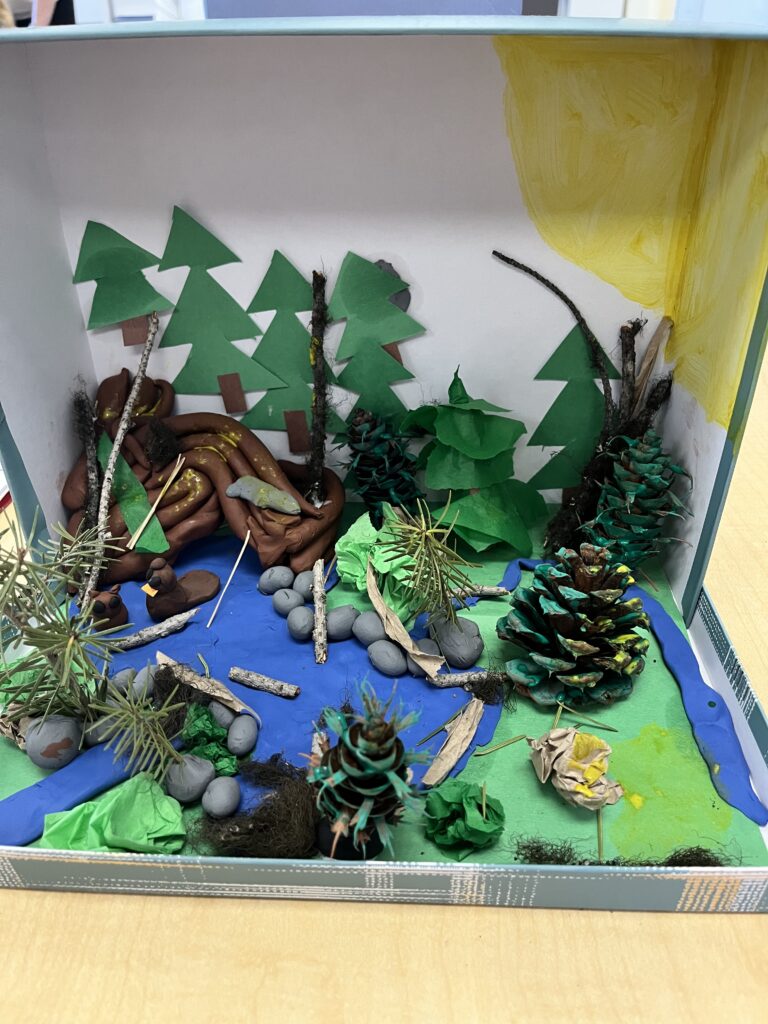
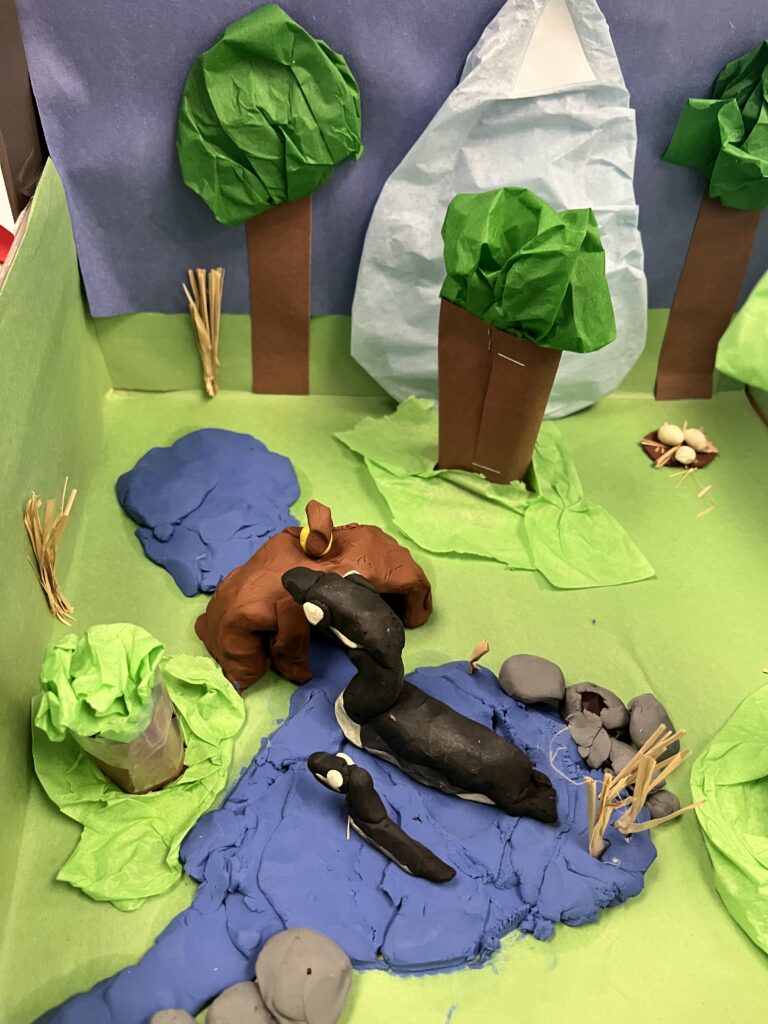
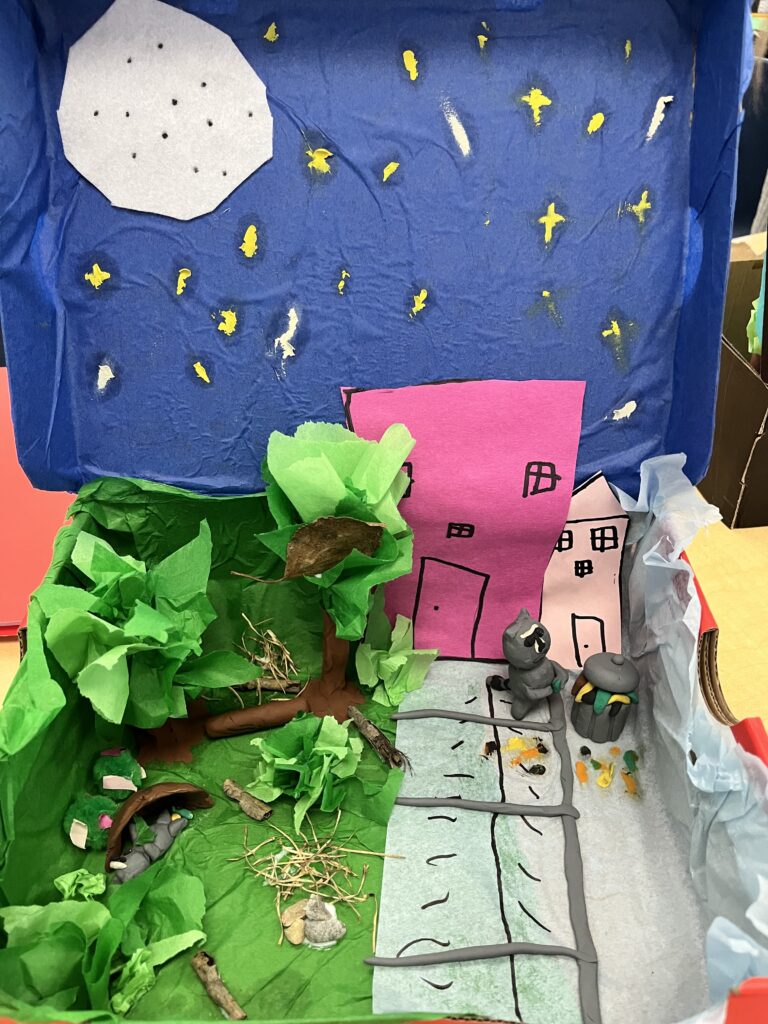
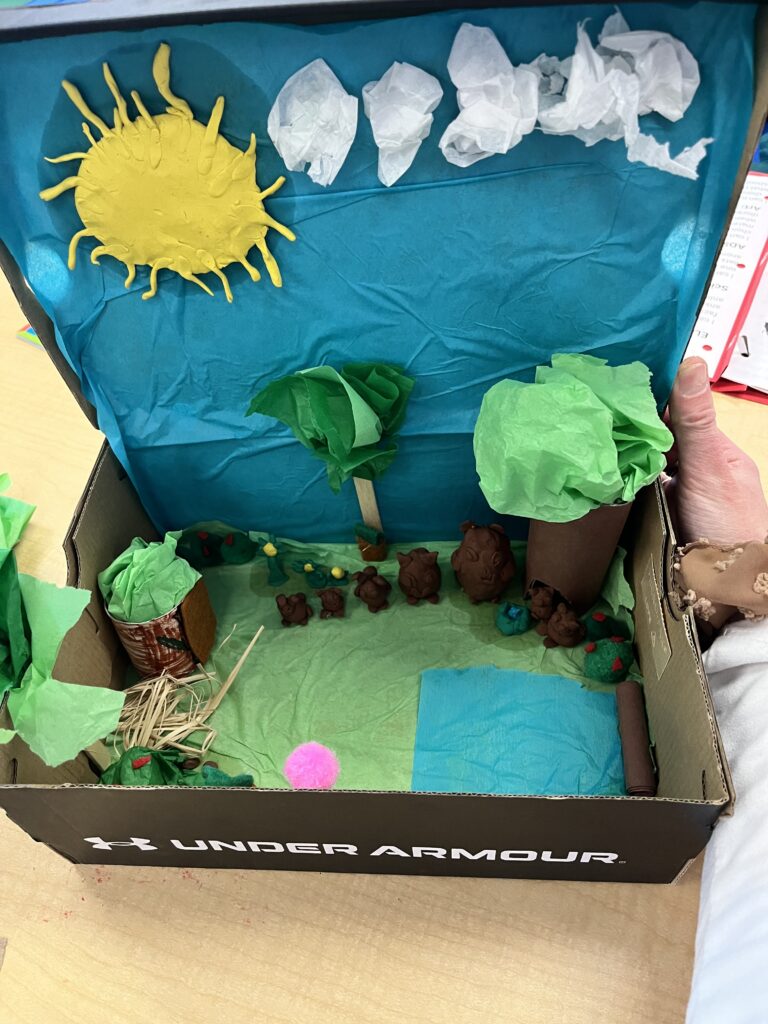
In a grade 2 science class we worked with students who had chosen a local animal. Our students were tasked with learning the animal name in Ktunaxa, creating a diorama of the animal’s habitat, and with completing a workbook including a self-assessment. This was a great way to do hands-on learning! My student chose the beaver and wanted to put the beaver lodge on the side of the diorama with no pond. We were able to talk through how the beavers would get into their homes if there was no door. We then looked back at the book to remind ourselves that the beavers needed to swim underwater to enter the lodge. You guessed it, we moved the lodge to sit on top of the pond instead. It was a great “aha” moment for my student, and for me.
I still wonder how to create these meaningful learning opportunities for my students while covering all of the required content. Inquiry based projects can take up a lot of time. I wonder if there is still a place for conventional worksheets or if it is better to create an environment where students to make a few lasting connections rather than learning all of the content items?