Student Description

Meet Eli. Eli is in grade 2 and loves Sonic the Hedgehog and playing Fortnite and Minecraft. He loves to play with his “really big” dog. Eli has an older sister, and they do not get along very well. That said, he hopes that they might get along better when they got older. Eli is quiet and seems like tough nut to crack. He loves physical education and playing outside, but does not like reading, writing, and math. He is really looking forward to Spring Break.
Acadience Progress Monitoring and
Oral Reading Fluency
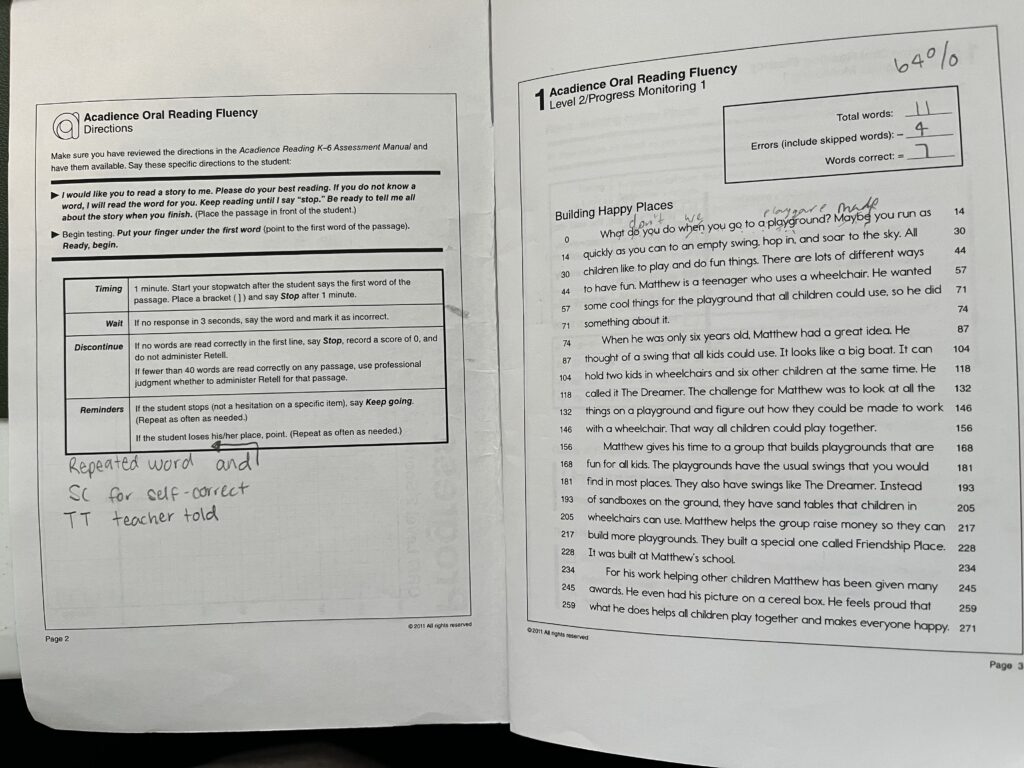
Analysis of Results: I had the opportunity to do the Acadience Progress Monitoring reading assessment with Eli. Acadience uses the Oral Reading Fluency (ORF) reading levels. Eli, being in grade 2, read from the Level 2 booklet. Acadience ORF is in line with the Science of Reading. Acadience is different from other reading assessments because there are no “clues” on the page like with picture books. Acadience is a universal screening tool and it uses benchmarks that are predictive of future reading outcomes (Stollar, 2024).
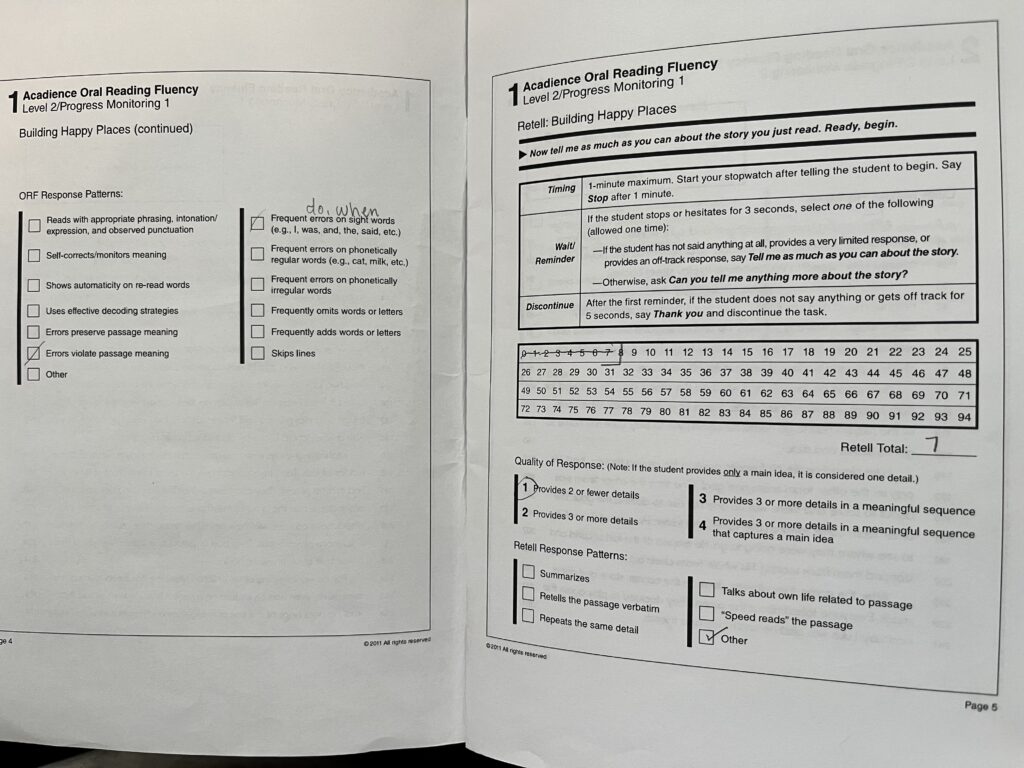
I read with Eli twice; first in January and second in February. In January I had Eli read the first 3 passages from the level 2 booklet. In February Eli read the following 3 stories (4-6). Below are the results of both assessments.

I am new to this testing, and as a result I made some errors in the “script” that I was suppose to use, additionally I also did not correct Eli when he got words wrong which likely accounts for some of Eli’s overall comprehension.
According to the benchmark this level places Eli below the grade 1 benchmark.
Eli adds or changes letters which violates the meaning of the word. For example “pen” became “plan.” Do became “don’t.” During the retell, Eli tended to make up his own version of the story. Part of this is attributed to my failure to correct his mistakes. For example when retelling about a Pen Pal, Eli told me about a baseball game.

I corrected my errors from the first testing.
Overall, Eli’s results decreased from the first assessment. This could be the result of my becoming more proficient at the testing process.
Eli’s ability to read sight words improved from the first assessment. However, Eli’s response pattern continued to contain errors that violate the meaning of the text, he makes frequent errors on phonetically regular and irregular words, and finally I noticed that he now omits words or letters which makes comprehension difficult.
The retelling response pattern remains the same in that Eli creates a different meaning based on a word he recognizes. For example in the story “A Day for Trees” Eli inferred the meaning of the text to be about a river after the phrase “rays of sun stream in through the trees.”
BC Curriculum
Curriculum Expectations:
For Grade 2, grade level means students should be able to: “read with comprehension, phrasing, and attention to punctuation,” “to use personal stories and experiences,” make predictions, inferences, connections, and ask questions (BC Curriculum, 2016).
Some of the Connect and Comprehend Curricular Competencies for grade 2 are: to read at grade level; to use sources of information and prior knowledge to make meaning; to use developmentally appropriate reading, listening, and viewing strategies to make meaning.
Eli is not yet reading at grade level. It does not appear that he is using information and prior knowledge to make meaning, nor is he using strategies to make meaning. Yet.
Based on Eli’s ORF results he is scoring below the grade 1 benchmark. The yellow highlighted area is the benchmark for the middle of grade 1. Eli’s mid-grade 2 percentage is 44% with 8 words correct.
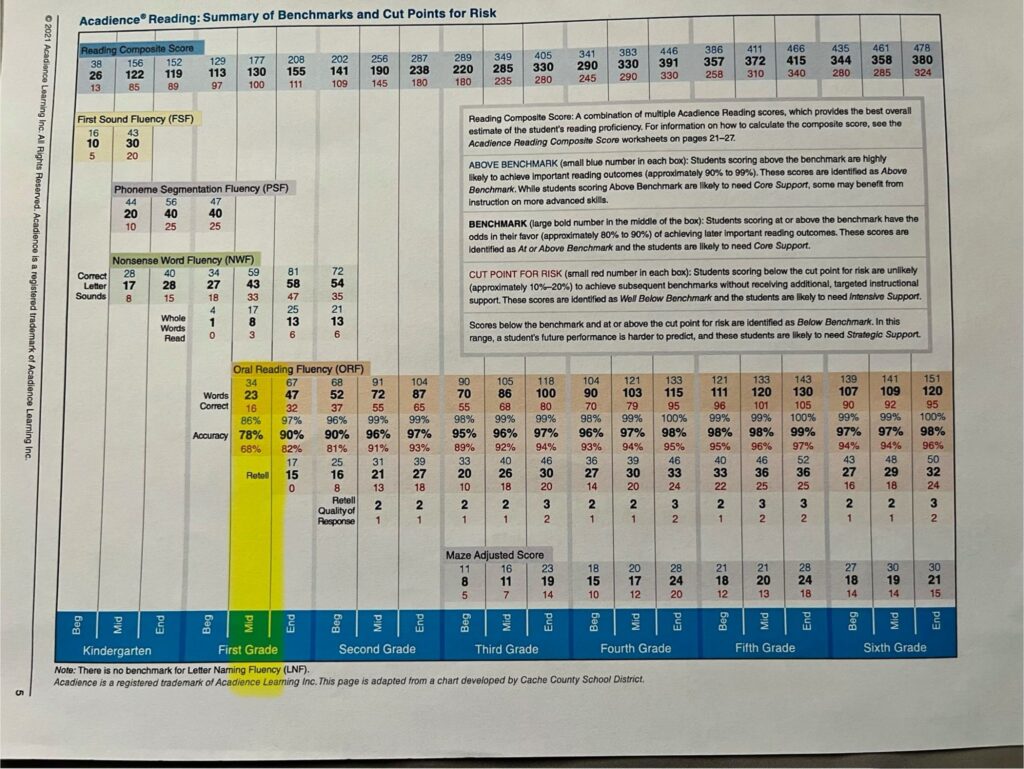
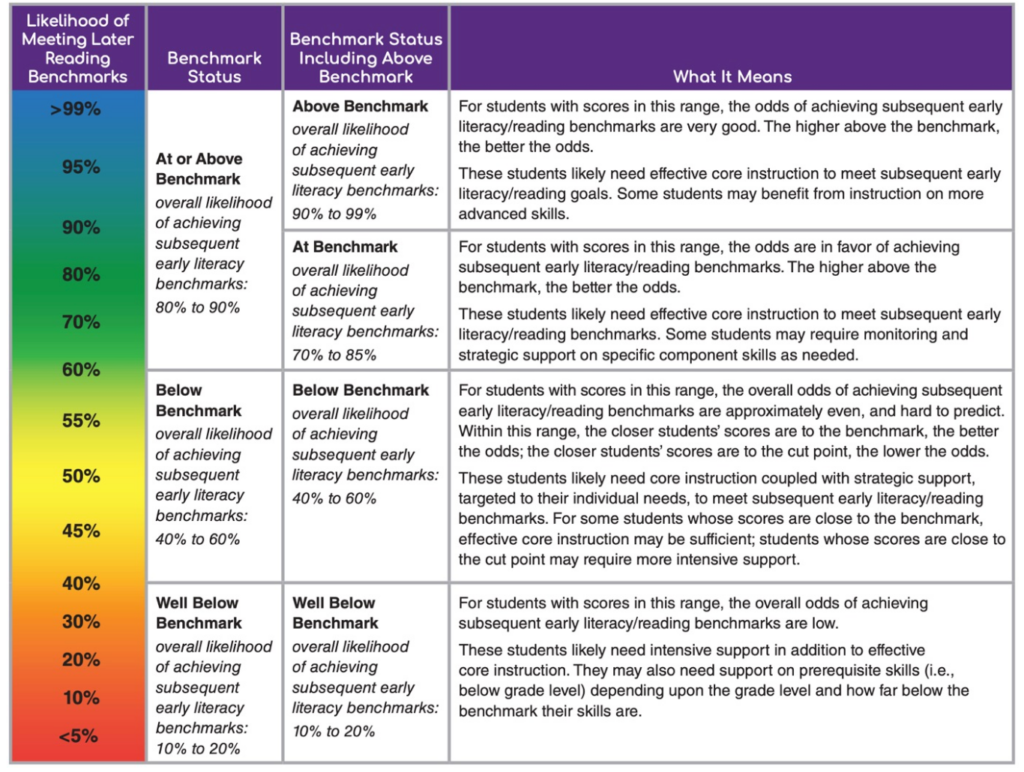
According to the chart below this score puts Eli in the “Well Below” category, and as a result intervention is needed (Acadience).
Sample Report Card
Reporting Communication:
English Language Arts: Developing
Eli you are an energetic and kind child. You can recognize some sight words (in, the, are, to, from), and with hard work you will be able to read at a grade 2 level. With support, you can make some connections to the text from your own experiences, and retell some details of a story. Eli you have a lot of interests; so, we will be focusing on finding books you like. Eli, the goals we made together are to do 2 minute chunks of independent reading 10 times a day. At home, you can read for 5-10 minutes each day to keep progressing! You are working really hard, and it will pay off!
Weekly Classroom Literacy Set-up
Directly below is a potential daily plan, and below that is an example of a yearly plan to focus on individual skills:


Book Recommendations
Eli is really interested in Minecraft, Fortnite, and Sonic the Hedgehog. One of the best ways to get buy-in is to find books that he is interested in. The best reading intervention is a book the child wants to read (Harvey & Ward, 2017, 145). Based on this principle I recommend the following books.
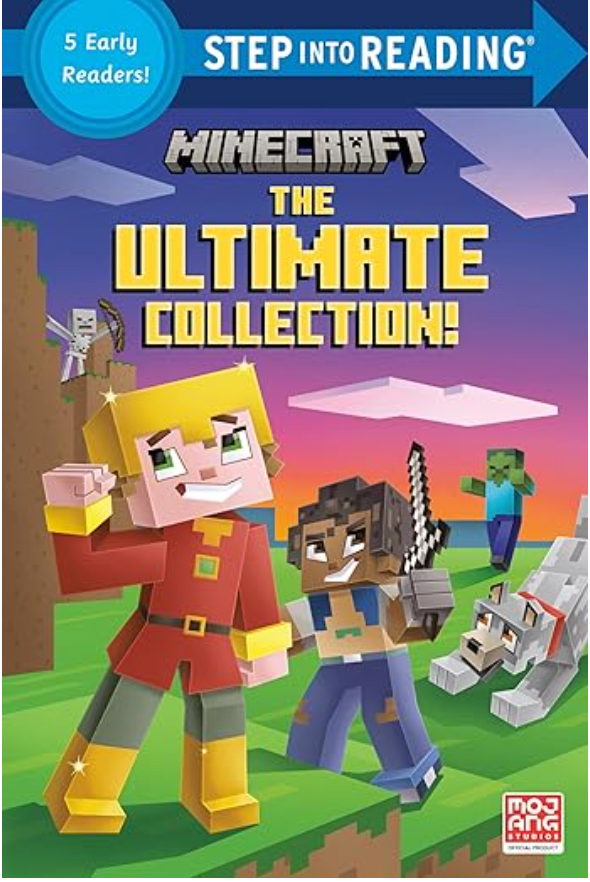

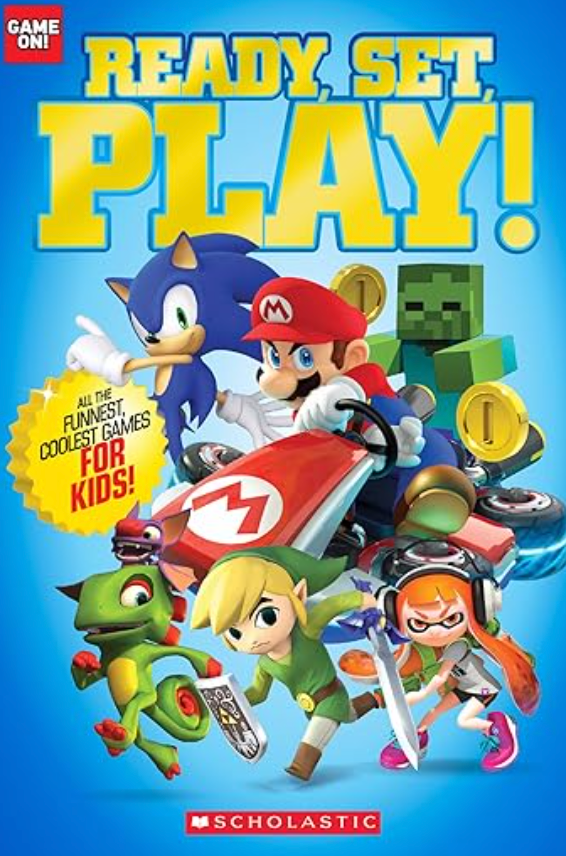
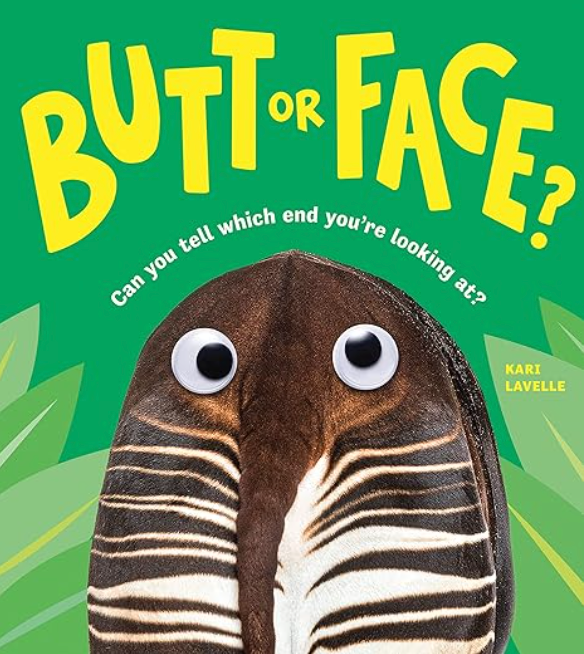

Some of these books are at Eli’s level, but some of them are not. However, all of them are books that will motivate him to open the book and begin to engage with the pictures. By working on the skills he needs outside of independent reading he will gain the skills to read these high interest books. The best book for Eli may be one written specifically for him. He is not the kind of kiddo who will enjoy the books that are at his reading level, so finding a book that he can read and like is a big challenge.
The three video game books provide small sections of reading for Eli to choose to read or not read. The main reason I choose these books for him is because I knew I could get “buy-in” from him. The first step for getting him to read is to have a book he is interested in. While he may not be able to read the entire book or even the entire page, there will be familiar words found through out the books from characters or game levels. This will give him a chance to see how these familiar words are spelled.
Minecraft: The Ultimate Collection also provides an opportunity for buy-in, but it also has fewer words per page which will give Eli a better chance of reading more of the words. This collection is still above Eli’s reading level, but it will be ‘cool’ which is half of the battle.
Finally, I chose Butt or Face? because it is hilarious. As I am sure you have noticed, it is all about “buy-in” when I choose books for Eli. The picture to word ratio in this book is really manageable. Plus, the phrase “Butt or Face” repeats throughout, therefore, he will have a base to start from. He is pretty guarded and I know that if I am to succeed in getting books onto his “Up-Next” list they are going to have to be funny or cool.
Classroom Supports & Small Group Instruction
Soft Start (whole-class with individual check-in): Building meaningful relationships are key to success. “No meaningful learning occurs without meaningful relationships” (Bright, 2021, p. 19). Spending a small amount of time with each student who really needs an extra bit of attention has the potential to allow me to ask more of them academically. While this is not specifically a literacy activity, it directly supports all learning.
10-15 minutes
Morning Meeting (whole-class): According to Dr. Lori Friessen, routines are an important way to create a safe learning environment for our students. Additionally, phonemic awareness is supported through songs with rhyming. Our morning meeting will also include a “word of the day” to increase students’ vocabulary (Bright, 2021, p. 95).
15-20 minutes
UFLI (whole-class) followed by Literacy Stations (small-group) or a Literacy Activity (small-group): Some days we will focus all on UFLI activities that come with the program such as reading passages. Literacy stations would change throughout the year based on what skill we are working on. Literacy Stations that focus on phonics, decoding, vocabulary, and comprehension will be a specific way to support Eli, and all the students. What is good for one is good for all. Literacy stations also provide an opportunity for the teacher to check in with one small group of students at a time. This also provides Eli with the opportunity for individual support when he is working with the teacher in the small group.
25-30 minutes
Some literacy activities ideas that I will use are:
- Guided reading: group the students together according to their approximate reading level, look over the cover of the book together while looking for clues, look at each page to make some predictions about what the story may be about from the pictures, teacher should review unfamiliar vocabulary, read book all together, then take turns reading pages (Bright, 2021, p.40).
- Shared reading: Use the “Five Days of Shared Book Reading” which is the brainchild of Jill Eggleton. Each day use the same book for 10-15 minutes of instruction. Day 1: Understanding the Story, Day 2: Vocabulary and Phrasing, Day 3: Flow and Fluency, Day 4: Phonemic Awareness and Phonics knowledge, Day 5: Oral and Written Response (detailed instructions in Bright, 2021, pp. 44-46).
- Before Reading-During Reading-After Reading: To boost reading comprehension I will work with Eli and the whole class to build the routine of Before Reading-During Reading-After Reading (Bright, 2021, pp. 132-133). Before reading students think-pair-share to consider what they need to understand more about before reading the book. During reading the teacher can pause for students to understand parts of the story. After reading the teacher can give specific instruction about what the students need to know. This helps students create a type of formula for comprehension in their minds. This is also similar to the Read Aloud template created by Molly Ness in “Read Alouds for all Learners” (2024, pp. 18-31).
Independent Reading (individual): When Independent reading is happening I will offer a choice of where to read as long as students are not distracting one another (Harvey & Ward, 2017, p. 63). There will be daily independent reading as it is imperative that students have access to books they like as much as possible. Book matching is important here (Harvey & Ward, 2017, pp.87-113).There is no literacy intervention better than getting a kid to read a book they love (Harvey & Ward, 2017, pp.87-113). I will spend a great deal of time book matching with Eli to ensure he has a book that he is interested in and has some success with (Bright, 2021, p. 57). Offering a Reading Interest Survey will help me narrow down what Eli is most interested in beyond video games. Additionally, I can create a “Up Next” list for him so that he always has something to be reading. for building fluency (Bright, 2021, pp. 84-85). As with the literacy stations, this time offers a great opportunity for the teacher to do one-to-one reading with students like Eli.
10-15 minutes
- While thinking about Eli specifically, I noticed that the books he was reading had vocabulary that was too hard. To ensure he does not get too frustrated I would ensure that a lot of the focus for the small-group lessons are on building his bank of Tier 1 words, or sight words, to ensure he has success moving forward (Bright, 2021, p. 97). If there are not any books available with the correct level of vocabulary that is interesting to Eli, I would also consider writing a book for him to ensure he has success (Bright, 2021, p. 99).
Gratitude Journal (individual): The Journal will be one of the main writing activities that my class will do. This practice actively fosters gratitude and resilience (Sauber Millacci, 2017). For Eli in particular, I would consider scribbling or writing his sentence out in highlighter and having him trace his entry with pencil.
10 minutes
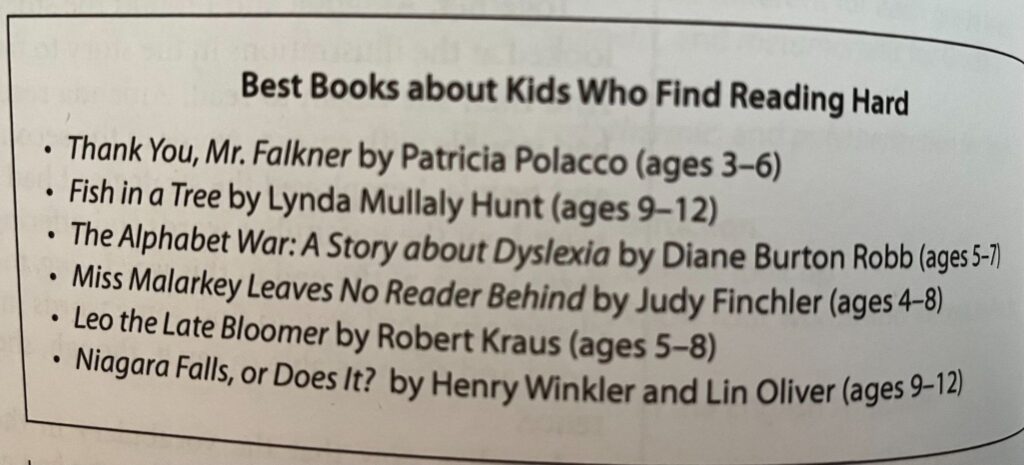
Read Aloud (whole-class): When students hear books being read out loud it builds their fluency and exposes them to a wider range of vocabulary. When choosing books I will consider choosing books about kids who find reading hard (Bright, 2021, p. 100).
8-10 minutes
Learning Services & School Supports
Levelled Reading Programs: As the classroom teacher I will speak with Learning Services to advocate for Eli getting reading support. I know a lot of schools in the area used levelled reading programs, and I have seen a lot of success with those. The issue I have is often students who need the most support are pulled out when the classroom teacher is doing core instruction. As a result I really love the reading programs that have students read for 1 minute at a time because they do not miss as much class time, and it does not exhaust their ability to do work in class.
Testing: For Eli in particular, I am curious if there are any learning delays or issues like dyslexia. I would compare how Eli is doing in other subjects and use data to inform my request for help from learning services. Teachers are not able to do any of these assessments, only trained professionals with the permission of caregivers; however, Learning Services Teachers have a lot more experience with the symptoms of disorders like dyslexia. As a result I can put in place Tier 2 supports that would be good for a lot of students.
One-One Reading: I would refer Eli to any in school reading programs like One-to-One reading. However, I would wait until he had been assessed by Learning Services to ensure these programs were appropriate for him.
Big Buddy Reading: I would invite an older grade to come in to do Big Buddy Reading. All students, including Eli, would benefit from having a more fluent reader come in to read with them. I would be intentional about pairing Eli with an older student who Eli would look up to.
Home Supports
I would send home a list of manageable strategies for reading with their child. A lot of caregivers do not know where to start to help their child read which can lead to being unsure of where to start or causing harm by pushing too hard and making kids hate reading. Plus, families are really busy and do not always have time or energy to do a bunch of homework with their children. By offering some tools we can empower our families.
The books I would choose to send home would be books that will be “just right” books. I would send an email and a printed out form in the Home Reading Bag.
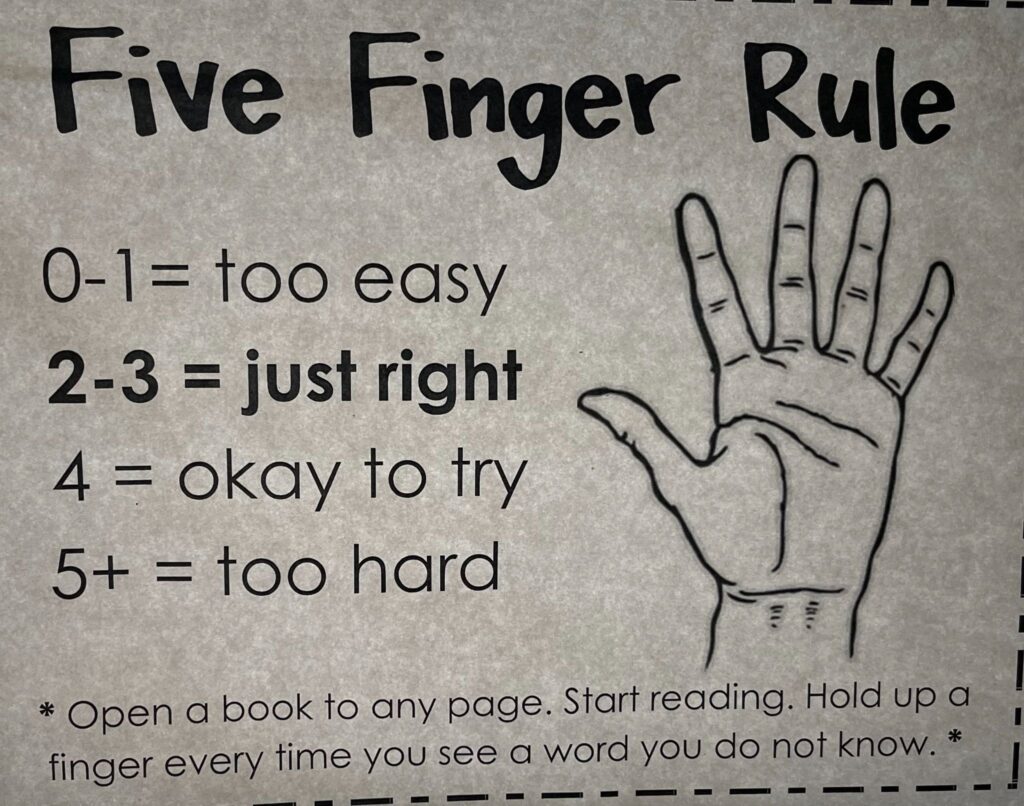
An example of a letter I would send home is found below:
Hi Caregivers,
We will be starting our home reading program. I will send 3-5 books home with your child each week. They can read either these books, books that you have at home, or books from the public library. The books I send will be just right for them, which means there may be 2-3 words on the page that are a bit too hard for them. This is just the right amount of challenge, but not so much that they are discouraged. It is also ok to read books that seem too easy because this can make reading more enjoyable. If your child is interested in reading a harder book then let them give it a try!
I have talked with your child about how important 10-15 minutes of reading a day is. Kids who read 10-15 minutes a day can end up learning thousands more words every year. But even 2 minutes would be an amazing place to start!
This program is not mandatory, but I would love and appreciate your help. Just do what you can. Please reach out to me if you have any questions.
Here are some tips if you are not sure where to start.
Keep it short and calm. Ten minutes of relaxed reading is better than 30 minutes of frustration.
Let your child choose the book. Kids read more when they like what they are reading.
Start with a quick picture walk. Look at the pictures together and guess what might happen.
Take turns reading. You read a page, then your child reads a page.
Help tricky words gently. Give them a moment to try, then offer the first sound or say the word and keep going.
Talk about the story. Ask simple questions after reading like “What was your favourite part?” or “Why do you think that happened?”
Reread familiar books. Repetition builds confidence and fluency, even if it feels easy.
Celebrate effort, not perfection. Praise things like trying hard, sounding out, or reading smoothly.
End on a positive note. Stop before they get tired so reading always feels like a win.
Ongoing Assessments
I would like to do a Holistic Reading Assessment like that found in Powerful Thinking by Adrienne Gear (2024, p. 26). While I appreciate the Acadience testing system, as a new teacher I do not have enough experience to understand the data to meaningfully move forward. The holistic reading assessment really breaks down individual skills so I can find out exactly where Eli is needing support.
Ultimately, I am looking for growth. I would rather Eli make small steady gains than nothing at all. To ensure this is happening I would:
Observation: Create a checklist to fill out once a month during small group work. This time interval will give me an overview of the progress my students are making.
Products: The gratitude journal will be an ongoing record of the kind of work each student is able to produce. For Eli in particular, I will be able to use this journal to see how much he is able to do on his own and how much has been scribed for him.
Conversation: Do a Reading Interest Survey after big school breaks in order to gauge if Eli’s reading interest has changed or remained the same.
References
Acadience. (n.d). Acadience reading K-6 benchmarks and cut points for risk. Acadience. Retrieved February 28, 2026, from https://acadiencelearning.org/help-center/article/acadience-reading-k-6-benchmarks-and-cut-points-for-risk
BC’s Curriculum. (2016). English Language Arts 2. Government of British Columbia. https://curriculum.gov.bc.ca/curriculum/english-language-arts/2/core
Bright, R. (2021). Sometimes reading is hard. Pembroke Publishers Limited.
Friessen, L. (n.d.). Morning meetings: how to do them and why they’re so important. Retrieved February 24, 2026, from https://www.drlorifriesen.com/blog/morning-meetings
Gear, A. (2024). Powerful thinking. Pembroke Publishers Limited.
Harvey, S., & Ward, A. (2017). From striving to thriving: How to grow confident, capable readers. Scholastic Inc.
Ness, M. (2024). Read alouds for all readers. Solution Tree.
Pryde, K. (2012, September 30). The daily 5. Elementary Teachers’ Federation of Ontario. https://heartandart.ca/the-daily-5/
Stollar, Stephanie. (2024, July 24). Why you should use acadience for early literacy screening. YouTube. https://www.youtube.com/watch?v=7V7jJmfdxiE
Sauber Millacci, T. (2017, February 28). What is gratitude and why is it so important? Positive Psychology. https://positivepsychology.com/gratitude-appreciation/
University of Florida Literacy Institute (n.d.). UFLI toolbox. Retrieved March 10, 2026, from https://ufli.education.ufl.edu/foundations/toolbox/
Wright, P. (2023, November 11). What happens to your brain when you give and practice gratitude? Neurology and Neurosurgery. Nuvance Healthline. https://www.nuvancehealth.org/health-tips-and-news/your-brain-when-you-give-and-practice-gratitude