Slow is faster than stuck. -Tom Frose

Category: Reading and Literacy

Story Vines

You’ve probably heard the old saying: we don’t truly understand something until we try to teach it to someone else. Speaking from experience this is absolutely true.Ā  According to Robin Bright, author of Sometimes Reading is Hard, one way to build our students’ reading and oral fluency is to create a story vine (2021, pp.91-93).Ā 

What is a ‘Story Vine’?

What is a story vine you ask? Well, let me tell you!

Bright explains that Story Vines “are based on an old African tradition of storytelling and can be used to develop language and support reading and writing across the curriculum” (Bright, 2021, p. 91).

Robin Bright cites Marlene McKay who argues that Story Vines are a great tool for developing a student’s “reading skills while collaborating and contributing to meaningful classroom talk” (Bright, 2021, p. 91).

Below is a page from McKay’s book, Story Vines and Readers Theatre: Getting Started (2008, p.37).

The Process

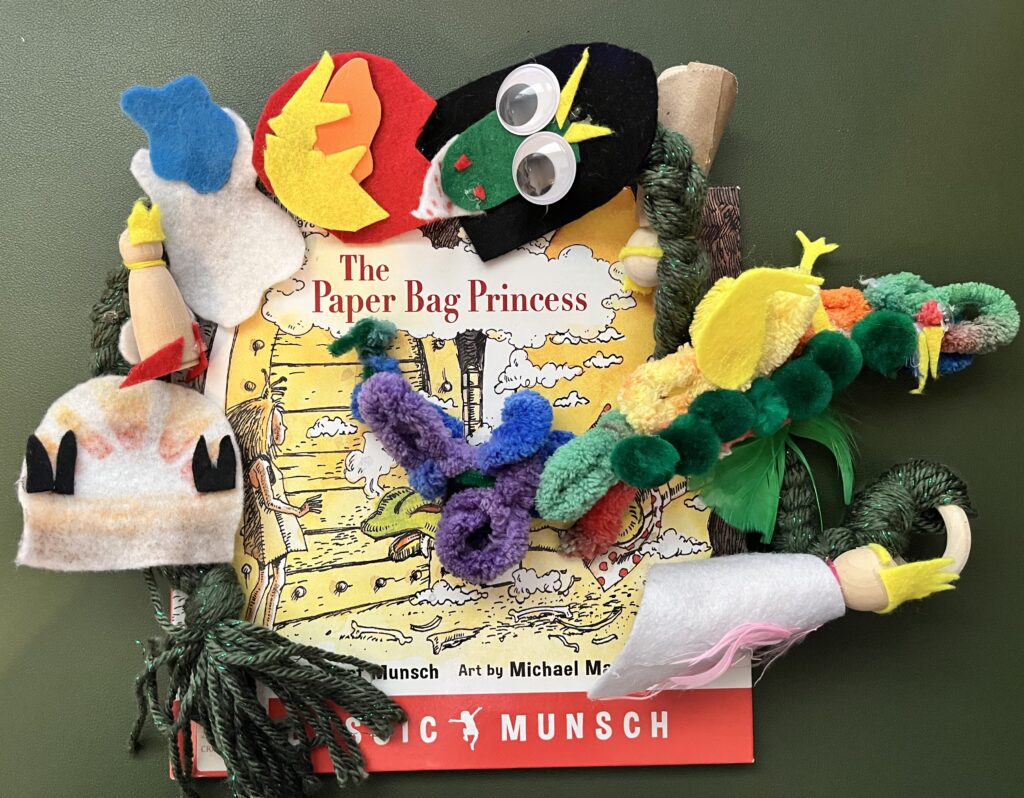
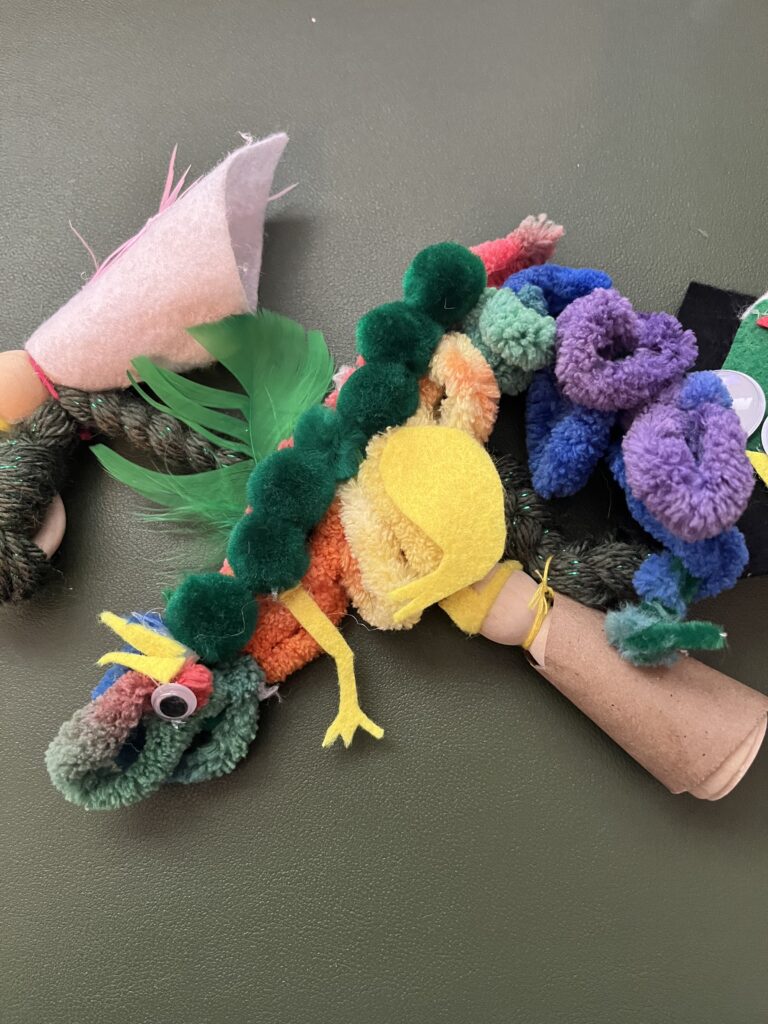
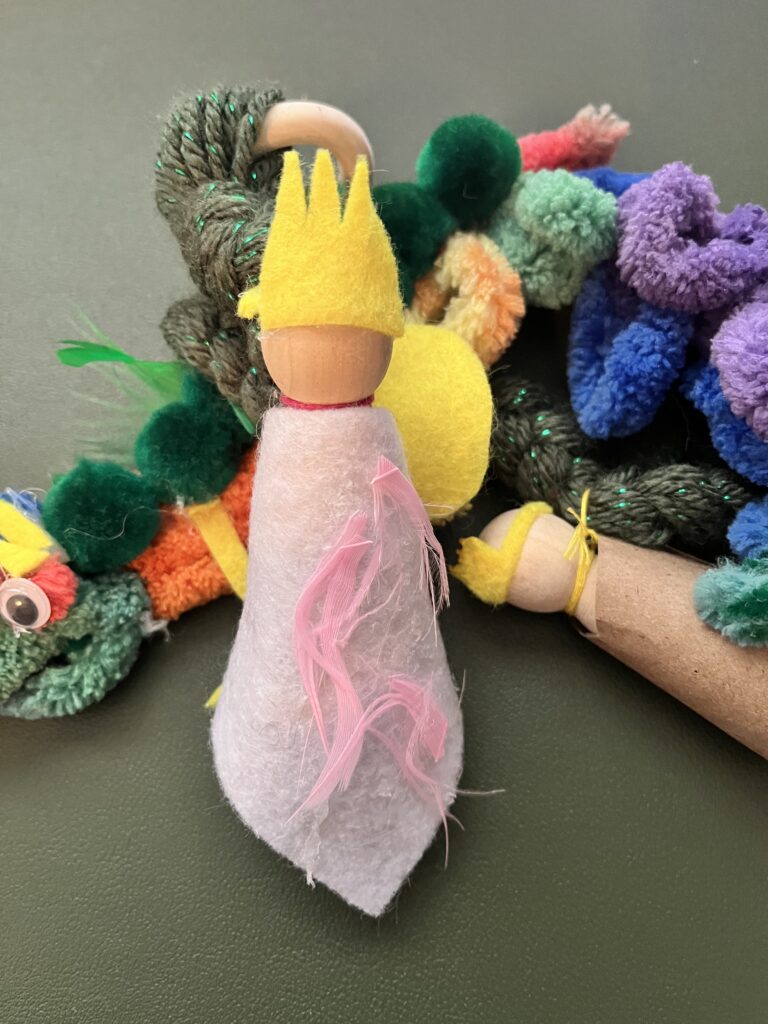
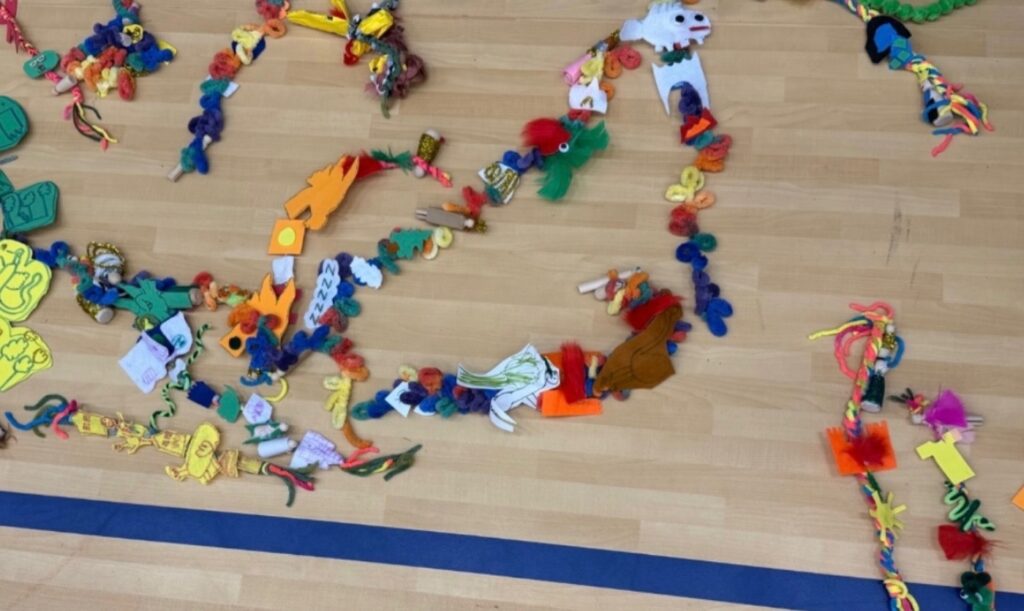
When our teacher education class made Story Vines with a grade 2/3 class this is what we did…

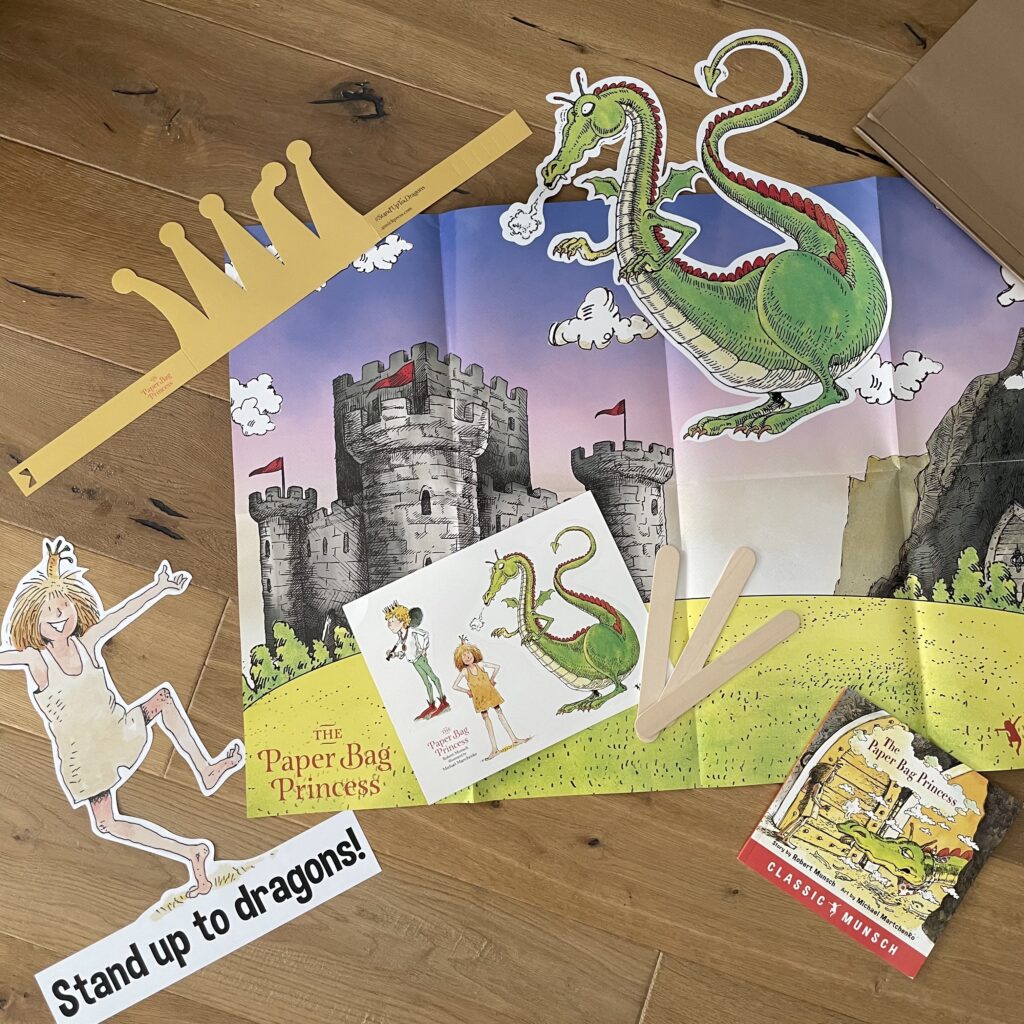
First, choose a book. For this activity we chose The Paper Bag Princess by Robert Munsch.Ā 

Second, using yarn, rope, or sturdy string you make a braid that is about arms length (pro tip, the yarn pieces should be from the floor to the person’s outstretched arm). Then gather craft supplies to create the elements of the story vine.Ā 

Third, instruct your students to listen to the story and pick important events that they will use to retell the story to someone else. Our grade 2/3 students used their vines to tell the story to kindergarteners. 

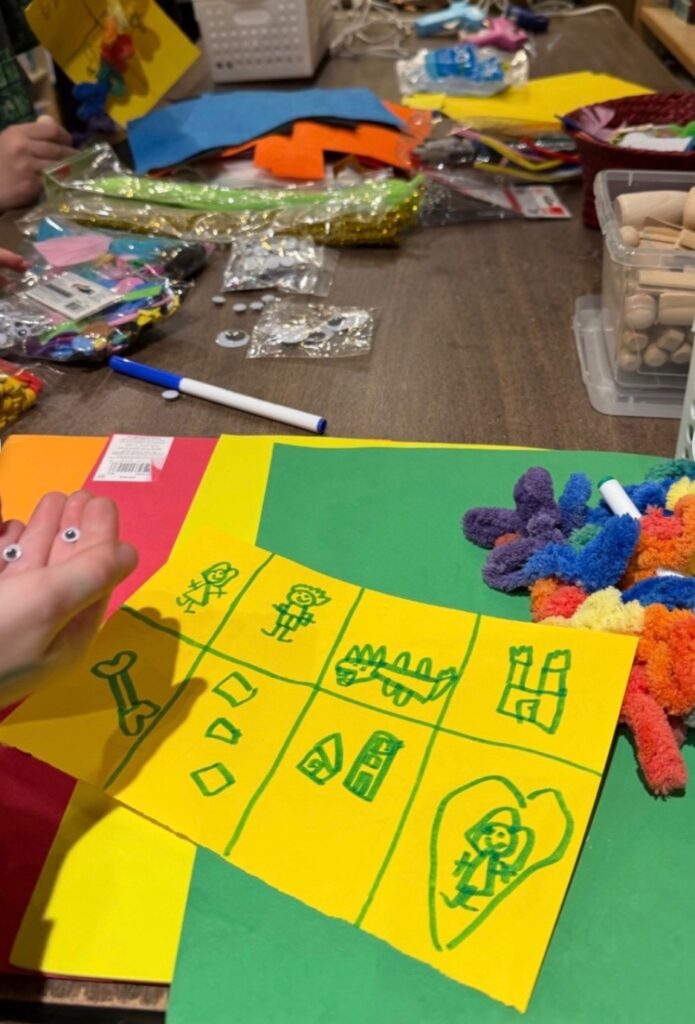
Fourth, students should create the ā€œcharactersā€ or ā€œpicturesā€ that will go onto their vines.

Fifth, put it all together and share with a classmate. 

Reflection on the Experience
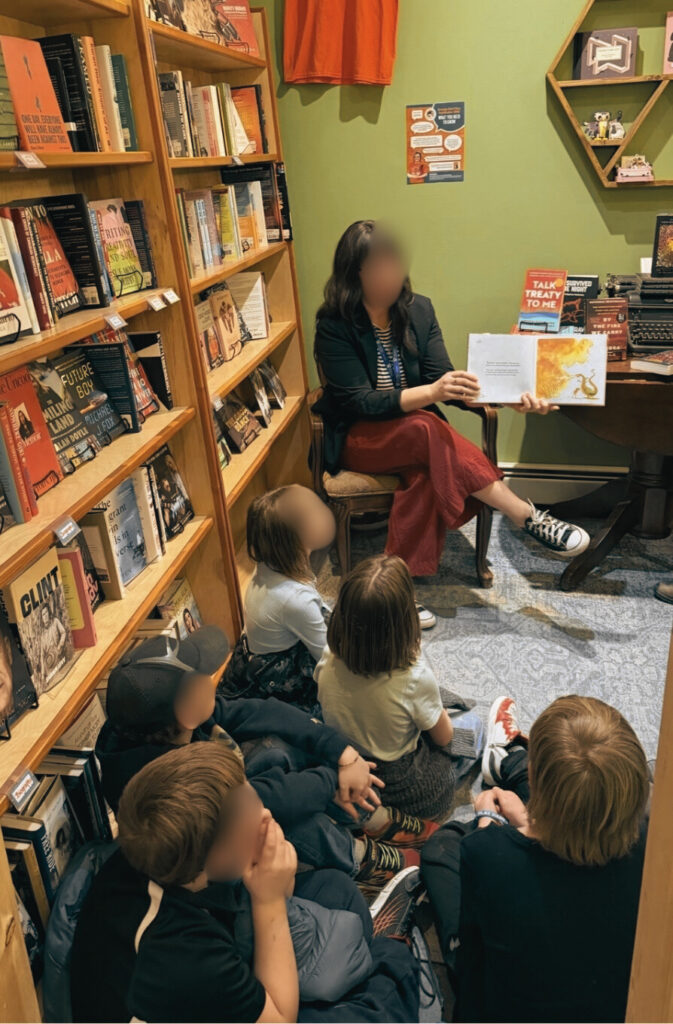
Our students were really engaged with this activity. While some were not really into The Paper Bag Princess, and chose to highlight Prince Ronald’s role in the story more so than Princess Elizabeth, I did hear them ask to do another Vine that was about a preferred book. Allowing students a choice in books is a great way to help them connect with the process. 

Considering my own reading journey, I think I would have really benefited from this kind of activity as it challenges the creator to think about the key moments in a story to be able to retell it. 
Screenshot

What is really wonderful about this activity is that you can adapt it for nearly all ages and subject areas. As McKay shows in her book, you can use this in a variety of situations with all ages. I love the idea of using this for social studies to create timelines. What about giving it as an option for a cheat sheet for a science test? There are so many different learning styles, and this would be a great way for a student to solidify their learning. This, in combination with a conversation, could be a great summative assessment for many different students.Ā 

Screenshot

BC Curriculum Connection

First Peoples Principle of Learning: Learning is embedded in memory, history, and story. The students get to participate in the power of oral story telling, while deepening their ability to listen for important details when hearing a story. 

All from the grade 4 English Language Arts BC Curriculum:

Curricular Connections:

Big Ideas: Language and text can be a source of creativity and joy. 

Curricular Competencies:
Comprehend and Connect:  Use a variety of comprehension strategies before, during, and after reading, listening, or viewing to deepen understanding of text
Create and Communicate:  Use oral storytelling processes

Content:
Strategies and Processes: reading strategies, oral language strategies, writing processes
Language features, structures, and conventions: features of oral language

References

Bright, R. M. (2021). Sometimes reading is hard: Using decoding, vocabulary, and comprehension strategies to inspire fluent, passionate lifelong readers. Hawker Brownlow Education, 91-93.

Curriculum. (n.d.-a). https://curriculum.gov.bc.ca/

FNESC (n.d.). First peoples principles of learning. First Nations Education Steering Committee. https://www.fnesc.ca/first-peoples-principles-of-learning/

McKay, M. (2008). Story vines and readers theatre: Getting started. Portage & Main Press, 37.
Building a Diverse Classroom LibraryĀ 

When curating a classroom library ensure that BIPOC books fully develop the character and ensure the protagonist is not objectified or used to teach a moral lesson (Harde, 2016). 

Indigenous Books

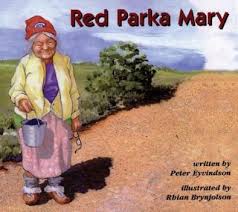
Harde quotes Clare Bradford who states ā€œsettler-society texts,ā€ or books written by non-indigenous writers, can be used when authors, like Peter Eyvindson, create books wherein ā€œIndigenous children can find themselves and their community depicted in positive and human ways in a variety of settings, urban, rural, and reserveā€ (Harde, 2016, p. 5).  Eyvindson’s books are: Red Parka Mary, Jen and the Great One, Kookum’s Red Shoes, and Kyle’s Bath.

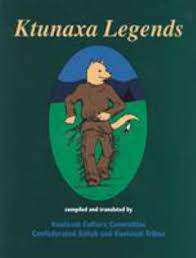
Harde talks a lot about using literature that is grounded in Oral Storytelling. Ktunaxa Legends comes to mind. Using a local resource like this will be a part of my diverse classroom. 

Some other books I would like to include in my classroom library are: 

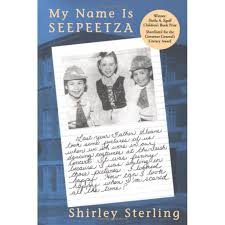
My Name is Seepetza by Shirley Sterling. This novel is about a 6 year old girl going to residential school. 

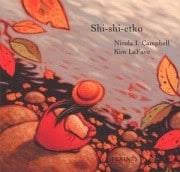
Shi-Shi-etko by Nicola I. Campbell. This story book is about a young girl and her family preparing for her to leave home for residential school.

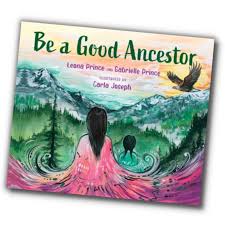
Be a Good Ancestor by Leona Prince and Gabrielle Prince. This picture book encourages the reader to consider how they are connected to the world around them. 

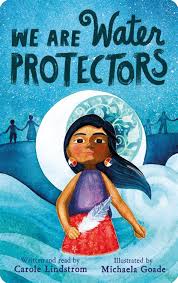
Water Protectors by Carole Lindstrom. This picture book encourages readers to protect the water as it is the source of life. 

BIPOC Books

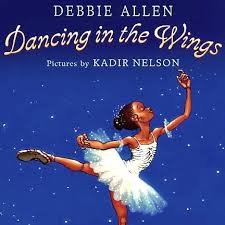
Dancing in the Wings by Debbie Allen. This picture book is about Sassy, a ballerina with big feet. Sassy is embarrassed by her feet, but in the end those feet allow her to do great things. 

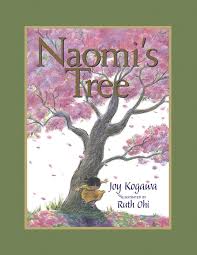
Naomi’s Tree by Joy Kogawa. This picture book is about Naomi, the heroine from Naomi’s Road and Obasan. This is an age appropriate introduction to Japanese Internment. 

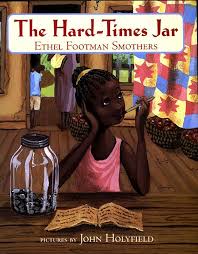
The Hard-Times Jar by Ethel Footman Smothers. This picture book is about distinguishing between want and need and a young girl’s love of reading and writing. 

Inclusive Books

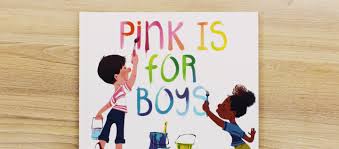
Pink is for Boys by Robb Pearlman. This picture book is about celebrating everyone and rethinking stereotypes. 

Read Aloud to All Ages

According to Molly Ness, author of Read Alouds for all Learners, students of all ages love to be read to. These books could either stand on their own as a novel study in the case of My Name is Seepetza, or as an anchor book for a larger unit.

BC Curriculum Connections

Using diverse books meets the BC Curricular Competency: recognize the validity of First Peoples oral tradition for a range of purposes (comprehend and connect-grade 7), recognize the role of language in personal, social, and cultural identity (comprehend and connect-grade 4), and recognize the importance of story in personal, family, and community identity (comprehend and connect-kindergarten).

Ideas to Encourage a Diverse Classroom

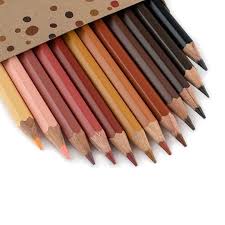
Other ways to increase diversity in my classroom will be to include a variety of options for skin colour. Growing up everyone was coloured peach or light pink. I think assumptions like this create a white-centric world view, and in small communities where there is not a lot of diversity it is even more important for teachers to provide opportunities for our students to broaden their thinking.

References

Harde, R. (2016). Putting first nations texts at the center. Bookbird: A Journal of International Children’s Literature, 54(1), 4–9. https://doi.org/10.1353/bkb.2016.0019 

Curriculum. (n.d.-a). https://curriculum.gov.bc.ca/

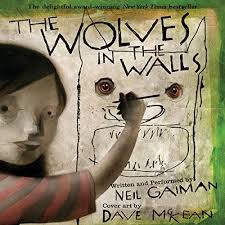
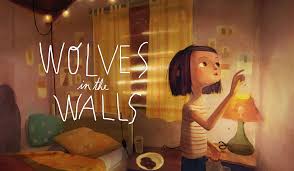
The Wolves in the Walls

by Neil Gaiman

Virtual Reality for Literacy

I embarked on my first experience with Virtual Reality (VR) this week! I had heard of it of course, but I had never used one before. Man was it ever a blast!! I am so glad I got to try it first before bringing it into a classroom setting. We started off in the local Design Lab. Many Teacher Candidates got to try out the app that we would be using with the students the following day. It was wonderful. I actually enjoyed the VR so much more than I thought I would. 

Read Aloud in Different Locations

The following day we all met and divided the jobs to be done with the students. First the students would all listen to the book read aloud. Another really cool thing we did was to split the long story up into 5 sections. Each section was read by a different person. The small groups of students cycled through each of the 5 sections, which were placed around the school. This kept the students engaged because they were never sitting for too long. I also really enjoyed reading the same section repeatedly because I got more into the voices and the characters each time I read it. The last group definitely got the best reading of them all. One thing I really noticed is that I read slower and took my time with each word to really get the most of it. 

English Language Arts: booklet work

Following the reading, the students could either work on a booklet that encouraged them to think about the story they had read, or have a chance to try out the story in the VR app. We did not have enough VR sets for each student so many had to wait for their turn.

BC Curriculum Connections

When considering the BC Curriculum and where an activity like this fits in I think immediately of English Language Arts (ELA). Of course. 

Grade 6:  ELA

Big Idea: Exploring and sharing multiple perspectives extends our thinking.

Curricular Competency: Recognize and appreciate the role of story, narrative, and oral tradition in expressing First Peoples perspectives, values, beliefs, and points of view. 

Content: Language features, structures, and conventions. 

First Peoples Principles of Learning: Learning is embedded in memory, history, and story. The students got to experience a story in a different way.

However, ELA is not the only application for a story like this. 

In grade 5 math you could use the VR to estimate the area and perimeter of different rooms in the house. Additionally you could establish a timeline of events that are happening throughout the story. 

In grade 5 science you could compare the muscular skeletal system of wolves to humans. There may even be some bones to bring into class of other animals found in this region. You could compare similarities and differences. 

There are so many applications for using VR in classrooms. For example, the following day the VR headsets were used in a grade 8 science class to teach cell theory and types of cells. There are so many great ideas! 

Movement Breaks for the WIN!

I had such a wonderful time reading a section of the book to all the groups of students as they moved through the different sections of the book and the school. I think this was a wonderful way to read the book as it built in movement breaks to an otherwise very long book. I also loved reading the same section over and over again because I got better at reading it. I’m sure there is an application there for doing Readers Theatre.

Here is another great idea I want to save for the future!

References

Curriculum. (n.d.-a). https://curriculum.gov.bc.ca/

First peoples principles of learning. First Nations Education Steering Committee FNESC. (n.d.-a). https://www.fnesc.ca/first-peoples-principles-of-learning/

Literacy Stations

Magic E Literacy Stations

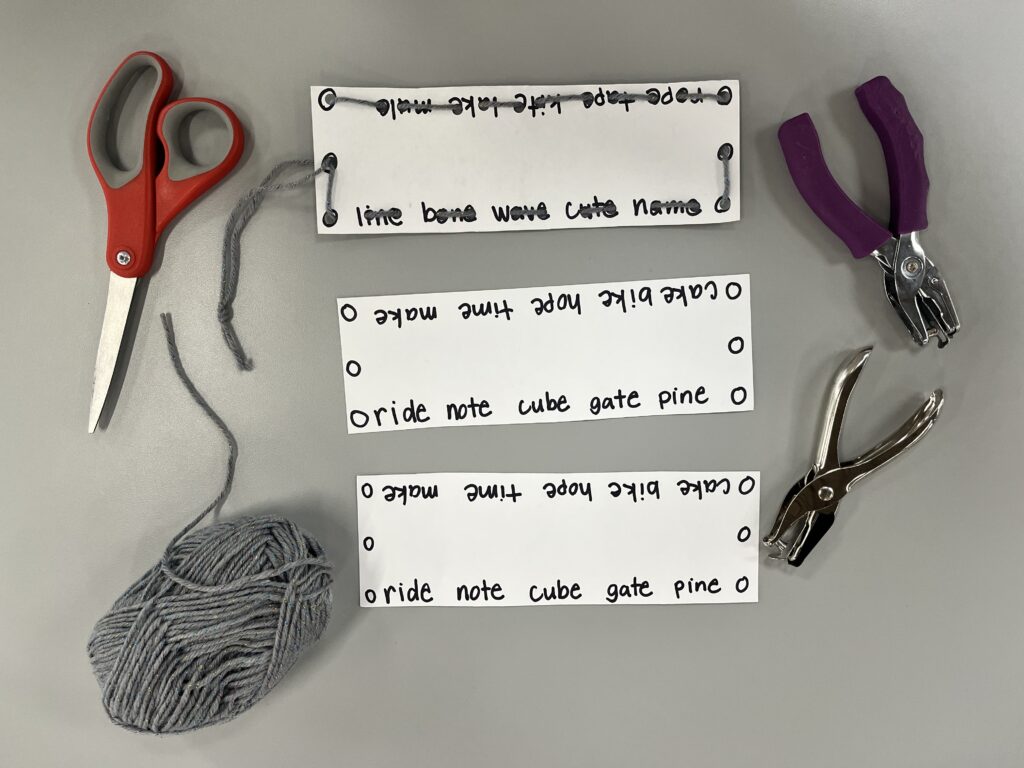
The ā€œMagic eā€ or the ā€œBossy eā€ can be a struggle for many readers. I created a literacy station focusing on this topic. 

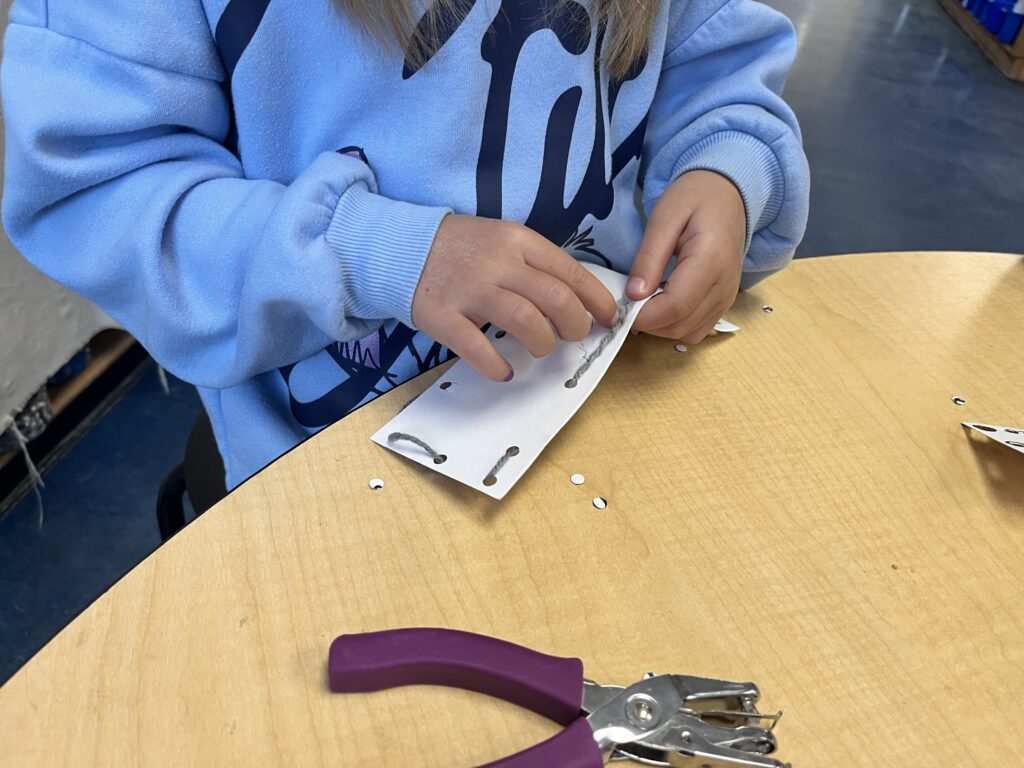
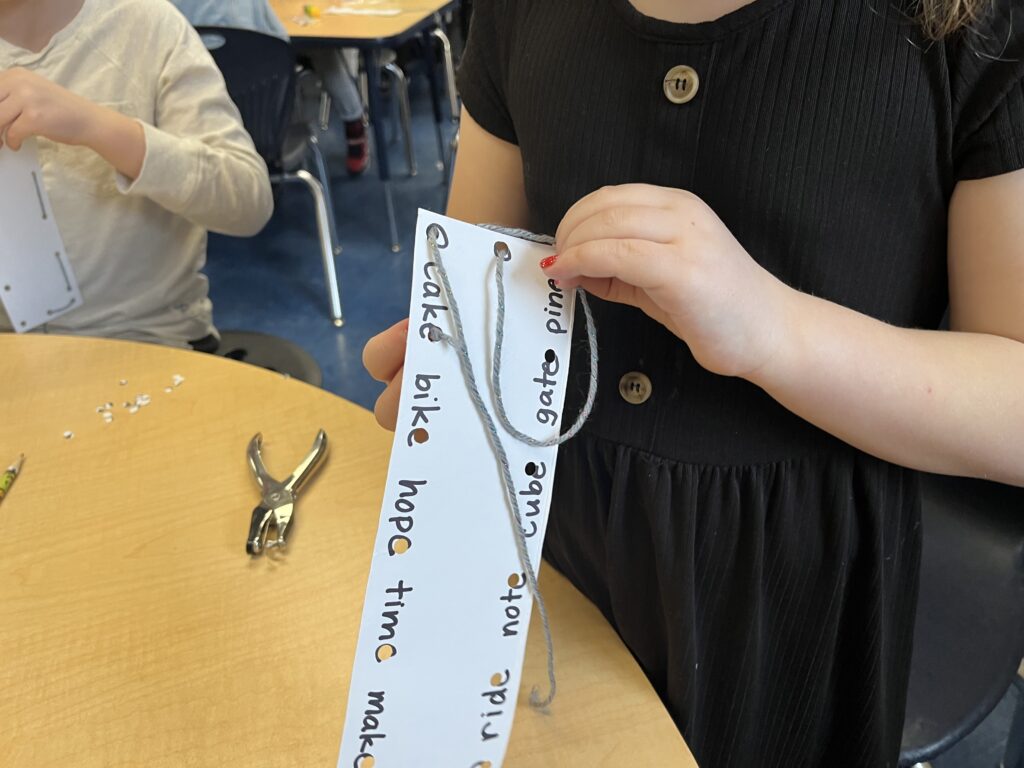
I cut cardstock into four sections. In each section I wrote ten ā€œmagic eā€ words to create a border. Each student had to use an individual hole-punch to punch out the ā€œmagic e.ā€ 

Together as a group we read each word first, punched the ā€œmagic e,ā€ then read the word that was left. Some words made sense like ā€œnoteā€ became ā€œnot,ā€ while others did not make sense like ā€œgateā€ turned into ā€œgat.ā€ In the future, I would choose words that all made different words when the “e” was taken off.

Many students found using the hole-punch hard at the beginning, but once they got the hang of it they really loved it. 

As a final piece the students thread a string of yarn through all of their punched holes to create a bookmark. Most students did not have time for the yarn part of the activity, but a few did. They took the yarn to finish at home. 

All in all I will use this centre again. I will need to pre-teach how to use the hole-punch. Specifically, where the paper goes, how to line the metal punch up with the spot you need to put a hole in, and how to use both hands. However, I think the skill of using a hole-punch, gaining hand strength, and working on fine motor skills by threading the yarn through the holes make this a worthwhile activity. Plus many students said it was FUN! Always a win!! 

Materials Needed:
Cardstock (1-2 quarters per student)
Individual hole-punch per student in the group
Yarn
Scissors
Sharpie

BC Curriculum Connections

Big Idea: Playing with language helps us discover how language works.

Curricular Competency: Use developmentally appropriate reading, listening, and viewing strategies to make meaning

Content: Strategies and processes: reading strategies 

Core Competency: Critical Thinking and Reflective Thinking

Profile 2: I can use evidence to make simple judgments.

Profile 4: I can gather and combine new evidence with what I already know to develop reasoned conclusions, judgments, or plans.

First Peoples Principles of Learning: Learning is holistic, reflexive, reflective, experiential, and relational (focused on connectedness, on reciprocal relationships, and a sense of place). This literacy station used experience and a tactile approach to learn this concept.

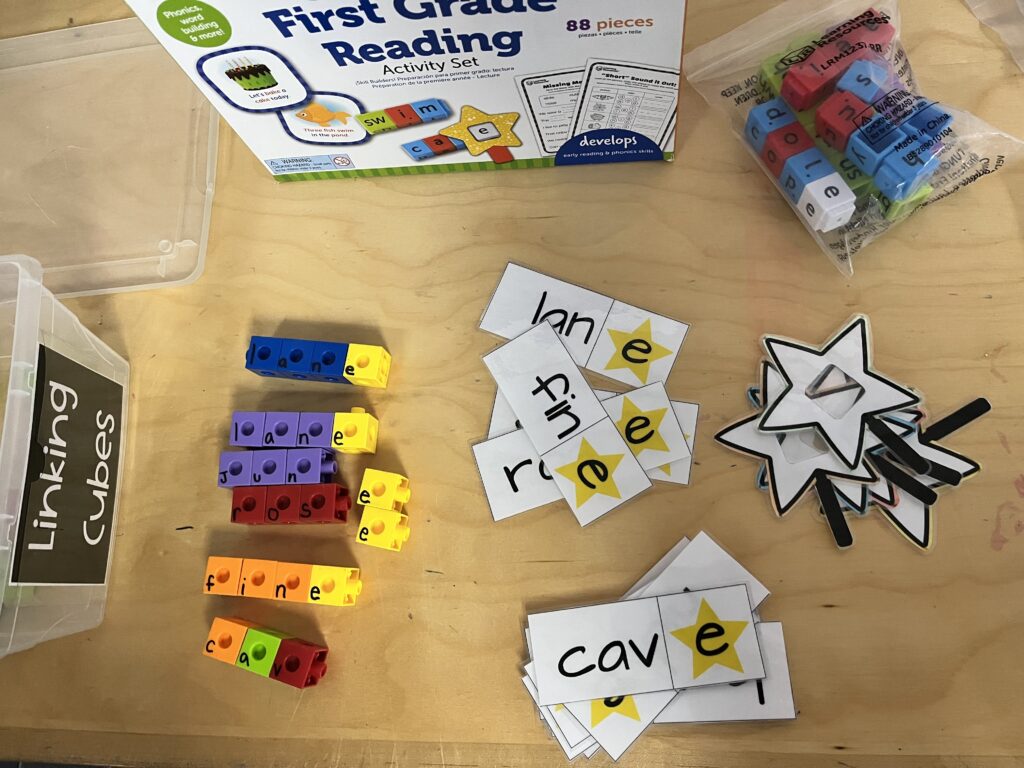
Another literacy station that was used in the class used linking cubes with the letters on each block. Students had to put the word together on the corresponding word.

Boosting Reading Comprehension

Other ways to boost reading comprehension beyond literacy stations are to teach the following:
1. “Engage students in self-aware, active reading
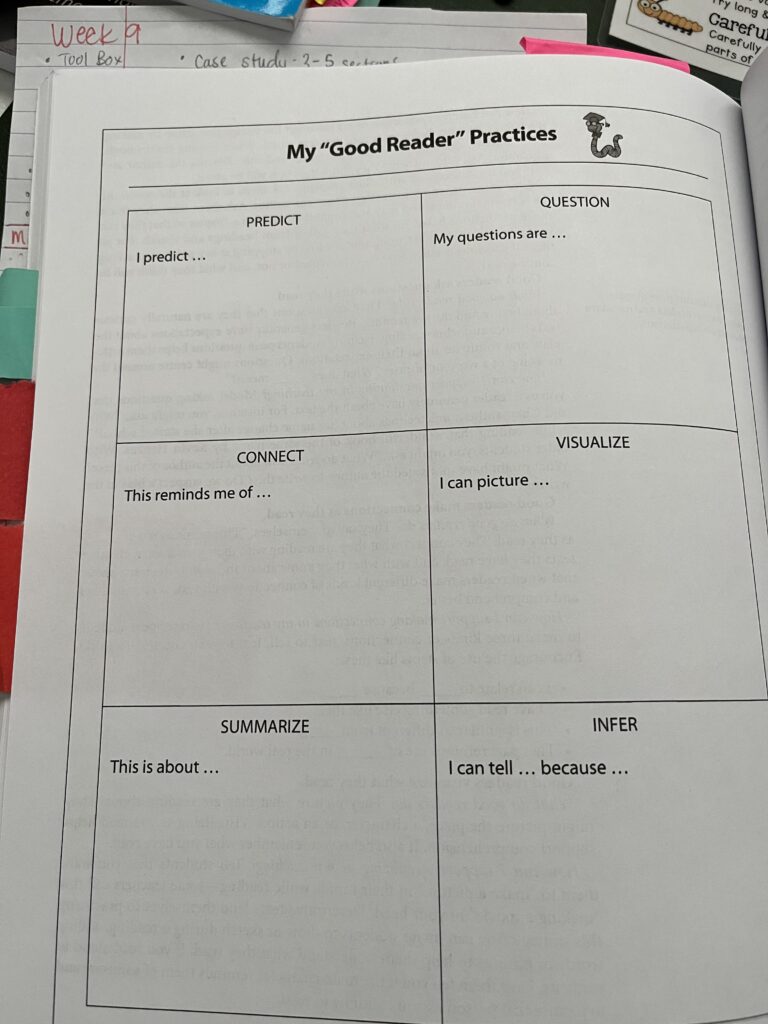
2. Teach the practices of good readers
3. Teach text structures
4. Seek out mentor texts
5. Organize book clubs” (Bright, 2021, p.34)

References

Bright, R. M. (2021). Sometimes reading is hard: Using decoding, vocabulary, and comprehension strategies to inspire fluent, passionate lifelong readers. Hawker Brownlow Education, 134-147.

Curriculum. (n.d.-a). https://curriculum.gov.bc.ca/

First peoples principles of learning. First Nations Education Steering Committee FNESC. (n.d.-a). https://www.fnesc.ca/first-peoples-principles-of-learning/

Read Alouds for all Readers

Read Alouds for all Readers by Molly Ness promotes the importance of reading aloud to ones class, regardless of age. Ness offers steps to create a “Read Aloud” (found below).

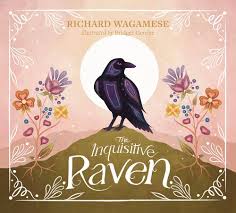
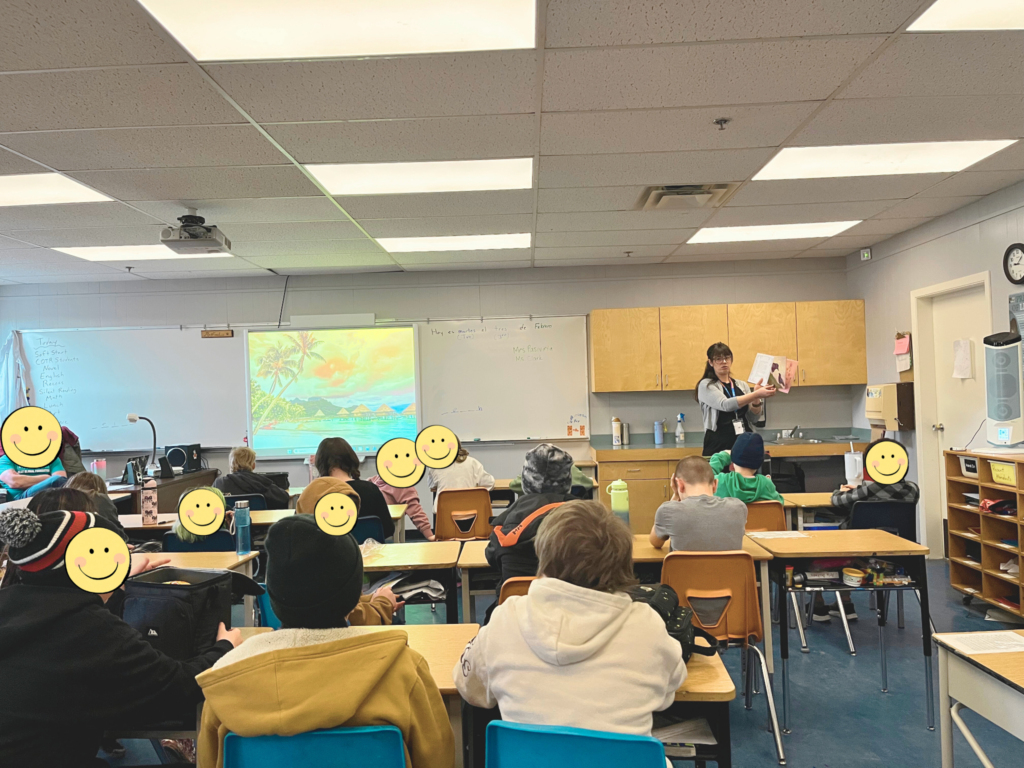
My partner and I read “The Inquisitive Raven” by Richard Wagamese, an Ojibwe author, to a grade 5 class. The book describes how Rueben’s inquisitiveness leads him to learn a very important lesson.

For this activity I considered Indigenous Perspectives and First Peoples Principles of Learning.

Learning involves generational roles and responsibilities; and learning involves recognizing the consequences of one’s actions. Rueben learned from his actions how important his role within the community is, and that all creatures have respect for one another.

This book also embodies the different roles family members have in raising youth.

Read Aloud Template

We did our read aloud activity over three days.

Day One: We read from page 1 to page 7.

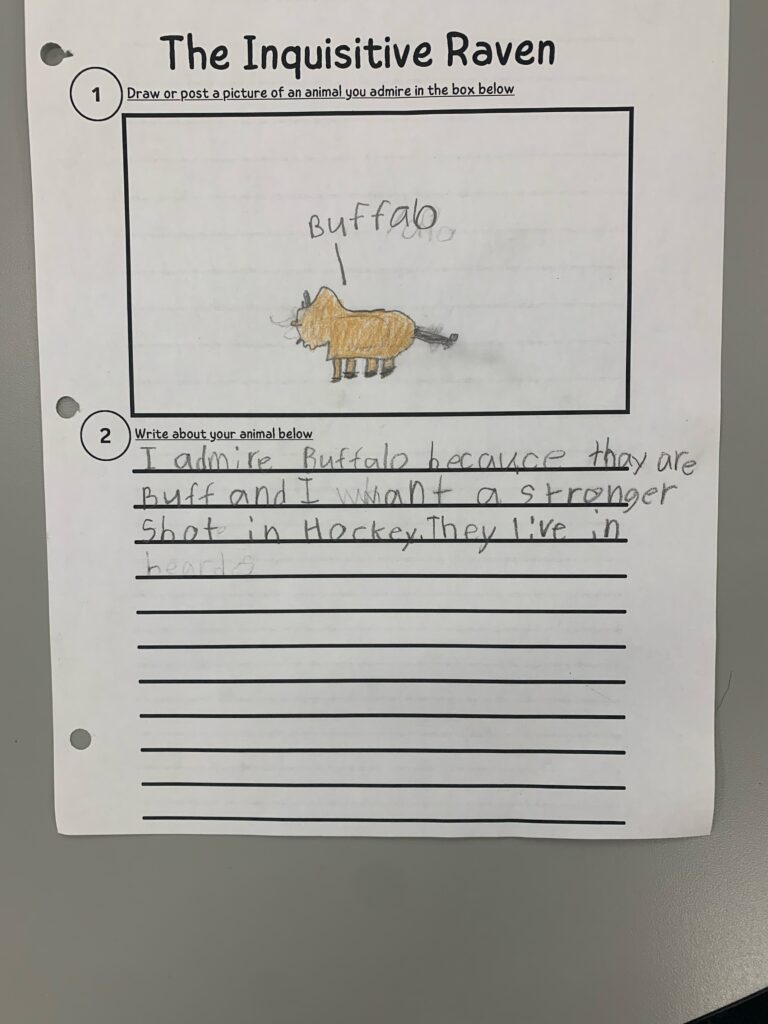
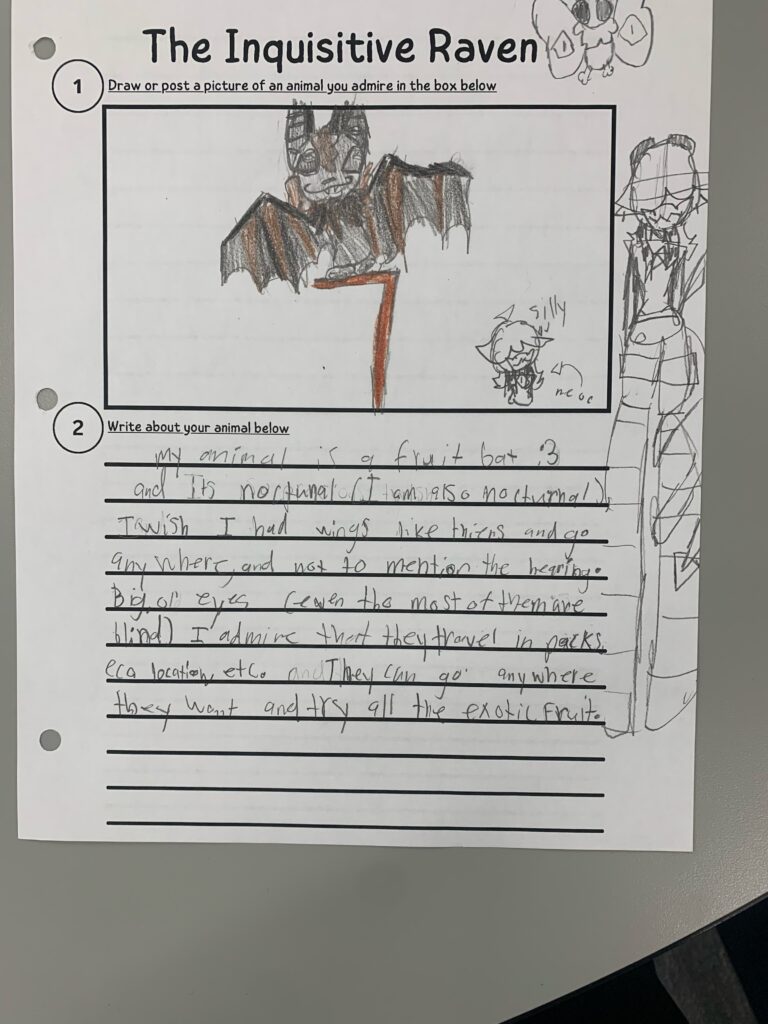
We had a little more time this day to do a drawing and writing activity. We brought books from the library with tons of different mammals, birds, fish, insects, and lizards. Students were asked to pick an animal they admire and draw it. There were a few students who went really in depth with their drawings, adding a lot of details and showing their admirable qualities. Others were a little silly, but for the most part they engaged really well. The second part of the activity had the students writing two-four sentences about what they admire about their animal. Many students filled up the rest of the page and had a lot to say about what made their animals special.

Day Two: We read from page 8 to page 23.

This day the book section was substantially longer. I would even say it was a tad too long. Some students were starting to get fidgety near the end, and I could hear little side conversations as my partner read.

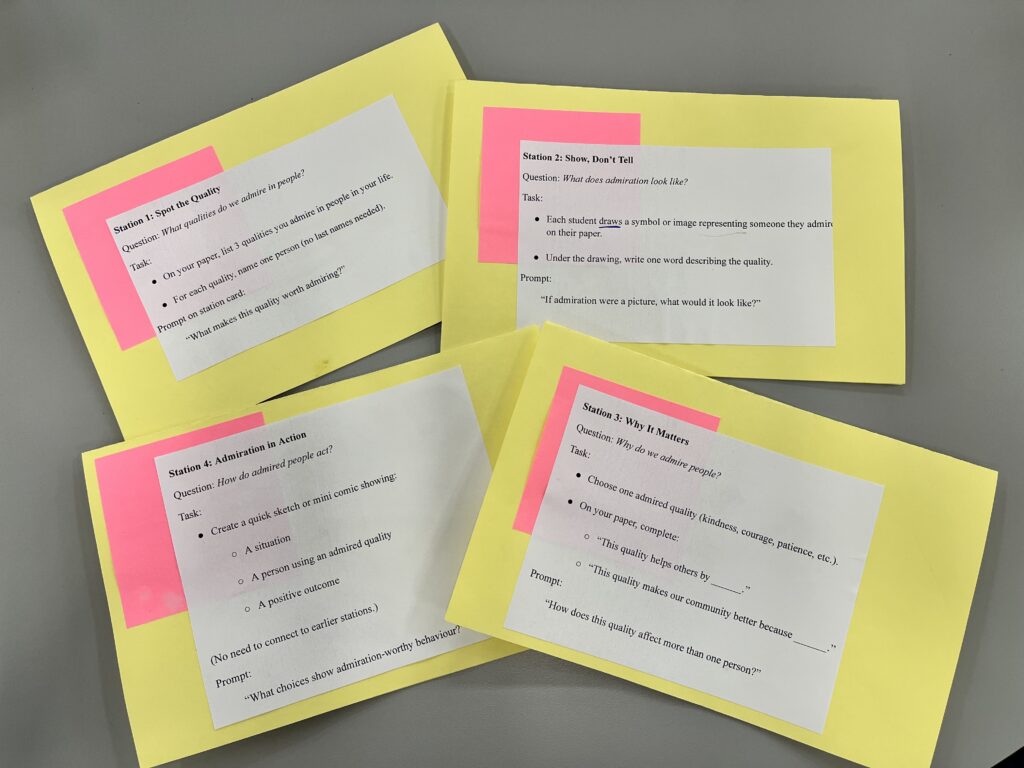
For the activity we made station cards. Students were given a blank piece of paper to use throughout the stations. In the future I would make the stations clearer on the paper.

Station 1: What qualities do we admire in people? List 3 qualities.

Station 2: What does admiration look like? Draw a symbol to represent something you admire.

Station 3: How can admiration influence us? Finish the sentences: “I admire people who_____?” “I could practice this by_____?”

Station 4: Why do we admire people? Finish the sentences: “This quality helps others by_____.” “This quality makes our community better because_____?”

Day Three: We read from page 24 to page to the end.

For this activity we did a mini lesson on making a tableau. We had one volunteer come up and my partner and I, along with our student volunteer created a tableau that the rest of the class had to guess. Next, we split the class into groups of 3 (one group of 4 girls and one group of 2 boys). Each group was given a scene from the book. The groups took turns presenting their tableaux for the class, and we all had to guess which scene it was. Following that we handed out admirable traits for each group to come up with their own ideas for how to display that trait. Some of the ideas were really wonderful. This day was by far the best as everyone stayed engaged and very little redirection was needed.

BC Curriculum Connections

Activity 1 falls under the grade 5 English Language Arts Curricular Competency: Use a variety of comprehension strategies before, during, and after reading, listening, or viewing to guide inquiry and deepen understanding of text.

Activity 2 falls under the grade 5 English Language Arts Curricular Competency: Use personal experience and knowledge to connect to text and develop understanding of self, community, and world.

Activity 3 falls under the grade 5 Arts Curricular Competency: Interpret and communicate ideas using symbols and elements to express meaning through the arts.

References

Curriculum. (n.d.-a). https://curriculum.gov.bc.ca/

First peoples principles of learning. First Nations Education Steering Committee FNESC. (n.d.-a). https://www.fnesc.ca/first-peoples-principles-of-learning/

Wagamese, R., & George, B. (2025). The inquisitive Raven. D&M Kids.

One Book Changed Everything

Reading did not come easily for me. You could say I was a striving reader for sure. I remember feeling very embarrassed any time we had to take turns doing out loud reading. Up and down the rows of desks each student would have to take a turn to read a paragraph. I remember counting how many classmates were ahead of me, then counting ahead in the book, and practicing my paragraph over and over again to make sure I did not stumble over any words that would elicit little sniggers. Sniggers that were silent to our teacher, but deafening to me. I never remembered what was read because I was hyper focused on perfection.

My dad would spend time, when he was home from extended work trips, sitting with me and reading. Looking back I cherish those times together and I value the effort, but it was never enough to help me catch up to my classmates. Looking back I can see how the First Peoples Principles of Learning were already at play in my life. “Learning is embedded in memory, history, and story:” this time spent with my dad is priceless (FNESC).

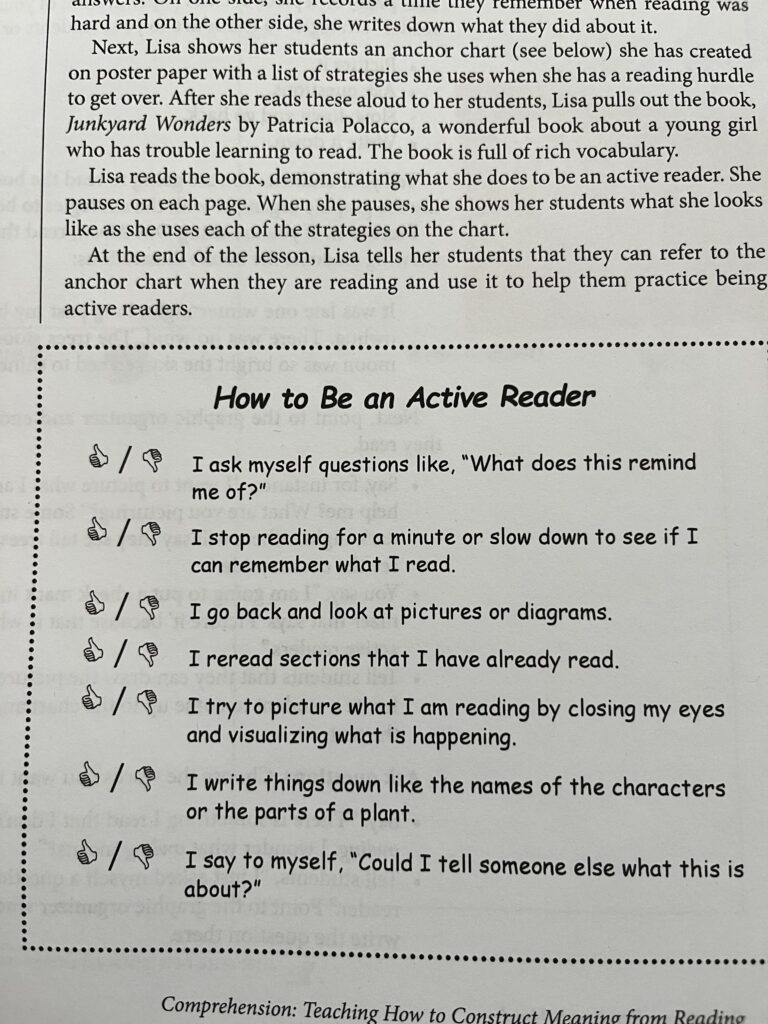
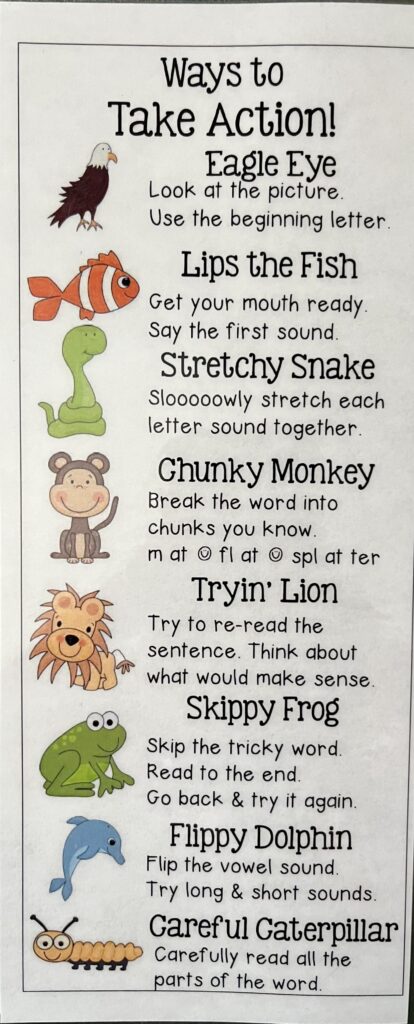
When I look at the BC Curriculum now, I can see that in my early reading days I was not able to use many of the reading strategies that we have been learning like those found on this little card. These strategies would have helped me on my way to mastering the Kindergarten English Language Arts Curricular Content.

Needless to say I was a late bloomer

But then I found A Handful of Time by Kit Pearson. I do not remember the miraculous circumstances that brought this book to me, but somehow I found a book that I could not put down. I was hooked. Between the relatable heroine, the relatable content, and the time travel I had found the book that turned me into a reader. 

Reading Interest Survey

(adapted from Sometimes Reading is Hard by Adrienne Gear)


How do you feel about reading? 

Little did I know at the time that I would think back to A Handful of Time and wonder if I could ever find another that engaged me so thoroughly. I am happy to report that I have indeed found others that continue to make me love reading. I find non-fiction books a lot harder to get into than fiction. If I have non-fiction books to read I do a lot better with audio books. I often wonder if I still struggle with decoding, or if I have dyslexia.

https://jarrettlerner.com/tag/world-read-aloud-day/

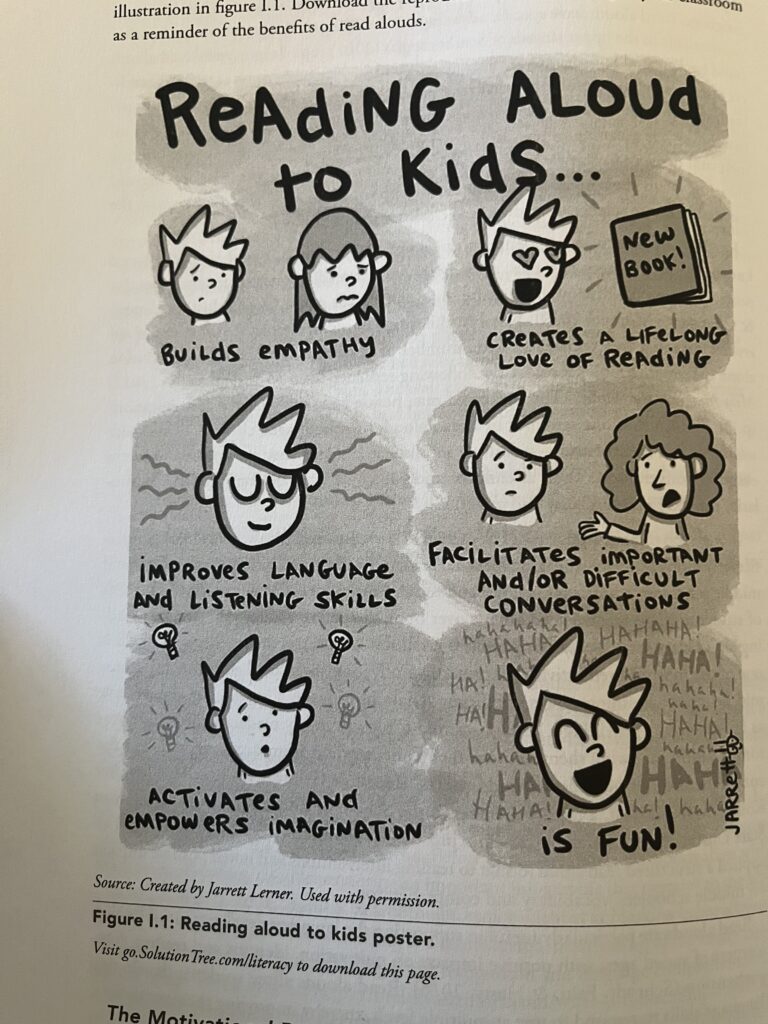
I makes me wonder if I would have fallen in love with reading a little earlier if my teachers had done Read Alouds which would have introduced me to literary worlds far earlier than I was able to visit on my own. Read Alouds were first introduced to me by Molly Ness’ book, Read Alouds for all Learners, which uses Jerrett Lerner’s great poster on the left.

What types of books do you like to read? 

https://www.amightygirl.com/

Is it any wonder that my first love instilled in me a love a previous time? I love historical fiction. If you add in some mystery and a female protagonist I am hooked! I love A Mighty Girl for great resources for books featuring female protagonists.

List some hobbies and activities you like to do outside of school.

I love to be active and cozy in equal measure. I love to cross-country ski, mountain bike, walk my dogs, lift weights, and spin. But then I love a hot bath followed by cozy pyjamas, and to watch a good show, read a book, do cross-stich, or attempt to water colour paint (this is a new hobbie and it is not to be congratulated in any way shape or form).

Every once and awhile my family will agree on a movie (it gets tricky when you have a 9 year old and an almost 17 year old!) and we will all get cozy together. Otherwise I love to be with my family even if we are all doing our own thing (parallel play 2.0). 

Who are your favorite authors?

Kate Quinn, Martha Hall Kelly, L.M. Montgomery, and J.K. Rowling (her kids books more so than her adult books).

Tell me about the last book you really enjoyed?

https://fashionmagazine.com/flare/celebrity/why-women-need-anne-of-green-gables-more-than-ever/

I just finished The Ickabog by J.K. Rowling. I really enjoyed it. The story was engaging and I think it would be good for a lot of young readers. Particularly those readers who are not drawn to sentimental stories. But….

Before that I read, for the first time ever (!!!), Anne of Green Gables. I cannot believe I have gone my whole life without reading that book. My mom and I watched the CBC show when I was little, but I never read the books. 

My family got me the rest of the series for Christmas so I will be diving into those next. 

What I did over Christmas Break?

I worked as an EA from December 1-19. Then I did almost all the things I love to do around the holidays. I baked cookies, watched many Christmas movies (though I did not get to them all because of the aforementioned movie negotiation with the children), spent time with my family, exercised, and slept! 

What subjects or topics do you like learning about? 

I like learning about various wars through the perspective of women. I like to learn about gardening. I also love to flip through magazines that are all about interior and exterior home design. 

If you could read a book about one thing, what would that be?

I would love to find more historical fiction written by authors who tell women’s stories. I feel like I have run out of books and I am always waiting for Quinn or Kelly to write more! I also want to learn more about indoor gardening because our climate is too cold for year-round growing.

References

Curriculum. (n.d.-a). https://curriculum.gov.bc.ca/

First peoples principles of learning. First Nations Education Steering Committee FNESC. (n.d.-a). https://www.fnesc.ca/first-peoples-principles-of-learning/

Pearson, K. (2011). A handful of Time. Puffin Canada.